The U.S. government’s plan to convert large commercial warehouses into immigration detention centers has triggered lawsuits in several states. The disputes are not primarily about whether Immigration and Customs Enforcement (ICE) has authority to detain people under immigration law. Instead, states and local governments argue that the Department of Homeland Security (DHS) and ICE moved ahead with huge detention projects without completing environmental reviews, consulting local authorities or adequately considering the effect on surrounding communities.
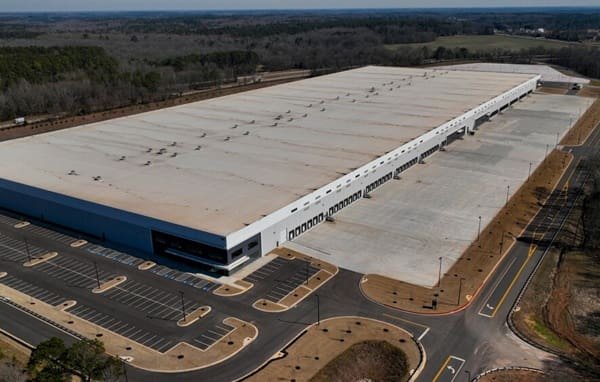
The warehouse strategy was part of a much larger effort to expand immigration detention capacity. DHS planned billions of dollars in new detention infrastructure and purchased 11 warehouses in eight states for more than $1 billion. Several of those projects later faced lawsuits, local opposition and regulatory challenges.
Maryland Lawsuit Over Williamsport ICE Warehouse
Maryland brought one of the most important legal challenges.
On February 23, 2026, Maryland Attorney General Anthony G. Brown sued DHS and ICE over plans to convert a warehouse near Williamsport in Washington County into an immigration detention and processing facility capable of holding as many as 1,500 people.
The state alleged that federal officials had moved forward without completing requirements under the National Environmental Policy Act, or NEPA, and without proper consultation with Maryland authorities.
Maryland raised concerns about sewage capacity, waterways, environmental damage and the infrastructure changes necessary to turn a commercial warehouse designed for cargo into a facility housing hundreds of people.
On March 11, a federal judge issued a temporary restraining order stopping construction and retrofitting work.
The court later issued a preliminary injunction largely preventing DHS and ICE from converting or operating the warehouse as an immigration detention center while the lawsuit proceeds. Limited work needed to protect or secure the building was allowed.
The federal court said the dispute presented a strong example of an agency potentially failing to meet basic NEPA requirements before undertaking a major project.
Michigan Lawsuit Over Romulus Detention Center
Michigan and the City of Romulus filed another major lawsuit on March 24, 2026.
ICE had purchased a commercial warehouse at 7525 Cogswell Street in Romulus and intended to convert it into a facility capable of holding approximately 500 detainees.
Michigan argued that the location was unsuitable because it was close to schools and residential neighborhoods, sat within a floodplain and lacked sufficient bathrooms, sewer capacity and other infrastructure for hundreds of detainees and staff.
The lawsuit alleged violations of the Administrative Procedure Act and environmental requirements, including failure to adequately evaluate alternative facilities and consult state and local authorities.
The case produced a major change before construction began.
In June 2026, DHS and ICE informed the court that they no longer intended to convert the Romulus warehouse into a detention center and instead planned to sell the property.
The lawsuit was subsequently stayed while the parties dealt with the government’s decision to abandon the project. Michigan’s official litigation tracker states that a 60-day stay was entered on July 7, 2026.
Salt Lake City and County Lawsuit
Salt Lake City and Salt Lake County filed their own federal lawsuit against DHS and ICE on June 8, 2026.
The dispute concerned an approximately 833,000-square-foot warehouse at 6020 W. 300 South that DHS had purchased for about $145.4 million.
Local authorities argued that converting the building into a massive immigration detention facility would place pressure on water supplies, utilities, emergency services and surrounding infrastructure. They also alleged that federal officials had failed to comply with environmental and administrative requirements.
But this project was also abandoned.
Federal officials informed Salt Lake City that they no longer intended to convert the warehouse into an immigration detention center. Instead, the property was to be declared excess federal property for disposition through the General Services Administration.
On August 20, 2026, the federal court granted a joint request to stay the lawsuit for 60 days.
Why the Warehouse Projects Faced Legal Problems
A recurring issue in these lawsuits is the difference between purchasing an ordinary warehouse and operating a large detention facility.
Warehouses are designed primarily for storage and distribution. Housing hundreds or thousands of detainees requires major changes involving sanitation, sewage, medical services, security, emergency planning, transportation, water use and environmental effects.
States and cities argue that DHS cannot avoid federal environmental and administrative requirements simply because the government already owns the property.
The federal government, meanwhile, has maintained that increased detention capacity is necessary to support immigration enforcement.
ICE Has Scaled Back the Original Warehouse Strategy
The lawsuits became part of a broader reconsideration of the warehouse detention program.
DHS paused additional warehouse purchases while reviewing the expansion strategy. By June, federal officials were preparing to sell or transfer several properties that had originally been purchased for detention purposes.
Projects in Romulus and Salt Lake City have effectively been abandoned, while the Williamsport project remains blocked by a federal injunction as the Maryland litigation continues.
The warehouse lawsuits therefore represent more than isolated local disputes. They show that even during a major expansion of immigration enforcement, federal agencies can still face judicial scrutiny over environmental review, administrative procedure and the way large detention projects are planned and approved.