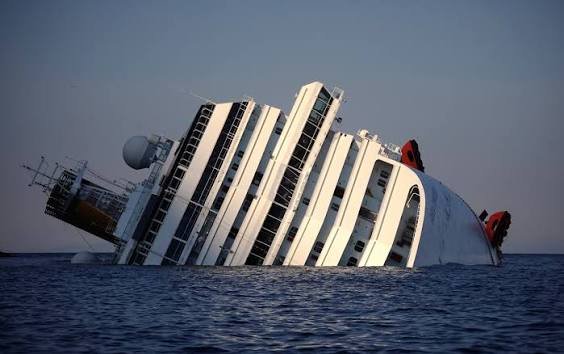
The Costa Concordia disaster produced years of litigation across several countries after the cruise ship struck rocks off Italy’s Giglio Island on January 13, 2012. More than 4,200 passengers and crew were aboard, and 32 people died. What followed was not one single lawsuit but a network of passenger claims, wrongful-death demands, consumer cases, criminal proceedings with civil parties, and disputes over whether Carnival-related companies could be sued in the United States.
For U.S. readers, the most important legal lesson is jurisdiction. Carnival Corporation is closely associated with Florida, but American courts repeatedly concluded that Italy was the more appropriate forum for many Costa Concordia claims. At the same time, Italian and European litigation continued for more than a decade, and compensation disputes were still reaching important rulings in 2026.
Why Passengers Filed Lawsuits After the Shipwreck
The Concordia ran aground after Captain Francesco Schettino took the vessel close to Giglio Island. The collision tore open the hull, power was lost, and the ship eventually rolled onto its side during a chaotic evacuation.
Passengers later brought claims involving negligence, gross negligence, emotional distress, personal injury, loss of property, breach of contract and alleged failures in evacuation and crew training. Some lawsuits also targeted Carnival Corporation and other related entities rather than Costa Crociere alone.
Costa Offered an Early €11,000 Compensation Package
Only two weeks after the disaster, Costa Crociere reached an agreement with several Italian consumer groups offering uninjured passengers a lump-sum payment of €11,000 each. The package also covered the cruise fare and certain travel, medical and onboard expenses.
The offer did not apply in the same way to passengers who had suffered physical injuries or to families of those who died. Those cases were to be handled separately. Passengers were also free to reject the package and pursue legal action instead.
That decision became important years later. Most passengers resolved their claims through settlement, while a smaller number continued litigating in an effort to obtain larger compensation for physical injuries, psychological trauma or other losses.
Why the Major U.S. Lawsuits Struggled
Soon after the wreck, groups of passengers filed cases in Florida and other U.S. courts against Carnival entities, Costa Crociere and additional defendants. One of the central fights was not initially about negligence. It was about where the cases should be heard.
In the Florida litigation known as Abeid-Saba and Scimone, passenger groups tried to keep their claims in the United States. Carnival argued that Italy was the proper forum because the ship was Italian-flagged, Costa Crociere was an Italian company, the wreck occurred in Italian territorial waters, and much of the evidence, witnesses and regulatory material was located there.
Florida’s Third District Court of Appeal ultimately agreed that the cases should be dismissed on forum non conveniens grounds. The court found Italy to be an adequate alternative forum and emphasized the strong connection between the accident and Italy. Even U.S. passengers in the consolidated litigation were directed away from Florida.
The Mass-Action Question
The litigation also produced an important federal jurisdiction ruling. Two groups containing 56 and 48 plaintiffs filed separate Florida state-court actions. Carnival tried to remove them to federal court under the Class Action Fairness Act’s mass-action provision. The Eleventh Circuit upheld the remand because neither individual action contained the 100 plaintiffs generally required for that form of federal jurisdiction, and the plaintiffs themselves had not proposed a joint trial.
The ruling did not decide whether Carnival was liable for the disaster. It dealt with which court had authority to hear the cases.
Italy Became the Center of the Legal Fallout
Italian proceedings dealt with both criminal responsibility and civil compensation. Costa Crociere accepted a €1 million administrative sanction in 2013 under Italian corporate-liability law, avoiding a corporate criminal trial on that issue. Several company employees also reached plea agreements.
Schettino was separately convicted of offenses including multiple manslaughter, causing the shipwreck and abandoning the vessel. His 16-year sentence became final in 2017. During the criminal proceedings, passengers, public bodies and other parties also pursued civil damages. A 2015 ruling imposed millions of euros in provisional compensation on Schettino and Costa Crociere jointly for various civil parties.
Passenger Compensation Did Not End With the Early Settlement
One of the clearest later examples involved passenger Ernesto Carusotti. A Genoa court recognized post-traumatic stress and other damages connected with his experience during the disaster and ordered Costa Crociere to pay damages and legal costs totaling about €92,700. The case became notable because it showed how much more an individual award could be than the early €11,000 package when specific injury was proven.
According to reporting on the litigation, Costa told the court during Schettino’s trial that it had already paid about €84 million in compensation to passengers, crew members and relatives of those who died. Many individual settlements, however, were private, so there is no single public figure that accurately describes what every victim received.
The Litigation Was Still Developing in 2026
The legal consequences of the wreck continued long after the ship itself was removed. In June 2026, Italy’s Court of Cassation addressed how non-economic damages should be valued in a Costa Concordia passenger case. The court stressed that judges using equitable principles must explain their reasoning consistently and cannot sharply reduce compensation through contradictory reasoning after recognizing the extreme fear and emotional suffering experienced during the shipwreck.
That ruling is important beyond the Concordia itself. It shows how long-term psychological harm and the terror of facing an apparent risk of death can become independent questions in civil-damages litigation, even many years after the underlying event.
What the Costa Concordia Cases Teach About Cruise Litigation
- A U.S.-based parent company does not automatically make the United States the proper place to sue.
- Forum-selection rules, witness location, governing law and the place of the accident can determine where a case proceeds.
- Early settlement offers may resolve thousands of claims, but injured passengers can choose litigation if they believe their individual damages are greater.
- Criminal responsibility, corporate sanctions and private civil compensation are separate legal issues.
- Psychological injuries such as post-traumatic stress can become significant compensable damages when supported by evidence.
Conclusion
The Costa Concordia lawsuits became one of the clearest modern examples of how complicated international cruise litigation can be. American courts largely rejected attempts to make the United States the main forum for passenger claims, while Italian courts and settlement processes handled most of the financial consequences.
More than a decade later, the legal story still matters. The cases established important lessons about forum non conveniens, multinational corporate structures, settlement strategy and compensation for severe psychological trauma. They also show why the question after a maritime disaster is not only who may be liable, but where the victims are legally entitled to pursue that liability.