A sloth may look calm enough to be an easy exotic pet, but the legal side of ownership is far less relaxed. Sloths are wild mammals native to Central and South America, and U.S. law does not treat them like ordinary household animals. Legality depends on the state, the exact species, how the animal was acquired, and sometimes the county or city where it will live.
Private sloth ownership is possible in some parts of the United States, often under an exotic-wildlife permit system. Other states prohibit sloths as pets. Federal law can also regulate dealers, exhibitors, transport, and international wildlife trade. Captive-bred status or an online sale does not by itself make ownership legal.
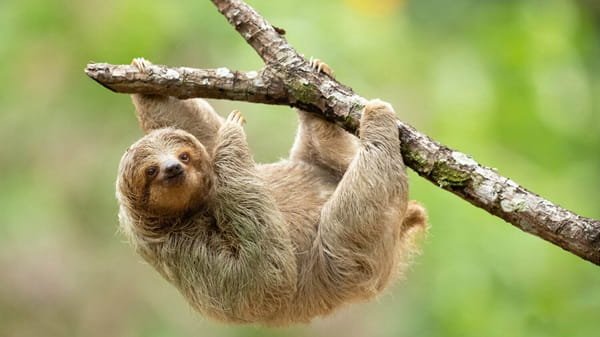
Is There a Federal Ban on Owning a Sloth?
There is no general federal rule making simple private possession of every sloth illegal. Under Animal Welfare Act regulations, a person who buys an animal solely for personal use and does not sell or exhibit animals is generally not required to obtain a USDA dealer or exhibitor license.
Federal rules become more important when the animal is sold commercially, exhibited, transported in regulated commerce, or moved internationally. USDA licensing can apply to dealers and exhibitors, while U.S. Fish and Wildlife Service rules apply to wildlife imports and exports.
Are Sloths Legal to Own in Florida?
Florida uses a permit system for captive wildlife. Animals not placed in Class I, Class II, Conditional, or Prohibited categories generally fall into Class III. Personal possession of Class III wildlife that requires a permit is covered by Florida’s no-cost Class III personal-pet permit.
Florida also specifically identifies sloth species in its wildlife-import rules. Bringing a sloth into the state requires the appropriate import authorization, so a possession permit should not be confused with permission to import the animal.
Can You Keep a Sloth as a Pet in California?
California takes a much stricter approach. Its restricted-species regulations cover sloths, and possession requires a restricted-species permit.
California Department of Fish and Wildlife says these permits are issued only for limited purposes such as research, exhibition, education, or shelter. They are not issued simply to keep restricted wildlife as household pets, so an ordinary resident cannot legally keep a sloth as a pet in California.
What About Texas?
Texas illustrates why state laws must be read carefully. Sloths are not listed in the Texas dangerous-wild-animal statute, which covers animals such as lions, tigers, bears, wolves, bobcats, and certain primates.
Texas Parks and Wildlife says non-protected exotic animals on private property generally have no state possession limits. City or county ordinances, animal-control rules, and import requirements can still change the answer.
Can You Import a Sloth From Another Country?
International acquisition is more complicated than a domestic purchase. U.S. Fish and Wildlife Service import and export rules apply, and protected-species permits may be required.
Some sloth species are regulated under CITES. U.S. Fish and Wildlife Service guidance states that moving a CITES-listed pet across an international border counts as wildlife trade and can require a permit even when the animal is a personal pet.
Does Captive-Bred Status Make a Sloth Legal?
No. Captive breeding can matter for wildlife-trade documentation, but it does not override state law. A captive-bred sloth remains illegal in a state that prohibits private possession.
A USDA-licensed seller also does not make ownership legal everywhere. USDA licensing regulates the seller’s federal activity; it does not cancel state or local restrictions applying to the buyer.
What Happens If You Own a Sloth Illegally?
Penalties vary by jurisdiction. Authorities may seize the animal, issue fines, deny future permits, or pursue criminal charges. Unlawful importation or protected-species trade can create additional federal consequences.
Sloths also need specialized temperature, humidity, climbing space, diet, and veterinary care. Legal possession does not mean ordinary household conditions satisfy welfare or enclosure requirements.
The Bottom Line
Yes, it can be legal to own a sloth in some parts of the United States, but the answer changes sharply by location. Florida uses a permit and import system, California does not allow sloths simply as pets, and Texas is comparatively less restrictive at the state level while local rules can still matter.
Before acquiring a sloth, check the species, state wildlife law, local ordinances, import requirements, and seller documentation. A legal sale in one state does not guarantee lawful possession somewhere else.