A quitclaim deed is a legal document that transfers whatever ownership interest one person has in a property to another person, without guaranteeing that the interest exists or that the property has a clear title. It is commonly used between family members, following divorce, or to resolve a possible ownership claim. Unlike a warranty deed, it offers the person receiving the property no promises about the quality of the title.
A quitclaim deed can convey full ownership when the person signing it actually owns the entire property. However, if that person has only a partial interest—or no interest at all—the recipient receives only that limited interest or nothing. The document cannot transfer rights the signer does not have.
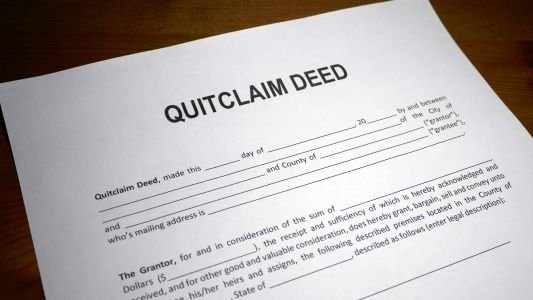
How Does a Quitclaim Deed Work?
The person transferring an interest is called the grantor, while the recipient is the grantee. A deed identifies the parties, describes the real estate, states the interest being released, and is executed according to the law of the state where the property is located. The deed is then typically recorded in the county land records.
For example, if two siblings jointly own a house and one signs a quitclaim deed transferring their interest to the other, the recipient may become the sole owner, provided there are no other ownership interests. If the signer never owned a share, the signed deed does not create one.
When Is a Quitclaim Deed Used?
Quitclaim deeds are especially common when the people involved already know one another or when a possible claim to ownership needs to be released. Typical situations include:
- Transfers between spouses or other family members, including gifts of property.
- Divorce settlements in which one spouse transfers their ownership interest to the other.
- Transfers into or out of certain trusts, subject to the trust terms and applicable law.
- Correcting title issues, such as releasing a possible interest held by a previous owner or heir.
A quitclaim deed is generally a poor substitute for title investigation in an ordinary home purchase between unrelated parties. The recipient accepts the risk of ownership defects that the deed itself does not address.
How to Prepare and Record a Quitclaim Deed
Requirements vary by state and county. A typical transaction begins with obtaining the property’s legal description from an existing recorded deed or another reliable land record. The deed must correctly identify the grantor and grantee and contain the language needed to transfer the intended interest.
The grantor signs the document under the applicable formalities. Many jurisdictions require notarization; some require witnesses or additional declarations. The completed deed is submitted to the appropriate county recorder or clerk along with any required forms, fees, or transfer-tax information. Recording helps establish a public record of the transaction and protects against competing claims, although its legal effect depends on state law.
Errors in names, descriptions, execution, or recording can create serious title problems. County recording offices generally do not determine whether a deed actually transfers valid ownership.
Quitclaim Deed vs. Warranty Deed
A general warranty deed includes promises that the grantor holds good title and will defend against covered title defects. A quitclaim deed contains no such title guarantees. A special warranty deed provides more limited assurances, usually concerning defects arising during the grantor’s ownership. The available deed forms and their effects differ by state.
Because a quitclaim deed contains no title warranty, the recipient may have little recourse against the grantor under the deed if a previous lien, competing owner, or other defect surfaces. A title search and, where appropriate, title insurance can provide additional protection.
Does a Quitclaim Deed Remove a Mortgage?
No. Transferring an ownership interest does not automatically pay off an existing mortgage or release a borrower from personal responsibility on the loan. The lien may remain against the property, and changing ownership may raise questions under the mortgage agreement. A lender’s written release or an appropriate loan arrangement is a separate matter from the deed itself.
Are There Taxes or Other Costs?
A quitclaim transfer may involve county recording fees, state or local transfer taxes, and tax reporting obligations. Gifts can have federal gift-tax implications, while transfers between spouses or incident to divorce may receive special treatment. Property-tax reassessment and future capital-gains consequences also depend on the facts and jurisdiction. A deed should not be treated as a way to avoid taxes or outstanding liens.
What to Check Before Signing
The most important questions are whether the grantor actually owns the stated interest, whether there are mortgages or liens, whether the legal description is correct, and whether the transfer has consequences for taxes, inheritance, or divorce obligations. For a disputed or valuable property, a real estate attorney or title professional can review the transaction before it is recorded.
A quitclaim deed is useful for transferring or releasing an existing interest, but it is not proof that the recipient will obtain clear, uncontested ownership. Its simplicity does not remove the need to establish what rights are being transferred.