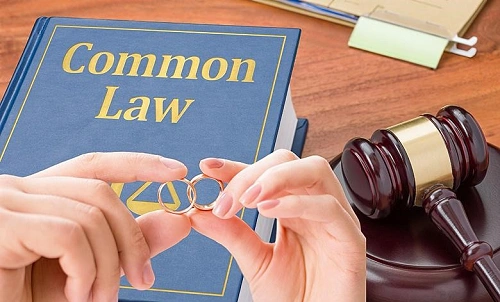
Yes, Texas does recognize common law marriage, which state law refers to as an “informal marriage.” This means a couple can be legally married in Texas without a wedding ceremony or marriage license—but only if specific legal requirements are met. Many couples believe they are married under common law when, legally, they are not. Others are legally married without realizing it.
Because an informal marriage in Texas carries the same legal weight as a formal marriage, understanding how it works is critical.
How Marriage Works in Texas
Texas recognizes two equally valid forms of marriage:
- Formal (ceremonial) marriage, created with a license and ceremony
- Informal (common law) marriage, created through agreement and conduct
Once established, both types of marriage are treated exactly the same under Texas law. An informal marriage creates full spousal rights and obligations, including property rights, inheritance, and the requirement of divorce to end the relationship.
There is no automatic record of an informal marriage unless the couple files a declaration or a court later determines that the marriage existed.
How Texas Defines Common Law (Informal) Marriage
Texas law is more structured than many people realize. Informal marriage is not based on vague assumptions or simply living together for a long time.
Under Texas law, a couple must prove three elements, all at the same time.
The Legal Requirements for Common Law Marriage in Texas
To establish a valid informal marriage in Texas, the couple must show:
1. An Agreement to Be Married
Both partners must have agreed to be married. This must be a present agreement—not a plan to marry someday in the future.
The agreement does not need to be written, but it must be mutual and real.
2. Living Together as Spouses in Texas
The couple must live together in Texas as part of the marital relationship. There is no minimum time requirement, but the living arrangement must reflect a marriage, not casual cohabitation.
3. Holding Out to Others as Married
The couple must represent themselves to others as married. Courts may look at evidence such as:
- Referring to each other as husband and wife
- Filing joint tax returns
- Using the same last name
- Listing each other as spouses on insurance, employment, or housing documents
All three elements must exist together. Missing even one defeats the claim.
How Texas Courts Handle These Cases
Texas courts apply close scrutiny to informal marriage claims, especially in cases involving:
- Divorce
- Property division
- Probate and inheritance
- Survivor benefits
Because marriage dramatically affects legal rights, courts do not assume it lightly. Evidence must be consistent and credible.
Filing a Declaration of Informal Marriage
Texas allows couples to formally register their informal marriage by filing a Declaration of Informal Marriage with the county clerk.
This step:
- Is optional, but highly recommended
- Creates official proof of marriage
- Avoids disputes later
Once filed, the marriage is legally established without the need for a ceremony.
The Two-Year Rule After Separation
Texas has a unique rule many couples overlook.
If a couple separates and no legal action is taken within two years, the law creates a presumption that the marriage never existed.
This does not automatically cancel a marriage, but it makes proving one significantly harder. Timing matters.
Legal Consequences of an Informal Marriage
Once an informal marriage is established in Texas:
- A formal divorce is required to separate
- Community property laws apply
- Spousal support may be available
- A surviving spouse has inheritance rights
There is no option to simply “break up” without legal consequences.
Common Misunderstandings in Texas
Even in a state that recognizes common law marriage, confusion is widespread.
1. Living together long enough creates marriage
Time alone is not enough.
2. Private agreement is sufficient
Public representation matters.
3. No paperwork means no marriage
Conduct can establish marriage.
4. You can just walk away later
Divorce is required once a marriage exists.
Death and Inheritance Issues
Many informal marriage claims arise after one partner dies.
If the marriage is proven:
- The surviving spouse inherits under Texas law
If it is not proven:
- The surviving partner may receive nothing
- Assets pass to legal heirs
Because there is no marriage certificate by default, documentation and consistency are crucial.
Recognition Outside Texas
Other states will generally recognize a valid Texas informal marriage under the Full Faith and Credit Clause, even if those states do not allow common law marriage themselves.
However, proving the marriage outside Texas can be difficult without strong evidence or a filed declaration.
Why Informal Marriage Can Be Risky
Texas’s system offers flexibility—but also uncertainty.
Some couples become married without realizing it. Others assume they are married when they are not. Both situations can lead to unexpected financial, legal, and estate consequences.
Final Takeaway
Yes, Texas recognizes common law (informal) marriage, but only when all legal requirements are clearly met. Living together alone does not create marriage. At the same time, couples who believe they are “just dating” may legally become married through their agreement and public conduct.