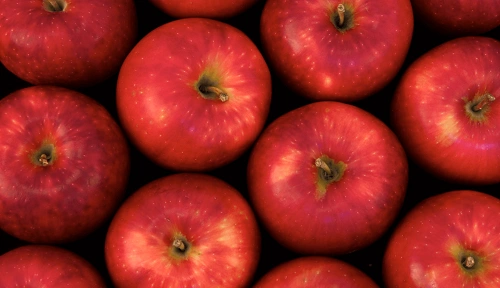
Well, the story of this Cosmic Crisp Apple lawsuit actually goes back to nearly three decades ago. And in this lawsuit, where finally the verdict came after a long time, it was Washington State University going against a company regarding who had the permission to grow and sell cosmic crisp apple trees. Spoiler alert: WSU won this case. But in actuality, the details are pretty interesting, so let’s just get to that for now.
Where Did The Cosmic Crisp Apple Come From?
For those who quite literally don’t know anything about it yet, well, to give you the brief history of it, see, the Cosmic Crisp apple began as a project at Washington State University (WSU) in 1997. Back then, the scientists at the university spent many years breeding Honeycrisp and Enterprise apples to get a variety that was crisp, sweet, and could be stored for a long time. And sure enough, it was eventually called Cosmic Crisp and officially named WA 38.
From the very start, WSU had the patent, trademark, and growing rights. So for around ten years, only licensed Washington growers were permitted to cultivate the apple. The idea was to allow the local farmers to get their investment back. And then, years later, the launch of the apple in 2019 was supported by a colossal marketing campaign, and the apple quickly attracted national attention and commercial value.
Why Did The Lawsuit Start?
Well, the trigger point can be traced back to where WSU collaborated with a startup called Phytelligence, and just so you know, which was founded by university members and has been connected to it since its establishment in 2012. Back then, the firm applied lab-based techniques to produce tree saplings and assumed that their contract permitted them to sell Cosmic Crisp plants.
But later down the line, in 2018 the partnership ended in a dispute. Phytelligence argued that WSU blocked their sales of trees, which were not in line with their contract. On the other hand, WSU denied the allegations and charged the company with secretly selling nearly 135,000 unauthorized trees to Evans Fruit, a big grower, you know? WSU stated that the sales should not have happened as the company had broken the terms of the contract.
What Did The Court Decide?
WSU won the case in court. Plain and simple! Why did the court sided with them though? Oh, actually, the judges said that the contract did not grant Phytelligence the right to sell the trees commercially. They saw that the company could grow them for research only, not for profit. The decisions were made in 2019 and were reaffirmed in 2020.
The court also pointed out that Phytelligence could have requested a commercial license, as other nurseries do, but decided not to. The firm eventually closed down because of money problems. WSU was left with the complete authority of the apple’s licensing process. Still, down the line, the court rejected WSU’s claim for additional compensation for legal fees.
Why Was There Another Lawsuit Later?
Oh, of late, to be precise in 2020, WSU, together with its licensing partner Proprietary Variety Management, filed another lawsuit, this time against Angel’s Grafting and Nursery. This time though, the latter is a small nursery that was accused of illegally growing and selling Cosmic Crisp trees.
The claim pointed out that during 2016 and 2020, unlicensed growers were sold tens of thousands of trees. And sure enough, it became a big deal as farmers in Washington had already invested close to half a billion dollars, relying on the exclusivity of the growing rights. A grower even had to destroy the trees he had planted in order to stay out of the law.