Nowadays, no doubt, pretty much every health-conscious person looks at the nutrition labels to get the idea of what they’re putting in their body, and that’s why these labels are super important. But what if those nutrition labels are nothing less than a lie, and that’s all? What then? Well, that seems to be the case in this David Protein Bar Class Action Lawsuit. So let’s get to the pretty disappointing yet eye opening details here.
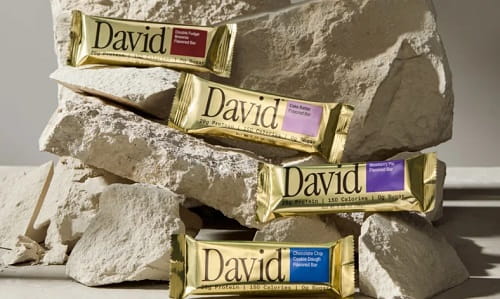
What Are David Protein Bars?
Just in case you’re thinking like, where these protein bars sit, well, they’re mainly for those who want high protein but with relatively low calories, that’s it. And with David Protein Bars, it is possible because there is:
- 28 grams of protein
- 0 grams of sugar
- Around 2 grams of fat
- About 150 calories
And sure enough, with this type of mix in these protein bars, they had to become a hit because there were a lot of people who wanted the same.
It was only in September 2024 when the brand made its debut, and very soon, it started attracting attention on the internet. Linus Technologies Inc., the company responsible for the bars, accused other protein bars of having inferior protein-to-calorie ratios.
It’s not just this though; they also sell things like Chocolate Chip Cookie, Cinnamon Roll, Fudge Brownie, Red Velvet, and Cake Batter. Just so you know.
There were rumors that the company experienced rapid growth and reached a valuation of approximately $725 million, with first-year revenue expected to be around $140 million. Bars are usually sold at a price point between $3.25 and $4.99 each.
When Was The Lawsuit Filed?
The suit was initiated in the federal court at New York on January 23, 2026. A consumer named Daniella Lopez initially brought the lawsuit, and two others, who were added as new plaintiffs, joined the case later.
The legal action is against Linus Technologies Inc., the manufacturer and distributor of David Protein bars.
Basically, plaintiffs want the court to decide if the company deceived the buyers by the nutrition facts on the label. Lopez v. Linus Technologies Inc. is the case’s official name, and the location of the hearing is the U.S. District Court for the Southern District of New York.
The plaintiffs claim that the nutritional tags influenced their buying of the bars. They say that had the real nutritional percentages been different from those on the label, they either would not have bought the product or would have paid less for it.
What Are The Main Allegations?
The central claim in the lawsuit is that the bars may contain more calories and fat than the packaging states.
The label advertises:
- 150 calories per bar
- 2 grams of fat
But the lawsuit argues that the third-party tests revealed greater figures.
The complaint states the real amount of calories might be increased by 83% in comparison to the labeled content. Furthermore, the lawsuit points out that the fat content may be 400% more than the 2 grams indicated on the packaging.
This was pretty much the reason behind the lawsuit that we’re talking about right now, and now you must have gotten the idea like what was so big of an issue with it all, correct?
Did Tests Find Different Nutrition?
Yes, it is. The legal action quotes findings of tests carried out by a certified laboratory.
In the lawsuit, it is said that the lab tests indicated that the bars had about 268 to 275 calories each, which would be more than 100 calories over the 150 calories shown on the label.
Those very tests also discovered that each bar had somewhere between 11 to 13.5 grams of fat instead of the 2 grams mentioned on the packaging.
All in all, the plaintiffs in this case are saying that the buyers depend a lot on the nutrition labels and this matters a lot, and that’s why this case becomes kinda super important these days.