Yes, Kansas does recognize common law marriage, and it is one of the states where this form of marriage is still legally valid today. That said, recognition does not mean it is easy to establish. Kansas applies a clear legal standard, and many couples who assume they are married later discover that the law disagrees.
Because a common law marriage in Kansas carries the same legal consequences as a ceremonial marriage, it’s important to understand exactly how it works and where people most often get it wrong.
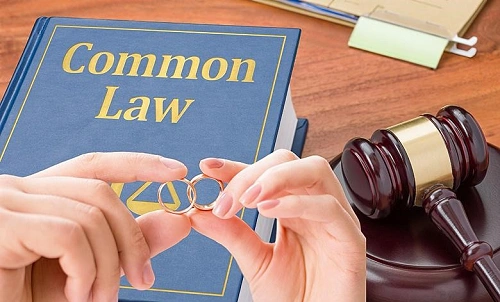
How Marriage Is Defined in Kansas
Kansas recognizes two valid paths to marriage:
- Formal marriage, created through a license and ceremony
- Common law marriage, created through agreement and conduct
Once a common law marriage is established, Kansas treats it no differently than a traditional marriage. Divorce is required to end it, marital property rules apply, and spousal rights attach automatically.
There is no registration system for common law marriage in Kansas. Its existence is determined only when a court is asked to decide.
What Common Law Marriage Means in Kansas
In Kansas, marriage can exist without paperwork—but not without mutual commitment. The law focuses on whether both people deliberately chose to be married and then lived in a way that supported that choice.
Kansas does not view common law marriage as casual or accidental. Courts expect clear proof that the relationship crossed the line from dating or cohabitation into a marital partnership recognized by both parties and the public.
Legal Requirements for Common Law Marriage in Kansas
Kansas courts generally require three elements to be present at the same time:
1. Legal Capacity to Marry
Both partners must be legally eligible to marry. This means:
- They are of legal age
- They are not married to someone else
- They are mentally competent
If either person lacked capacity, a common law marriage cannot exist.
2. Present Agreement to Be Married
There must be a mutual, present agreement to be married. Not an intention to marry later, not a vague understanding—but a current decision to be spouses.
This agreement does not need to be written or spoken formally, but it must be real and mutual.
3. Holding Out to the Public as Married
The couple must represent themselves to others as married. Courts look at behavior such as:
- Referring to each other as spouses
- Using the same last name
- Filing joint tax returns
- Listing each other as spouses on insurance or employment records
No single act is decisive. Courts examine the overall pattern.
There is no minimum time requirement. A common law marriage can form quickly if the evidence supports it.
How Kansas Courts Decide These Cases
Kansas courts evaluate common law marriage claims using the totality of the circumstances. Judges look at the relationship as a whole rather than relying on a checklist.
Evidence may include:
- Financial documents
- Joint ownership of property
- Testimony from friends and family
- Written or digital communications
- Government or employment records
Because marriage dramatically affects legal rights, courts scrutinize these claims closely—especially during divorce or inheritance disputes.
Legal Consequences of a Valid Common Law Marriage
Once a common law marriage is established in Kansas, it creates full marital rights and obligations.
That means:
- The relationship can end only by divorce or death
- Property acquired during the marriage may be divided
- Spousal support may be awarded
- Each spouse may inherit from the other
There is no such thing as a “partial” or informal marriage once the legal standard is met.
Common Misunderstandings in Kansas
Even in a state that recognizes common law marriage, confusion is common.
1. Living together automatically creates marriage: Intent and public conduct are required.
2. One person believing they’re married is enough: Intent must be mutual.
3. No license means no marriage: Conduct can establish marriage.
4. You can just break up later: Divorce is required if a marriage exists.
Many couples only discover these realities when legal conflict arises.
Inheritance and Death of a Partner
This is where common law marriage disputes are most costly.
If a common law marriage is proven:
- The surviving spouse has full inheritance rights
If it is not proven:
- The surviving partner may inherit nothing
- Assets pass to legal relatives
Because there is no certificate, documentation and consistency matter greatly.
Recognition Outside Kansas
Most states will recognize a Kansas common law marriage if it was validly formed under Kansas law, even if those states do not allow common law marriage themselves.
However, proving the marriage outside Kansas can be difficult without strong evidence of intent and public recognition.
Why Common Law Marriage Is Risky
Common law marriage offers flexibility, but it also creates uncertainty.
There is:
- No official start date
- No automatic record
- No guaranteed outcome if challenged
Some couples unintentionally become married. Others believe they are married when they are not. Both situations can lead to serious legal and financial consequences.
Final Takeaway
Yes, Kansas recognizes common law marriage, but only when strict legal requirements are met. Living together alone does not create a marriage. At the same time, couples who think they are “just cohabiting” may legally become married through their actions and mutual intent.
Because the consequences are permanent and significant, anyone in a long-term relationship in Kansas should understand how common law marriage works and consider speaking with a Kansas family law attorney before assumptions turn into legal problems.