Car repossession in the United States can feel sudden and stressful. One day you’re behind on payments, and the next, your vehicle is gone. But even though lenders have the right to take back their collateral, they cannot do whatever they want.
Your rights are protected under state law and the Uniform Commercial Code (UCC). In 2026, these rules remain strict—especially when it comes to how repossession is carried out and what happens after.
Here’s a step-by-step explanation of your legal rights.
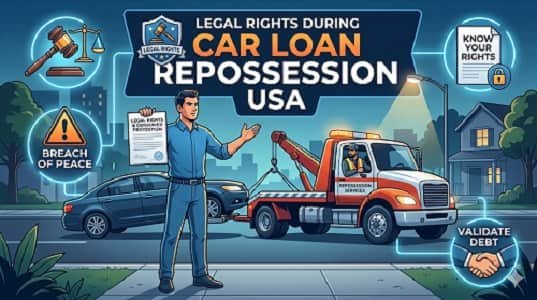
1. The Right to “No Breach of the Peace”
This is your most important protection during repossession.
What It Means
A lender (or repo agent) can take your car without a court order, but only if they do it peacefully.
What They CANNOT Do
- Use physical force
- Threaten you
- Break into a locked garage
- Cut locks or gates
- Remove you from the car if you’re inside
Where They CAN Take the Car
- Driveway
- Street
- Open parking areas
Why This Matters
If the repo agent crosses the line:
- The repossession may be illegal (wrongful repossession)
- You may sue for damages
- In some cases, the lender may lose the right to collect remaining debt
2. Your Right to Personal Property
The lender owns the car—not your belongings inside it.
What You’re Entitled To
- Phone
- Laptop
- Clothes
- Documents
- Any personal items
What the Repo Company Must Do
- Create an inventory of your belongings
- Notify you how to retrieve them
Fees
- Some states allow reasonable storage fees
- But they cannot force you to pay the loan just to get your items back
3. Right to Proper Notices After Repossession
Once your car is taken, the lender must follow strict legal procedures.
Notice of Intent to Sell
You must receive written notice that includes:
- When the car will be sold
- Whether it’s a public auction or private sale
Your Right to Attend
If it’s a public auction:
- You can attend
- You can even bid to buy your car back
Post-Sale Notice
After the sale, you must receive:
- Sale price
- Remaining balance
- Whether you owe money (deficiency) or are owed money (surplus)
4. Reinstatement vs Redemption (Getting Your Car Back)
Depending on your state and contract, you may have options.
Reinstatement (Catch-Up Option)
- Pay overdue amount
- Pay late fees + repo costs
- Continue the loan as before
Availability
- Allowed in some states
- Not guaranteed everywhere
Redemption (Full Payoff Option)
- Pay the entire loan balance
- Plus repossession costs
Key Point
- Redemption is a right under the UCC
- Available in all states
5. Deficiency Balance: Do You Still Owe Money?
Losing your car does not always clear your debt.
Example
- Loan balance: $15,000
- Car sold: $10,000
You still owe:
- $5,000 (deficiency)
What Happens Next
The lender can:
- Sue you for the remaining amount
- Garnish wages (with court order)
- Collect through legal means
Important Protection
The sale must be:
- “Commercially reasonable”
If Not
If the lender sells your car:
- Too cheaply
- Improperly
You can challenge the deficiency.
6. Summary of Your Core Rights
| Situation | Your Legal Right | Key Note |
| Repossession | No force or threats | “Breach of peace” is illegal |
| Personal Items | Full ownership | Must be returned |
| Sale Notice | Written notice required | Must include sale details |
| Auction | Right to attend | Can bid on your car |
| Debt After Sale | Only fair deficiency allowed | Must be reasonable |
7. Bankruptcy Protection (Emergency Option)
If you’re facing repossession or just lost your car:
Filing Bankruptcy Triggers
- Automatic Stay
What It Does
- Stops repossession
- Stops collection
- May allow you to recover the vehicle
Best Use Case
- Multiple debts
- Ongoing financial stress
8. Voluntary Surrender (Strategic Option)
Sometimes, giving up the car willingly is the smarter move.
What It Means
You:
- Return the vehicle to the lender voluntarily
Benefits
- Lower repossession fees
- Avoid aggressive recovery actions
What It Does NOT Do
- Does not protect your credit score
- Does not erase remaining debt
9. Common Mistakes to Avoid
Ignoring Notices
- Leads to faster sale
- Fewer recovery options
Not Collecting Personal Items
- Items may be lost or disposed
Assuming Debt Is Gone
- Many people still owe deficiency balances
Not Knowing Your State Law
- Rights vary slightly by state
Final Thoughts
Car repossession is serious—but it’s not a lawless process. You have clear rights, and lenders must follow strict rules.
The key points to remember:
- Repossession must be peaceful
- Your personal belongings are protected
- You must receive proper notices
- You may still owe money—but only fairly calculated
Most importantly, timing matters. The earlier you act—whether to reinstate, redeem, negotiate, or file bankruptcy—the more control you have.
If you stay informed and respond quickly, you can reduce financial damage and, in some cases, even regain your vehicle.