Collecting rainwater is legal in Texas, and state law encourages the practice through tax provisions and certain protections against homeowners association restrictions. But the rules for a backyard rain barrel are not the same as those for a system supplying drinking water or connected to household plumbing. More complex installations can raise local building, health, and cross-connection requirements.
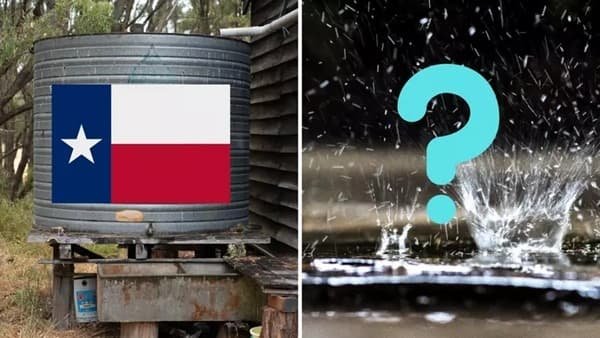
- Rainwater harvesting is lawful and encouraged in Texas.
- HOAs generally cannot impose blanket bans, subject to statutory exceptions.
- Indoor and potable systems can face additional safety requirements.
Texas Law Permits Rainwater Harvesting
Yes. The Texas Water Development Board expressly supports rainwater harvesting and describes legislation enacted to encourage the practice. Property owners commonly collect roof runoff in barrels or cisterns for landscape and other uses. Texas does not impose a general statewide ban on household rainwater collection. Separate rules can apply to building work, potable-water systems, and the way installations interact with public drinking-water infrastructure.
HOA Restrictions Under Texas Property Code Section 202.007
Texas Property Code Section 202.007 generally prevents property owners associations from enforcing provisions that prohibit rain barrels or rainwater harvesting systems. The statute nonetheless allows certain reasonable restrictions on appearance, materials, screening, and location, and it contains exceptions involving common property and some highly visible installations. A homeowner should examine the precise statutory language and governing documents rather than assume an HOA can never regulate a tank. A restriction that effectively violates the statutory protection may be unenforceable, but a compliant placement rule may still matter.
When Local Permits May Be Necessary
A simple outdoor collection barrel generally presents fewer regulatory questions than a permanent system with plumbing connections. Construction, plumbing, and local code requirements may apply based on tank size, structural supports, or installation details. The Texas Water Development Board encourages property owners to seek local guidance on construction requirements. Municipalities and public water suppliers are particularly important when a system is designed to connect with an existing potable-water supply.
Indoor Plumbing and Potable Water Safeguards
Texas Health and Safety Code Section 341.042 establishes safeguards for certain rainwater harvesting systems connected to public water supplies. Such connections require appropriate measures against cross-contamination, and specific consent and qualified installation requirements can apply. These rules protect public water quality if pressure changes or incorrect plumbing might otherwise allow untreated water to enter shared pipes. Rainwater collected from roofs also requires proper treatment before being considered safe to drink. The legality of collecting rain does not certify its potability.
Texas Rainwater Harvesting Tax Exemptions
Texas Tax Code Section 151.355 provides a sales-tax exemption for qualifying rainwater harvesting equipment and supplies. The Texas Water Development Board explains that purchasers must follow applicable exemption procedures, including furnishing the required form to the seller. There may also be locally adopted property-tax exemptions for certain water-conservation installations under Texas Tax Code Section 11.32. Property-tax relief is not automatic across every jurisdiction; homeowners should check with the local appraisal district.
Tank Location and Installation Requirements
Even lawful harvesting equipment must be installed safely. A tank should be supported on an appropriate base, fitted with overflow arrangements, and managed to prevent mosquito breeding and contaminated storage. Local codes or association rules may affect visibility, plumbing, or construction. Neighbors’ drainage rights can also become relevant where overflow is redirected across property lines. An installation that follows rainwater statutes can still create a separate building-code or nuisance issue if it is poorly designed.
How to Set Up a Compliant Rainwater System
Homeowners should establish whether the water will serve only an outdoor garden or will also supply toilets, fixtures, or drinking taps. For outdoor use, review local codes and association guidelines and choose suitable covered storage. For indoor plumbing, consult the public water supplier and an appropriately licensed plumbing specialist before work begins. Ask about cross-connection controls, inspections, and water treatment. Equipment manufacturers’ descriptions cannot substitute for the requirements of the local authority.
Summary of Key Rules
Texas permits and encourages rainwater harvesting. Its statutes offer homeowners association protections and potential tax benefits, while potable-water connections and substantial installations can trigger additional safeguards. The general legality of collecting runoff should not be confused with blanket permission for every system design. For large installations, it is worth confirming whether an above-ground tank requires a foundation or anchoring appropriate for its capacity and location. Water is heavy, and a filled tank can cause significant damage if installed improperly. These practical requirements are distinct from the state’s supportive policy on rainwater collection.