American elections can be fiercely contested, and public figures regularly urge citizens to vote. Yet voting in the United States is a legal right, not a mandatory civic duty enforced by a fine. No federal or state law requires eligible Americans to cast a ballot in presidential, congressional, state, or local elections. A person who decides not to vote is not committing a crime merely by staying home on Election Day.
Does the United States Have Compulsory Voting?
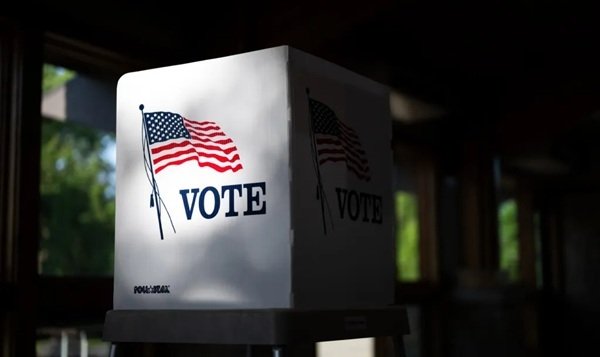
No. The federal government’s USA.gov voting guidance explicitly states that no one is legally required to vote in U.S. elections. This applies even to registered voters. A registration record establishes eligibility to participate under applicable rules; it does not create a legal obligation to submit a ballot whenever an election is held.
Some countries use compulsory voting and may impose penalties for failing to participate. The United States has chosen a different system, in which turnout depends on voluntary participation. Political campaigns can encourage voting, but neither campaign messages nor social pressure create a criminal requirement.
Can Someone Be Fined for Skipping an Election?
Not simply for failing to vote. There is no standard nonvoter penalty in the United States. A resident may miss a primary, a runoff, or a general election without owing a voting fine. That remains true whether the person forgot the date, disliked the candidates, or consciously chose not to participate.
Other legal obligations should not be confused with voting. Jury service, for example, can be compulsory when a person receives a valid summons, subject to lawful excuses and exemptions. Jury duty and election participation are separate processes. Failing to respond to a jury summons may have consequences, but failing to cast a vote does not.
What If a Registered Voter Does Not Participate for Years?
Long periods without voting can affect voter-registration records under lawful list-maintenance procedures, but not through an automatic punishment for declining to vote. Federal law places limits on removing people solely because they have not voted. Certain procedures may involve notices, address verification, and additional election cycles before a registration is canceled.
That means two issues must be kept distinct: a person is not legally required to vote, but they should check whether their registration remains active before returning to the polls. Updating a changed address or name can also avoid problems with eligibility and polling-place assignments.
Does the Constitution Guarantee a Right Not to Vote?
The Constitution and federal statutes protect voting rights against various forms of discrimination and interference. The United States does not have a federal compulsory-voting statute. Courts have also recognized that political expression and association raise significant constitutional questions when government compels participation, though no broad Supreme Court rule is needed to reach the basic practical answer: abstaining from an election is lawful.
Choosing not to vote should not be confused with obstructing someone else’s vote. Threats, intimidation, fraudulent voting, and interfering with election administration may violate federal or state law. The freedom to abstain does not include a right to prevent neighbors from voting.
Can Someone Leave Races Blank or Submit a Blank Ballot?
Voters generally may choose not to select a candidate in every contest. Election officials can explain the procedures for a particular voting system, including how undervotes are recorded. A person who does not support any listed candidate may also explore write-in options where state law permits them.
Voting methods and ballot-counting rules vary, but there is no nationwide requirement to choose a candidate in every race. Someone may participate in a local referendum while skipping a candidate contest, or choose not to vote in the election at all.
Why Do Political Leaders Call Voting a Duty?
The word “duty” is often used in a moral or civic sense. Elections determine public officials and policies, and advocates argue that participation helps make government accountable. That argument is distinct from legal compulsion. Citizens are free to value voting strongly without being required to exercise the right.
The bottom line is clear: not voting is legal in every U.S. state. Eligible voters should understand registration rules if they later decide to participate, but neither a missed election nor a deliberate decision to abstain creates a criminal offense or voting fine.