Yes, but only with court approval. Utah does not automatically recognize common law marriage, but it does allow a relationship to be legally declared a marriage if a court determines that specific legal requirements were met. This makes Utah very different from both states that fully allow common law marriage and states that ban it outright.
In short, a couple in Utah can be treated as married only after a judge confirms it. Until then, the relationship has no marital status.
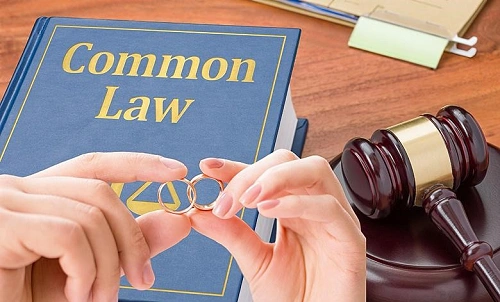
How Marriage Works in Utah
Utah recognizes two possible paths to marriage:
- Formal (ceremonial) marriage, created with a license and solemnization
- Judicially recognized marriage, sometimes referred to as Utah’s version of common law marriage
Unlike Texas or Oklahoma, Utah does not allow marriage to arise automatically through conduct. A court order is required to make it legally valid.
Once recognized, however, the marriage carries the same legal effect as any other marriage in Utah.
Utah’s Unique Approach to Common Law Marriage
Utah law allows a couple to ask a court to retroactively declare that their relationship was a valid marriage if certain conditions are met. This usually happens when:
- The relationship ends and one party seeks divorce
- One partner dies and inheritance rights are disputed
- Property or survivor benefits are at issue
Until a court rules on the issue, the couple is not legally married.
Legal Requirements for Court-Recognized Marriage in Utah
To obtain a judicial declaration of marriage, a couple must prove all of the following:
1. Legal Capacity to Marry
Both partners must have been legally eligible to marry, meaning:
- They were of legal age
- Neither was married to someone else
- Both were mentally competent
2. Mutual Agreement to Be Married
The couple must have mutually agreed to be married. This must be a present agreement—not merely plans for a future wedding.
3. Cohabitation
The couple must have lived together in a relationship resembling marriage. There is no fixed time requirement, but the cohabitation must be meaningful and consistent.
4. Public Representation as a Married Couple
The couple must have held themselves out to others as married. Courts may consider:
- Referring to each other as spouses
- Joint financial accounts or obligations
- How friends, family, and the community viewed the relationship
5. Court Petition Filed on Time
A petition asking the court to recognize the marriage must generally be filed:
- While the relationship is ongoing, or
- Within one year after the relationship ends
Missing this deadline can permanently bar recognition.
How Utah Courts Evaluate These Claims
Utah courts apply careful scrutiny. Because marriage affects property rights, inheritance, and divorce obligations, judges require clear and convincing evidence.
No single factor is decisive. Courts evaluate the totality of the relationship, and weak or inconsistent evidence often leads to denial.
Legal Consequences Once a Marriage Is Recognized
If a court declares that a marriage existed:
- The couple is treated as legally married
- A formal divorce is required to separate
- Marital property rules apply
- Spousal support may be awarded
- Inheritance rights attach
The marriage is treated as having existed from the earlier date, not the court order date.
Common Misunderstandings in Utah
Utah’s system creates frequent confusion.
1. Living together automatically creates marriage
Court approval is required.
2. Calling each other spouses is enough
Evidence must meet legal standards.
3. You can decide later whether you were married
Deadlines apply.
4. No paperwork means no marriage risk
Courts can declare marriage retroactively.
Death and Inheritance Issues
Many court-recognized marriage claims arise after one partner dies.
If the court recognizes the marriage:
- The surviving spouse inherits under Utah law
If not:
- The surviving partner may receive nothing
- Assets pass to legal heirs
Because there is no marriage certificate by default, evidence and timing are critical.
Recognition Outside Utah
Once Utah legally recognizes a marriage, other states must generally honor it under the Full Faith and Credit Clause, even if those states do not allow common law marriage themselves.
Why Utah Uses This System
Utah’s approach attempts to balance:
- Flexibility for nontraditional relationships
- Protection against accidental or assumed marriages
By requiring judicial approval, the state avoids automatic marriages while still protecting couples who truly intended to be married.
Final Takeaway
Utah does not automatically recognize common law marriage, but it does allow a court to declare a marriage valid if strict legal requirements are proven and deadlines are met.
For couples in Utah, marriage does not arise by accident—but it also does not always require a ceremony. The deciding factor is whether a judge agrees that the relationship met the legal standard.