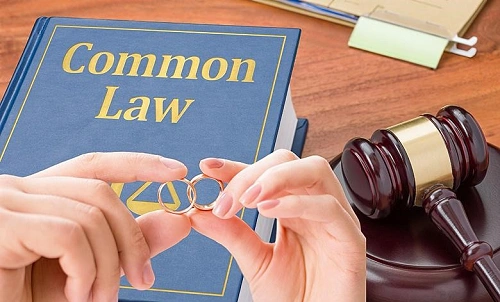
No, Virginia does not allow couples to form new common law marriages within the state. Living together, sharing finances, or presenting yourselves as married does not create a legal marriage in Virginia—no matter how long the relationship lasts.
However, Virginia will recognize a common law marriage that was validly established in another state where such marriages are legal. Under long-standing constitutional principles, those out-of-state marriages are generally honored even though Virginia itself does not permit common law marriage to be created.
How Marriage Is Defined in Virginia
Virginia treats marriage as a formal legal status, not something that develops gradually through conduct or time.
To be legally married in Virginia, a couple must:
- Obtain a valid marriage license
- Meet eligibility requirements under Virginia law
- Have the marriage solemnized by an authorized officiant
If these steps are not completed, the relationship is legally considered unmarried, regardless of commitment, cohabitation, or how the couple is viewed socially.
Virginia has never recognized common law marriage formed within its borders.
Why Common Law Marriage Does Not Exist in Virginia
Common law marriage is based on the idea that a couple’s intent, cohabitation, and public behavior can create a marriage without formal state approval. While some states historically accepted this approach, Virginia has consistently rejected it.
Virginia’s legal philosophy is that marriage should begin with a clear, documented act, not assumptions drawn from lifestyle or longevity. Requiring a license and ceremony avoids uncertainty about when a marriage began—or whether it existed at all.
Long-Term Relationships Are Not Legal Marriages
Virginia law draws a firm distinction between:
- Committed relationships, and
- Legal marriages
A couple may:
- Live together for decades
- Own property jointly
- Share finances
- Raise children
- Be socially viewed as spouses
And still have no spousal rights under Virginia law unless they legally married.
Commitment alone does not create marital status.
What Happens When Unmarried Couples Separate?
Because common law marriage does not exist in Virginia, separation between unmarried partners is not treated as a divorce.
Property Issues
Virginia’s marital property rules apply only to married spouses. For unmarried couples:
- Property belongs to whoever owns it or paid for it
- Joint property is divided based on ownership interests
- Courts do not presume an equal or fair split
No Spousal Support
Alimony applies only to legal marriages. Unmarried partners generally have no right to spousal support after separation.
Children Are Treated Separately
Child custody and child support are handled independently of marriage. Parental responsibilities exist regardless of marital status.
Death and Inheritance: Where Assumptions Become Costly
If one partner dies without a will:
- The surviving unmarried partner does not automatically inherit
- Assets pass to legal heirs under Virginia intestacy law
Length of cohabitation does not matter. Without marriage or proper estate planning, a surviving partner may receive nothing.
Recognition of Out-of-State Common Law Marriages
Virginia will recognize a common law marriage if:
- It was validly formed in another state that allows common law marriage, and
- It met that state’s legal requirements at the time
For example, a couple legally married under common law in Texas or Colorado may still be treated as married after moving to Virginia.
Virginia itself does not create, revive, or expand common law marriages.
Common Misunderstandings in Virginia
Many legal disputes begin with assumptions like:
- “We’ve lived together long enough”
- “Everyone thinks we’re married”
- “Marriage is just paperwork”
In Virginia, that paperwork is what creates marriage.
Legal Planning for Unmarried Couples in Virginia
Since common law marriage is not an option, planning becomes essential.
Cohabitation Agreements
These can define:
- Property ownership
- Financial responsibilities
- What happens if the relationship ends
Virginia courts often enforce clear, voluntary agreements.
Estate Planning
Unmarried couples should strongly consider:
- Wills
- Beneficiary designations
- Powers of attorney and health care directives
Without these documents, a surviving partner may have no legal authority or inheritance rights.
Why Virginia Maintains This Approach
Virginia prioritizes clarity and predictability in family law. Formal marriage requirements:
- Reduce litigation
- Prevent inheritance disputes
- Avoid forcing courts to reconstruct personal relationships
The system favors certainty over assumption.
Final Takeaway
Virginia does not permit common law marriages to begin within the state. Marriage exists only when the legal requirements—license and solemnization—are deliberately followed.