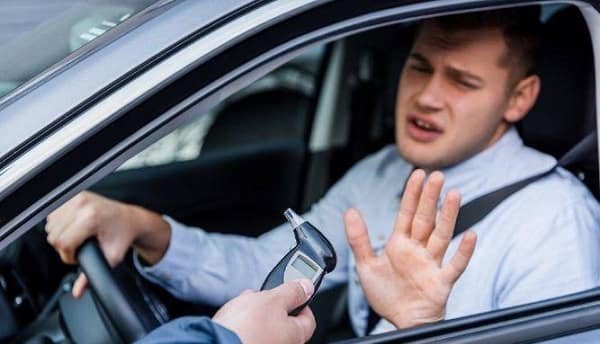
The question usually comes up at the worst possible moment. You are standing on the shoulder of a road somewhere in North Carolina, an officer has just asked you to blow into a machine, and somewhere in the back of your mind is a half-remembered piece of advice from a friend or a movie: you do not have to take the test.
That advice is true as far as it goes, but it leaves out almost everything that matters. Yes, you can refuse a breathalyzer in North Carolina. Nobody will pry your mouth open. Saying no, however, starts a process of its own, and parts of it move faster than the criminal case. The Raleigh criminal defense attorneys at Manning Law Firm, a father and son practice with more than 40 years of experience in the Wake County courts, represent drivers on both halves of this problem: the DWI charge itself and the license consequences that follow it. Those two halves run on separate tracks, and understanding how they fit together is the point of this article.
What North Carolina’s Implied Consent Law Says
North Carolina treats driving as a deal. By operating a vehicle on a highway or public vehicular area, you have already consented to a chemical analysis of your breath or blood if you are ever charged with an implied consent offense. Impaired driving, which North Carolina charges as DWI rather than DUI, is the most common one. That is the core of N.C.G.S. 20-16.2, the state’s implied consent statute, and it applies whether or not anyone ever explained it to you.
“Charged” has a specific meaning here. You are charged once you are arrested or once criminal process has been issued against you. At that point, before any evidentiary test is administered, the officer or chemical analyst must inform you of your rights, orally and in writing. The notice tells you, among other things, that you can refuse any test but your license will be revoked for one year, that the fact of your refusal will be admissible in evidence at trial, and that your driving privilege will be revoked immediately for at least 30 days if you refuse or if you test at 0.08 or more (0.04 for commercial drivers, 0.01 if you are under 21).
The notice also contains a right most drivers never hear about until it is too late to use it. You may call an attorney for advice and select a witness to view the testing, but the testing cannot be delayed for more than 30 minutes. When the 30 minutes are up, the test proceeds whether or not your lawyer ever picked up the phone.
The Roadside Test and the Station Test Are Not the Same
A lot of the confusion around refusal comes from lumping two very different tests together.
The first is the handheld screening device an officer may offer on the side of the road. That device is covered by a separate statute, N.C.G.S. 20-16.3, and its role is limited. The result helps the officer decide whether there are reasonable grounds to believe you committed an implied consent offense, and the specific number it produces cannot be used to prove your alcohol concentration in court. Declining this roadside screening test does not trigger the one-year refusal revocation, although the refusal can factor into the officer’s decision about whether to arrest you.
The second is the evidentiary test, usually a breath test on a stationary machine at the station or detention center, or a blood draw. This is the test the implied consent law is really about. Refusing it after you have been charged and advised of your rights is what the law calls a willful refusal, and that is the refusal carrying the penalties described in the rest of this article.
Field sobriety tests, the walking and eye-tracking exercises by the roadside, sit in their own category. You can decline those too, but under N.C.G.S. 20-139.1, evidence that you refused field sobriety tests is admissible in court, just like evidence of a chemical test refusal.
What Happens the Moment You Refuse
Refusing the evidentiary test starts two clocks at once.
The first is immediate. Under N.C.G.S. 20-16.5, a refusal, like a test result of 0.08 or more, triggers a civil license revocation on the spot, lasting at least 30 days. It is ordered by a judicial official, usually the magistrate you see shortly after the arrest, long before anyone has weighed the merits of your case.
The second clock belongs to the DMV. The officer and the chemical analyst swear out an affidavit documenting the refusal and mail it to the Division of Motor Vehicles. The DMV then notifies you that your license is revoked for 12 months, effective on the 30th day after the revocation order is mailed, unless you request a hearing in writing before that effective date.
And refusing does not necessarily keep your blood alcohol level out of the case. The statutory notice itself warns that an officer can compel testing under other laws, which in practice means applying for a search warrant for a blood draw. Officers in Wake County and across the state regularly do exactly that after a refusal. A driver who declines the breath test can still wake up to a blood result in the file.
The 12-Month Revocation Runs on Its Own Track
Here is the part that surprises people the most. The refusal revocation is a civil action by the DMV, and it does not depend on the outcome of your criminal case. You can have the DWI dismissed or be found not guilty at trial and still lose your license for a year because of the refusal.
If you request a DMV hearing in time, you keep your license until the hearing is held. The hearing itself is narrow. The hearing officer considers five questions: whether you were charged with an implied consent offense, whether the officer had reasonable grounds, whether the case involved death or critical injury to another person, whether you were properly notified of your rights, and whether you willfully refused. If those conditions are met, the revocation is sustained, and you then have 30 days to petition the superior court for review on the record.
The notification question matters more than it might sound. Proper advisement of rights is one of the issues that can undo a revocation entirely, which is one reason the paperwork from the night of the arrest gets read very closely.
Limited Driving Privileges After a Refusal
A 12-month revocation does not always mean 12 months without driving at all, but the path back behind the wheel is narrow.
Under N.C.G.S. 20-16.2(e1), a judge may issue a limited driving privilege after six months of the refusal revocation, and only if a list of conditions is satisfied. Among them:
- You held a valid license, or one expired for less than a year, at the time of the refusal
- You had no impaired driving conviction and no prior refusal within the preceding seven years
- The charge did not involve death or critical injury to another person
- The underlying charge has been finally resolved, either without a conviction or with a conviction at a punishment level that still allows a limited privilege
- You have obtained a substance abuse assessment and completed any recommended treatment
If the case involved death or critical injury to someone else, no limited driving privilege is available at all, and the 12-month revocation stacks on top of other revocation periods rather than running alongside them.
Does Refusing Actually Help a DWI Case?
There is no honest blanket answer, which is exactly why the question deserves thought before you are ever in the situation.
Refusing denies the state a breath number, and in some cases that matters. A prosecution built on officer observations and driving pattern can be harder to prove than one built on a printout showing 0.12. On the other side of the ledger, the refusal itself comes into evidence, prosecutors argue it shows a guilty mind, a blood warrant may produce a number anyway, and the 12-month revocation arrives regardless of how the criminal case ends. A driver with a prior refusal or a prior impaired driving conviction within seven years loses even the possibility of a limited privilege.
The 30-minute window to call an attorney exists for precisely this moment. It is short, and the test will not wait beyond it, but it is real, and using it beats guessing.
Frequently Asked Questions
Q: Is refusing a breathalyzer a crime in North Carolina?
A: No, there is no separate criminal charge for refusing. The penalties run through the license system instead: the immediate revocation of at least 30 days, the 12-month DMV revocation, and the use of the refusal as evidence in the DWI case.
Q: Can the police still test me if I refuse?
A: Often, yes. A willful refusal ends testing under the implied consent statute, but officers can seek a search warrant for a blood draw, and courts routinely issue them. If a driver is unconscious or otherwise incapable of refusing, the statute allows the officer to direct a blood sample without the usual notice and request.
Q: How long do you lose your license for refusing a breathalyzer in NC?
A: The DMV revocation for a willful refusal is 12 months. That comes on top of the immediate civil revocation of at least 30 days that follows the charge itself. Depending on the circumstances, a judge may grant a limited driving privilege after six months of the refusal revocation.
Q: Does refusing the roadside breath test carry the same penalty?
A: No. The handheld roadside screening device falls under a different statute, and declining it does not trigger the 12-month refusal revocation. The refusal that matters for your license is the refusal of the evidentiary test, the one administered after you have been charged and advised of your rights.
Q: If my DWI charge is dismissed, do I get my license back?
A: Not automatically. The refusal revocation is a separate civil matter handled by the DMV, and it can stand even when the criminal charge is dismissed or ends in a not guilty verdict. A dismissal does help in one respect: final resolution of the charge without a conviction is among the conditions for seeking a limited driving privilege after six months.
Know the Rules Before You Need Them
The implied consent decision has to be made in minutes, usually late at night, with no chance to research anything beyond the 30-minute window the statute allows. Knowing the framework ahead of time, what a refusal costs, what it does and does not prevent, and how the DMV process runs on its own schedule, is the closest thing to preparation available. And if the decision is already behind you, remember that the written hearing request has to reach the DMV before the revocation takes effect on the 30th day after the order is mailed, so the time to act is limited from the start.