Former California congressman Eric Swalwell faces several investigations arising from allegations of sexual assault and misconduct, with authorities in multiple jurisdictions examining claims that he denies. What began as a congressional ethics matter in April 2026 developed into criminal inquiries involving federal investigators and local prosecutors. Searches, seized electronic devices, and prosecutors reviewing evidence have drawn public attention, but none of those steps establishes guilt. As of November 6, 2026, the central legal questions remain what evidence investigators can substantiate and whether prosecutors will file charges.
How the Allegations Led to an Ethics Inquiry
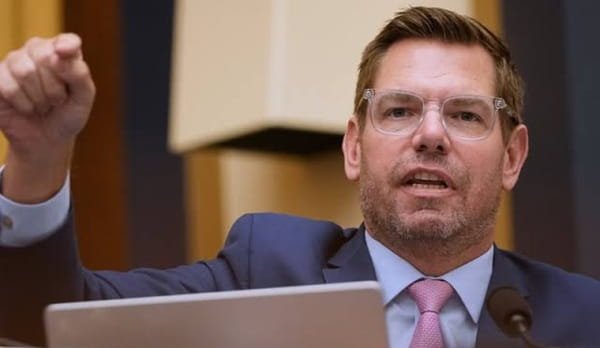
On April 13, the bipartisan House Committee on Ethics publicly announced an investigation into allegations that Swalwell may have engaged in sexual misconduct, including conduct involving an employee under his supervision. The committee expressly cautioned that opening an investigation was not a finding that any rule or law had been broken. Such inquiries examine conduct standards that apply to members of Congress; they are separate from criminal cases.
Swalwell subsequently resigned his House seat and withdrew from the California governor’s race after multiple women publicly alleged misconduct, including sexual assault. He has rejected the sexual-assault allegations. His resignation ended the House Ethics Committee’s ability to pursue that particular inquiry against him as a sitting member, but it did not end the jurisdiction of law enforcement agencies.
Federal Searches and Evidence Collection
In August, federal agents executed search warrants connected with the investigation. News organizations reported that agents seized an iPhone and a MacBook Pro from Swalwell at San Francisco International Airport and conducted another search at his Washington residence. In late October, agents also searched a Beverly Hills property connected to a donor where Swalwell had reportedly spent time. The property was not described as his residence.
A judicially authorized search warrant allows investigators to seek specified evidence after meeting the legal standard for probable cause. It does not amount to a criminal charge or verdict. Electronic evidence can require further forensic examination, and disputes about the permissible scope of a search can arise before a court if a prosecution follows.
What Local Prosecutors Are Reviewing
Los Angeles County prosecutors said in October that their sex-crimes unit was considering a case forwarded by sheriff’s investigators on September 21. The Manhattan district attorney’s office has also acknowledged examining allegations involving an incident said to have occurred in New York. These are distinct inquiries, with potentially different evidence, witnesses, laws, and jurisdictional requirements.
Prosecutors must evaluate whether admissible evidence supports each required element of an offense and whether the available proof is sufficient to bring a case. An accusation, an investigative referral, or an evidentiary search cannot be treated as a formal determination that the accused committed a crime.
Legal responsibility may differ across alleged incidents even when investigators review them together. Questions can include where an encounter occurred, which statute was in force, whether any limitation period applies, and whether evidence corroborates an account. Investigators may compare contemporaneous messages, travel records, witness statements, and digital records, while defense attorneys can contest reliability and admissibility. A public accusation may also generate civil litigation under a different standard of proof. None of those potential avenues establishes what happened in any individual allegation against Swalwell, and prosecutors have not announced a final adjudication of the accusations.
A Separate Earlier Counterintelligence Matter
Public discussion has sometimes mixed the current misconduct allegations with Swalwell’s earlier contact with Christine Fang, a suspected Chinese intelligence operative. That older matter prompted security concerns and a separate congressional ethics review, which closed in 2023 without action against him. Investigators did not charge him in that matter. It should not be presented as evidence of guilt in the unrelated 2026 inquiries.
What Happens Next
Possible developments include decisions by local prosecutors, further federal investigative steps, court disputes over evidence, or announcements that a particular inquiry has closed. Any charges would have to identify specific alleged offenses; a trial would require proof beyond a reasonable doubt. Until then, Swalwell retains the presumption of innocence, and the reported allegations remain unproven. The accurate description is an ongoing set of investigations, not a conviction or established criminal finding.