The NFL and NFL Players Association announced a joint review on October 25, 2026, of how Philadelphia Eagles quarterback Jalen Hurts was evaluated and cleared to play after developing a blood clot in his calf. His subsequent diagnosis of deep vein thrombosis and blood clots in both lungs raised questions about medical decision-making during an international road trip. The review is an examination of player-safety procedures, not a criminal investigation. No public finding has established that the Eagles’ medical staff violated medical standards or league rules.
Timeline of the Injury and Diagnosis
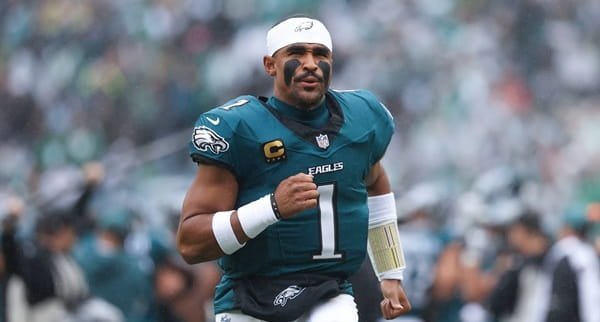
According to the Eagles and league reporting, Hurts took a cleat to his calf during the October 4 game against the Los Angeles Rams. He reported the problem to the team’s medical staff after practice on October 8, returned to practice the next day, and traveled with Philadelphia for its game in London.
Specialists in London initially diagnosed a superficial vein thrombosis in the left calf. Hurts played against the Jacksonville Jaguars on October 11. Further evaluations afterward identified deep vein thrombosis, a clot in a deeper vein, along with bilateral pulmonary emboli, meaning clots affected both lungs. The Eagles and Hurts’ agent announced the updated diagnosis on October 19.
Why the Players Union Requested Review
The central question is whether the information available at each stage supported the medical clearance decisions. The NFLPA sought scrutiny after the public learned that Hurts had played following the initial clot diagnosis. On October 25, the league and union confirmed they would review the medical handling together.
A joint review can examine medical records, communications among team physicians and outside specialists, the timing of assessments, and whether established return-to-play procedures were followed. It must distinguish what clinicians knew when a decision was made from what later testing revealed. A subsequent, more serious diagnosis does not automatically establish negligence in an earlier assessment.
The NFL’s Response and the Medical Staff’s Position
NFL Commissioner Roger Goodell said the league welcomed the scrutiny while expressing confidence that its protocols had been followed. The league’s chief medical officer, Dr. Allen Sills, defended the treatment process, and officials described consultations with medical specialists in London. These statements represent the league’s public position, not the final outcome of an independently completed review.
Questions have also been raised about travel, fatigue, and the timing of the London game. Such factors may be relevant to the medical timeline, but drawing conclusions about causation requires clinical evidence. The public record does not support declaring a specific individual responsible for Hurts’ condition.
Health Status and Playing Restrictions
In the October 19 statement, the Eagles and Hurts’ agent said he was clinically stable and expected to recover well. They reported treatment with anticoagulants, commonly called blood thinners, and said he would not participate in contact football while receiving that treatment. Hurts was placed on injured reserve and was expected to miss the remainder of the season.
A team’s desire to win cannot override medical clearance requirements. At the same time, professional football injuries often involve complex decisions made by physicians, athletes, and specialists using information that changes over time.
Sports-medicine oversight also involves player consent and the respective responsibilities of team doctors, consultants, and union representatives. A medical decision may be reviewed for whether information was communicated promptly and whether the athlete understood participation restrictions. Still, public reports do not reveal the full clinical record. Conclusions about the quality of care should rest on verified documentation and qualified medical review, rather than social-media claims about the seriousness of a clot or the risks of air travel.
What a Review Can Determine
The league and union may assess whether procedures were complied with, whether documentation or communication was adequate, and whether improvements are needed. Any dispute over professional medical liability would be a distinct legal question requiring proof of an applicable duty, breach, causation, and injury. It should not be assumed merely from the announcement of a review.
As of November 6, no conclusive public finding from the joint review had established wrongdoing. The confirmed story is the serious diagnosis, Hurts’ recovery plan, and a formal examination of the decisions made before and after the London game.