Alaska’s closely contested 2026 U.S. Senate election has become the subject of state and federal investigations after reports that political operatives may have encouraged a candidate whose name closely resembles that of Republican incumbent Senator Dan Sullivan. Democrat Mary Peltola’s campaign has been linked to the allegation, which she denies knowing about. Governor Mike Dunleavy ordered a state inquiry, federal prosecutors acknowledged a criminal investigation, and Congress sought testimony. The dispute raises questions about voter deception, candidate rights, and election certification, but no investigation alone proves a crime.
Why Two Candidates Named Dan Sullivan Matter
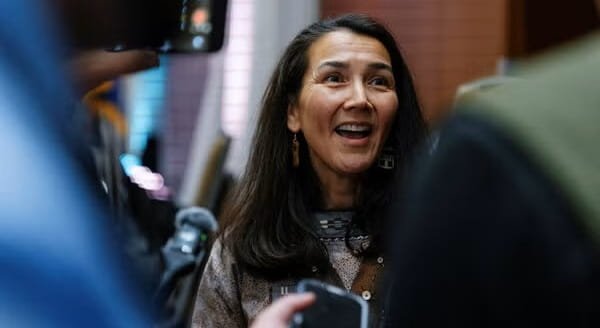
The ballot includes incumbent Senator Dan S. Sullivan and Dan J. Sullivan, a retired teacher from Petersburg running as an unaffiliated candidate. Reports in late October cited communications suggesting Democratic operatives wanted the similarly named challenger to draw votes from the incumbent. Peltola denied knowledge of an effort to manipulate the contest, while Dan J. Sullivan maintained that his candidacy was legitimate.
Alaska uses a top-four primary and ranked-choice general election. Dan J. Sullivan had qualified through the primary, and his legal appearance on the ballot was not itself evidence of unlawful conduct. Allegations concern the purpose and methods of any recruitment effort, not simply the existence of two similar names.
State, Federal, and Congressional Reviews
On October 29, Governor Dunleavy directed an investigation into whether the reported effort violated Alaska law. Federal authorities also sent subpoenas and document-preservation requests connected with the Senate race. On October 30, Alaska’s chief federal prosecutor, U.S. Attorney Michael Heyman, publicly confirmed a criminal inquiry into alleged efforts to mislead voters.
Separately, the Republican-led House Oversight Committee announced an investigation and requested interviews with former Peltola campaign manager Elisa Rios and political operative Jerid Kurtz. A congressional oversight request, an executive-branch criminal investigation, and a state inquiry serve different functions. None is equivalent to a criminal indictment or an adjudicated finding of campaign misconduct.
The Lawsuit Over Election Certification
The Justice Department filed a civil case seeking to prevent or delay certification under certain circumstances if the incumbent lost and the similarly named candidate drew enough votes to affect the margin. On November 1, U.S. District Judge Sharon Gleason dismissed that lawsuit. The dismissal addressed the attempt to obtain that particular court order; it did not resolve the separate allegations or terminate the ongoing criminal inquiry.
The government indicated it would challenge the dismissal. Election administration still depends on Alaska’s established ballot-counting and certification process, unless a court with proper authority orders a different result.
What the Law Would Require
A lawful candidacy is protected by election rules and constitutional principles. A prosecution for election misconduct would require evidence satisfying the elements of an applicable criminal law, including any necessary intent to deceive or interfere with voting. Reports about strategy, politically charged accusations, or an unusual ballot arrangement do not by themselves establish criminal liability.
Investigators may examine communications, campaign coordination, payments, candidate filings, and whether anyone knowingly made false statements. They must also distinguish provocative but lawful political activity from conduct that a statute actually prohibits. The accused individuals and organizations retain the opportunity to challenge allegations and evidence.
The distinction is particularly important under ranked-choice voting. A voter may rank several candidates, and a third candidate’s first-choice tally cannot be assumed to transfer automatically to one major party. Measuring an alleged effect on the result requires actual ballots and the statutory tabulation, not guesswork about what voters intended. Investigators can look for unlawful coordination or deception, but electoral officials must count eligible votes according to the rules in force. The criminal inquiry and the mathematical count must therefore proceed on their own evidence.
The Election Result Remains Unresolved
As of November 6, the Associated Press had not called the Senate race. Peltola held a narrow first-choice lead over the incumbent in incomplete returns, with additional ballots still to be counted and ranked-choice tabulation potentially necessary. Alaska accepts eligible mailed ballots after Election Day, so an early margin cannot be treated as a final certified result.
The next developments may come from prosecutors, election officials, or courts considering specific disputes. A responsible account should keep the investigation, civil lawsuit, and unfinished vote count separate—and should not label any candidate or campaign guilty without a legal finding.