The Stadium of Fire fireworks accident in Provo, Utah, has now moved firmly into the courtroom. Two lawsuits filed in July 2026 seek damages for spectators who say they were injured when a professional firework malfunctioned during the July 4, 2024 celebration at Brigham Young University’s LaVell Edwards Stadium.
The litigation is substantial enough to merit serious legal coverage. It is supported by an official fire investigation, a confirmed federal product-liability case, and a separate Utah state-court action involving additional spectators. At the same time, the allegations remain unproven, and the lawsuits should not be treated as findings that any defendant is legally responsible.
What Happened at Stadium of Fire?
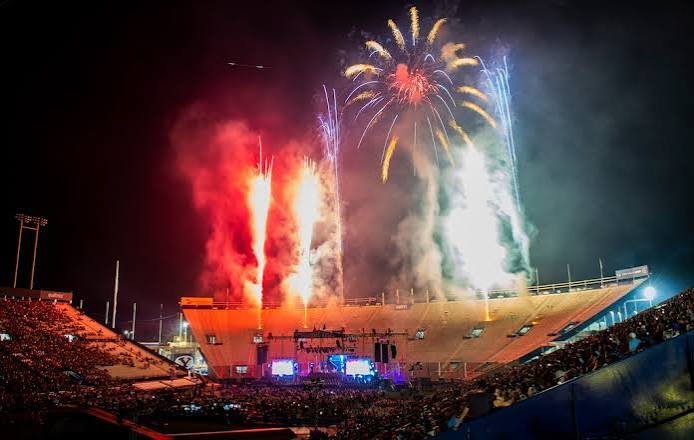
During the 2024 Stadium of Fire show, fireworks were being discharged around the time of a military flyover when one multi-shot device failed. Projectiles that were supposed to travel upward instead entered spectator areas and other parts of the stadium.
A later Provo Fire Marshal investigation identified the device as a 36-shot “Howling Tails to Hammer” firework. Investigators concluded that an uncontrolled deflagration occurred in successive tubes, breaking the device apart and allowing shots to travel in unintended directions.
Public reporting on the completed investigation described more than two dozen people as injured, including four who were directly struck by parts of the device. Other reported injuries involved flying debris and hearing effects from the blast.
Two Lawsuits Were Filed in July 2026
The legal dispute became much more concrete in early July 2026, when plaintiffs filed separate state and federal lawsuits arising from the incident.
The federal case, Schriever et al. v. America’s Freedom Festival, Inc. et al., was filed in the U.S. District Court for the District of Utah. The plaintiffs are Matthew Schriever, Charla K. Schriever and Mason K. Schriever. The defendants listed on the federal docket include America’s Freedom Festival, Stellar Fireworks, Spirit of ’76, Music Driven Production doing business as Baruch Gayton Productions, and entities associated with the Chinese fireworks manufacturer.
The federal docket classifies the matter as a personal-injury product-liability case and states that federal jurisdiction is based on diversity of citizenship. The plaintiffs have demanded a jury trial.
A separate lawsuit was filed in Utah state court on behalf of Utah residents. That action is broader in one important respect: reports of the complaint say it names public and institutional defendants including the state of Utah, Provo City, Utah County and Brigham Young University, in addition to private entities involved with the event and fireworks.
What the Plaintiffs Are Alleging
The state-court complaint alleges that the firework catastrophically failed and discharged projectiles horizontally into the assembled spectators rather than vertically into the air. The plaintiffs claim they suffered physical injuries, mental harm and other damages.
According to reporting on the filing, the state-court plaintiffs seek $300,000 for each named plaintiff. The amount requested is not an award. It is part of the plaintiffs’ demand and remains subject to defenses, proof of damages, applicable immunity rules and any eventual settlement or judgment.
Why Product Liability Is a Central Issue
The official investigation makes product liability an obvious part of the legal fight because it attributed the accident to a failure within the fireworks device itself. Utah product-liability law generally requires a plaintiff alleging a defective product to show that a defect existed when the product was sold by the manufacturer or initial seller and that the defect made the product unreasonably dangerous.
That does not automatically establish liability here. The manufacturer, importer, distributor and other defendants may dispute where the defect originated, whether the product was damaged after manufacture, whether it was stored or handled correctly, and which party had responsibility for inspection and placement.
Negligence Claims Could Reach Beyond the Manufacturer
The lawsuits are not limited to the company that made the firework. A negligence theory can focus on the conduct of organizers, pyrotechnic contractors, distributors, venue-related parties or others who allegedly had responsibility for selecting, inspecting, positioning, approving or operating the display.
A negligence claim generally requires proof of a duty of care, a breach of that duty, causation and legally recognized damages. In a case like this, the factual questions may include whether the device was suitable for use inside the stadium, whether adequate separation distances were maintained, what inspections occurred and whether any warning or labeling issue should have been discovered before ignition.
The Fire Marshal Report Could Become Important Evidence
The completed investigation is likely to be a major factual reference point, although its findings do not decide the civil lawsuits. Investigators reported that the failed device contained self-propelled components and recommended tighter product review and greater exclusion distances for future events.
The report was followed by changes to later Stadium of Fire shows. Organizers said the specific type of firework would no longer be used inside the stadium, self-propelled fireworks were removed from the in-stadium display, a new fireworks vendor was brought in for 2025, and fire officials increased inspections.
Those later precautions may be relevant background, but they should not be treated by themselves as an admission of negligence. Civil liability still depends on what the defendants knew or should have known before the 2024 accident and whether a proven act or omission legally caused each plaintiff’s injuries.
Claims Against Government Defendants Add Another Layer
The state lawsuit is legally more complicated because it reportedly includes government defendants. Claims against Utah public entities can involve governmental-immunity rules, special procedural requirements and statutory limitations that do not apply in the same way to an ordinary private defendant.
This means the court may have to decide not only whether negligence occurred, but also whether particular claims against public entities are legally permitted and whether procedural requirements were satisfied.
What Defendants May Argue
Possible defenses are likely to differ by defendant. A manufacturer may argue that the product was not defective when it left its control. A distributor may dispute responsibility for design or manufacture. Event organizers or contractors may point to permitting, inspections, industry practices or the unexpected nature of the device failure. Government defendants may raise statutory immunity and procedural defenses.
Defendants may also contest the nature and extent of individual injuries. With multiple spectators involved, medical causation and damages will have to be proved separately for each claimant rather than assumed from the fact that the same malfunction occurred.
Where the Lawsuits Stand Now
As of September 2026, the cases are still at an early stage. The publicly indexed federal docket confirms the complaint and the parties but does not establish liability. The state case likewise contains allegations that must be tested through motions, discovery, expert evidence, settlement discussions or trial.
The litigation may eventually focus heavily on the chain of responsibility: who manufactured the device, who imported or distributed it, who selected it for the show, who inspected it, who approved its use inside LaVell Edwards Stadium and whether any party had information that should have changed the safety plan.
Conclusion
The Stadium of Fire fireworks lawsuits are a legitimate and developing U.S. product-liability and personal-injury story, not a speculative topic. A documented fireworks failure injured spectators, an official investigation identified a technical cause, safety procedures were later changed, and two groups of plaintiffs have now taken the dispute to court.
The central legal questions remain unresolved. The courts will have to determine whether the failed firework was legally defective, whether any organizer or contractor breached a duty of care, how responsibility should be divided among the different defendants, and what damages each plaintiff can actually prove. Until those questions are resolved, the complaints are allegations—not findings of fault.