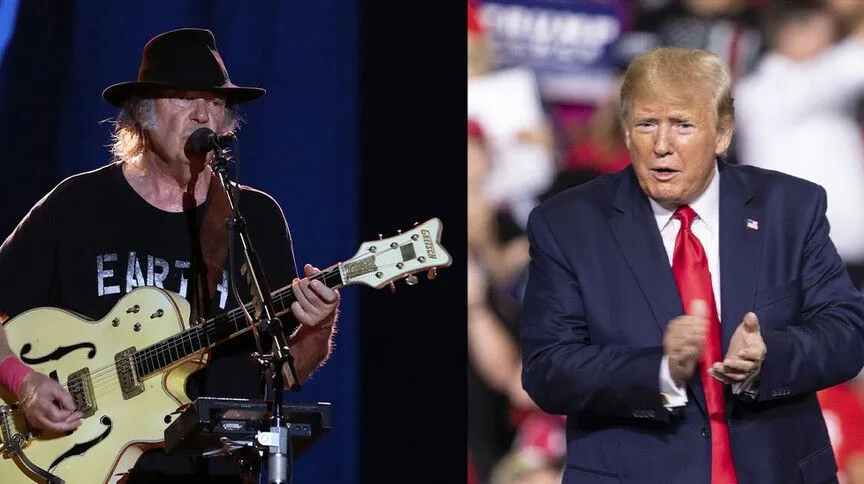
Musician Neil Young filed a new lawsuit in October 2026 over the use of his song ‘Rockin’ in the Free World’ at an event associated with President Donald Trump. The filing reportedly seeks $10 million from the Trump 47 Committee, a fundraising organization. This is a new dispute following Young’s earlier 2020 copyright case against the Trump campaign, which he voluntarily dismissed that December. The latest filing brings a longstanding dispute over campaign music into a new election cycle. Young has objected for years to political events using his songs without permission, and his earlier litigation demonstrated that the issue was more than a public disagreement over musical taste. The October 2026 complaint focuses on a particular event and a particular organization rather than simply repeating the 2020 case. Its reported demand for $10 million is a request for relief, not money already awarded by a court.
What happened at the October 2026 rally?
According to reporting on the new complaint, ‘Rockin’ in the Free World’ was played on October 12, 2026, at an event in Youngstown, Ohio, before Trump spoke. Young contends that the organizers did not have the necessary authorization. The new suit was reported on October 26 and 27, 2026.
Importantly, reporting identifies the Trump 47 Committee as the defendant in the new case, not Donald Trump in his personal capacity. A headline stating that Young sued Trump personally would therefore misdescribe the named party.
Why does the 2020 lawsuit matter?
Young sued Donald J. Trump for President, Inc. on August 4, 2020, in federal court in New York. His complaint objected to the alleged unlicensed use of ‘Rockin’ in the Free World’ and ‘Devil’s Sidewalk’ at campaign events, including a rally in Tulsa, Oklahoma.
On December 7, 2020, he dismissed that lawsuit with prejudice, which prevented refiling the same claims in that action. At the time, the public reasons for the dismissal were not fully explained. The new 2026 complaint reportedly alleges that the earlier litigation ended in an agreement restricting future unauthorized use. That reported agreement is a claim made in new litigation, not an independently established judgment about the 2026 event.
What is Young alleging now?
The 2026 dispute concerns whether playing his composition at the Ohio event violated copyright or a prior contractual undertaking. Reporting states that Young is pursuing a $10 million claim and points to the alleged 2020 settlement promise.
A campaign or event organizer may in some circumstances rely on performance licenses covering music played at venues, but licensing rights can depend on the type of use, ownership and applicable agreements. Political use also can provoke disputes about implied endorsement, although objection to a candidate is not, by itself, enough to establish copyright infringement.
What the October 2026 complaint says
Young’s new action was filed in the U.S. District Court for the Eastern District of Virginia on October 26, 2026, against Trump 47 Committee Inc. Reporting on the filing identifies the playing of ‘Rockin’ in the Free World’ at an October 12 event in Youngstown, Ohio. The complaint seeks damages and an order preventing unauthorized future use. It also refers to the earlier dispute and an alleged agreement concerning use of Young’s music. The defendant may contest the alleged lack of authorization, the legal theory and the amount sought. No allegation should be treated as a court finding merely because it appears in a complaint.
Why political events need music permissions
Playing a song at a rally can involve the public-performance right in a copyrighted musical composition. Event organizers may rely on licenses administered through performing-rights organizations, but the scope of a particular license and any exclusions matter. The identity of the entity organizing the event can also be significant. A musician’s personal objection does not automatically decide infringement, and a venue’s ordinary music license may not settle every question. The lawsuit will require analysis of actual rights, permissions and the conduct alleged.
What happens next?
The defendant can contest the alleged unauthorized use, the applicability of a prior agreement, any available licenses and the damages sought. A requested $10 million is not money a court has awarded. The new complaint also involves a different organizational defendant from the 2020 case, which could matter to the legal arguments.
The key timeline is therefore two distinct lawsuits: a 2020 case dismissed that December and a fresh October 2026 filing arising from a later event. Both should be covered to explain why Young has returned to court.