Starting a business in the U.S. is not complicated, but it does follow a clear legal path. If you skip steps or rush through paperwork, it can cause problems later—especially with taxes and liability protection.
This guide walks you through the process in a simple, practical order so your business is legally sound from day one.

Step 1: Choose Your Business Structure
This is the foundation. Your structure decides how you pay taxes, how much paperwork you handle, and whether your personal assets are protected.
- Sole Proprietorship
The simplest option. No formal registration required in most cases. But there’s a downside—you and the business are legally the same. If something goes wrong, your personal assets are at risk. - LLC (Limited Liability Company)
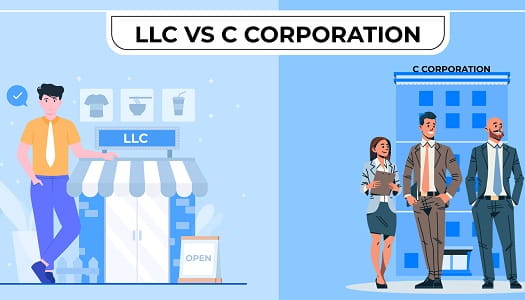
A popular choice for small and medium businesses. It separates personal and business liability and offers flexible taxation. - C-Corporation (C-Corp)
Best suited for companies planning to raise funding or go public. It has a structured system and is taxed separately. - S-Corporation (S-Corp)
Not a separate entity, but a tax election. It allows profits to pass through to owners while reducing self-employment taxes in some cases.
Take your time here. Changing structure later is possible, but not always smooth.
Step 2: Select and Register Your Business Name
Your business name is more than branding—it’s a legal identity.
- Check Availability
Visit your state’s Secretary of State website and search for your desired name. It must be unique within that state. - Trademark Search
Search the database of the United States Patent and Trademark Office to avoid legal conflicts at the national level. - Register a DBA (Doing Business As)
If you want to operate under a different name than your legal entity name, you’ll need to file a DBA (also called a fictitious name).
This step avoids future legal disputes and protects your brand identity.
Step 3: Register Your Business with the State
If you’re forming an LLC or corporation, this step makes your business official.
File:
- Articles of Organization (for LLCs)
- Articles of Incorporation (for corporations)
Appoint a Registered Agent
- This is a person or service with a physical address in your state who receives legal documents on your behalf.
Once approved, your business legally exists.
Step 4: Get an EIN (Employer Identification Number)
An EIN is like a Social Security number for your business.
You get it from the Internal Revenue Service.
- Cost: Free
Required for:
- Opening a business bank account
- Hiring employees
- Filing taxes
Even if you’re a single-member LLC, getting an EIN is a smart move.
Step 5: Apply for Licenses and Permits
Registering your business doesn’t automatically give you permission to operate. You may need additional approvals depending on your activity and location.
- General Business License
Required in some cities or counties - Professional Licenses
Needed for fields like accounting, law, healthcare, construction, or salons - Sales Tax Permit
If you sell physical goods, you must register with your state’s tax authority to collect and remit sales tax
Rules vary by state and city, so check local requirements carefully.
Step 6: Create Internal Governance Documents
These documents are often ignored, but they matter a lot—especially if disputes arise.
- Operating Agreement (for LLCs)
Defines ownership, roles, and how decisions are made - Corporate Bylaws (for corporations)
Covers governance rules, voting rights, and meeting procedures
Even if your state doesn’t require them, having these documents strengthens your legal protection.
Step 7: Open a Business Bank Account
This is a strict rule—never mix personal and business money.
To maintain liability protection (often called the “corporate veil”):
- Use a separate business bank account
- Keep clear financial records
- Run all business income and expenses through this account
To open one, you typically need:
- EIN
- Formation documents (Articles of Organization/Incorporation)
Mixing funds can weaken your liability protection.
Critical Compliance Checklist
Starting the business is just the beginning. Staying compliant is equally important.
- Annual Report (Yearly or Bi-yearly)
Keeps your business in “good standing” with the state - Estimated Taxes (Quarterly)
Required for many business owners to avoid penalties - BOI Reporting (Beneficial Ownership Information)
Filed with Financial Crimes Enforcement Network
A newer federal requirement where you report who owns or controls the business
Ignoring compliance can lead to penalties, fines, or even business suspension.
Final Thoughts
Starting a business legally in the United States is not about filling one form—it’s a sequence of steps that build on each other.
First, you choose the right structure. Then you secure your name, register the business, and get your tax ID. After that, you handle licenses, internal documents, and banking. Finally, you stay compliant year after year.
Many new entrepreneurs rush through this process. The smarter approach is slower and cleaner—get each step right once, and you avoid bigger problems later.
If done properly, your business doesn’t just exist—it stands on solid legal ground from the very beginning.