Common Causes and Liability in Commercial Vehicle Crashes
18-wheeler accidents are often far more complex than typical car collisions due to the sheer size and weight of commercial trucks, the severe injuries they inflict, and the intricate web of regulations governing the trucking industry. Understanding the common causes of these devastating events in areas like Jackson is the first step toward identifying negligence and seeking justice.
One of the most frequent contributing factors to semi-truck accidents is driver fatigue. Truck drivers are subject to strict Hours of Service (HOS) regulations set by the Federal Motor Carrier Safety Administration (FMCSA), which dictate how long they can drive and when they must rest. Violations of these rules, often driven by tight delivery schedules, can lead to drowsy driving, impaired judgment, and delayed reaction times.
Another significant cause is improper cargo loading. If cargo is not secured correctly or is overloaded, it can shift during transit, causing the truck to become unstable, especially during turns or braking. This can lead to rollovers, jackknifes, or loss of control, endangering everyone on the road.
Equipment failure also plays a critical role in many truck accidents. This can include issues like faulty brakes, defective tires, steering system malfunctions, or problems with the truck’s lighting. Often, these failures stem from inadequate vehicle maintenance. Trucking companies have a legal obligation to regularly inspect and maintain their fleets. Neglecting routine maintenance can lead to preventable mechanical failures that result in catastrophic crashes.
Other common causes include:
- Distracted driving: Use of cell phones, dispatch devices, or other distractions.
- Speeding: Exceeding posted limits or driving too fast for conditions.
- Improper lane changes: Failing to check blind spots or signal appropriately.
- Driving under the influence: Although less common, drug or alcohol impairment can occur.
- Poor road conditions or adverse weather: While not always the primary cause, these can exacerbate other issues if drivers are not adequately trained or fail to adjust their driving.
Identifying Negligent Parties in Complex Claims
Unlike standard car accidents where liability often rests solely with one driver, commercial truck collisions frequently involve multiple parties who may share responsibility. This complexity is why proving negligence and assigning liability in big rig collisions is far more nuanced.
Potential negligent parties can include:
- The Truck Driver: For direct actions like distracted driving, fatigue, speeding, or violating traffic laws.
- The Trucking Company (Commercial Carrier): They can be held liable for negligent hiring practices, inadequate training, pressuring drivers to violate HOS regulations, failing to maintain their fleet, or not properly supervising their drivers.
- Freight Loaders or Cargo Companies: If the accident was caused by improperly loaded or secured cargo, the company responsible for loading the freight could be at fault.
- Parts Manufacturers: If a defective truck part (e.g., faulty brakes, tires) contributed to the accident, the manufacturer of that part could be held liable.
- Maintenance Contractors or Mechanics: If an external company or individual was responsible for maintaining the truck, and their negligence led to a mechanical failure, they could share liability.
Identifying all potentially liable parties requires a thorough investigation, often involving expert analysis of the accident scene, vehicle components, and company records.
Securing Critical Evidence Through Personal Injury Representation
Proving negligence in a commercial truck accident case hinges on the collection and preservation of crucial evidence. Given the multiple parties potentially involved and the stringent regulations governing the trucking industry, this process is often extensive and time-sensitive.
Key pieces of evidence include:
- Police Reports: These provide initial details about the accident, including contributing factors, witness information, and sometimes preliminary fault assessments.
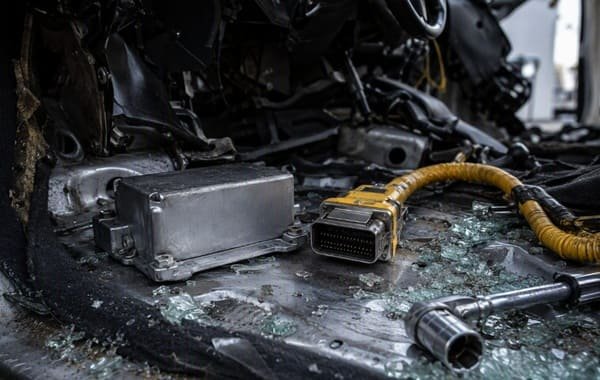
- Black Box Data: Commercial trucks are equipped with Event Data Recorders (EDRs), often referred to as “black boxes.” These devices record critical information leading up to, during, and immediately after a crash, such as speed, braking, steering input, and seatbelt usage. This data is invaluable for reconstructing the accident.
- Electronic Logging Devices (ELDs): ELDs record a driver’s hours of service, ensuring compliance with federal regulations. Violations indicated by ELD data can be strong evidence of driver fatigue.
- Truck Maintenance Records: These documents show the history of inspections, repairs, and preventative maintenance performed on the truck. Gaps or neglected maintenance can point to negligence by the trucking company or maintenance provider.
- Dashcam Footage: Many commercial trucks are equipped with dash cameras that record the road ahead, and sometimes the driver’s cab. This footage can provide a clear visual account of what transpired.
- Driver Qualification Files: These files contain information about the driver’s training, driving record, medical certifications, and drug/alcohol test results.
- Witness Statements: Eyewitness accounts can corroborate other evidence and provide valuable perspectives on the accident.
- Crash Scene Photos and Videos: Visual documentation of the accident scene, vehicle damage, road conditions, and any visible injuries is vital.
- Cargo Manifests and Loading Records: These documents can reveal details about the weight and nature of the cargo and how it was loaded.
It is crucial to initiate an investigation as early as possible. Electronic onboard data, driver logs, and black box records can be overwritten or disappear quickly if not preserved immediately. A rapid response team can help secure this critical evidence before it’s lost, forming the foundation of a strong claim.
The Role of Personal Injury Representation in Navigating State Laws
The aftermath of an 18-wheeler accident is a challenging period, both physically and emotionally. Navigating the complex legal landscape of truck accident claims requires specialized knowledge and experience. A dedicated Jackson truck accident lawyer plays a pivotal role in protecting your rights and securing the compensation you deserve.
Their assistance begins immediately after the incident, often with a 24-hour rapid response team ready to deploy resources to the accident scene. This early intervention is critical for preserving evidence, interviewing witnesses while memories are fresh, and documenting crucial details that might otherwise be lost.
A skilled attorney will meticulously investigate the accident, identifying all potential causes and liable parties, from the truck driver to the trucking company, cargo loaders, and parts manufacturers. They understand the intricate state and federal regulations governing commercial trucking, including FMCSA safety rules, and can identify violations that contributed to your crash.
Furthermore, legal representation is essential for handling communications with aggressive insurance adjusters. Commercial trucking companies and their insurers have vast resources and sophisticated legal teams whose primary goal is to minimize payouts. An experienced lawyer will protect you from tactics designed to undervalue your claim or shift blame, ensuring that your rights are upheld throughout the process.
Your legal team will also manage all aspects of your claim, from gathering medical records and calculating damages to filing necessary paperwork and adhering to strict legal deadlines. They will engage in settlement negotiations on your behalf, striving for a fair resolution that fully compensates you for your losses. If a fair settlement cannot be reached, they will be prepared to take your case to trial, advocating fiercely for your interests in court.
Understanding Comparative Negligence and State Deadlines
When pursuing compensation after a truck accident, two critical legal concepts are the statute of limitations and comparative negligence. These laws vary significantly between states and can profoundly impact your ability to recover damages.
The statute of limitations dictates the strict deadline by which you must file a personal injury lawsuit after an accident. Missing this deadline almost invariably means forfeiting your right to seek compensation, regardless of the merits of your case.
- Michigan Law: As of September 2026, Michigan law provides a three-year statute of limitations for personal injury lawsuits arising from truck accidents. This period begins from the date of the accident, as outlined in Mich. Comp. Laws Ann. § 600.5805. For wrongful death claims in Michigan, the same three-year period generally applies from the date of death.
- Georgia Law: In contrast, Georgia law provides a shorter two-year statute of limitations from the accident date to file a truck accident claim. This deadline is crucial for victims in Georgia to be aware of.
Comparative negligence rules determine whether you can still recover compensation if you were partially at fault for the accident, and how much your compensation might be reduced.
- Michigan’s Modified Comparative Fault: Michigan follows a modified comparative negligence rule. This means you can recover damages even if you were partially at fault, as long as your fault is not greater than the combined fault of all other responsible parties (i.e., you are less than 51% at fault). If you are found to be 50% or less at fault, your compensation will be reduced proportionally to your degree of fault. For example, if you are awarded $100,000 but found 20% at fault, you would receive $80,000.
- Georgia’s Modified Comparative Negligence: Georgia also operates under a modified comparative negligence system, but with a slightly different threshold. Under Georgia law, you can recover damages only if you are less than 50% at fault for the accident. If you are found to be 50% or more at fault, you are barred from recovering any compensation. If you are found to be less than 50% at fault, your award will be reduced by your percentage of fault.
Understanding these state-specific nuances is vital for any truck accident claim.
Feature Michigan Law Georgia Law Statute of Limitations 3 years from the accident date 2 years from the accident date Comparative Negligence Modified Comparative Fault (less than 51% at fault) Modified Comparative Negligence (less than 50% at fault) Recovery Threshold Can recover if 50% or less at fault Can recover if less than 50% at fault Damage Reduction Proportional to percentage of fault Proportional to percentage of fault Maximizing Economic and Non-Economic Damages with Personal Injury Representation
After an 18-wheeler accident, victims often face severe and long-lasting consequences. The goal of a personal injury claim is to secure comprehensive compensation that covers all losses, both tangible and intangible. A skilled legal team specializing in personal injury legal representation is crucial for accurately valuing and maximizing these damages.
Economic damages are quantifiable financial losses, including:
- Medical Expenses: This covers all past, present, and future medical care related to the accident, including emergency room visits, hospital stays, surgeries, doctor appointments, prescription medications, physical therapy, rehabilitation, and assistive devices.
- Lost Wages and Earning Capacity: Compensation for income lost due to time off work, as well as future lost earning potential if your injuries prevent you from returning to your previous job or working at the same capacity.
- Property Damage: Costs to repair or replace your vehicle and any other damaged personal property.
- Out-of-Pocket Expenses: Other costs directly related to the accident, such as travel to medical appointments or necessary home modifications.
Non-economic damages are subjective, non-monetary losses that significantly impact your quality of life:
- Pain and Suffering: Compensation for the physical pain, discomfort, and emotional distress caused by your injuries.
- Emotional Anguish: This includes anxiety, depression, PTSD, fear, and other psychological impacts resulting from the traumatic event.
- Loss of Enjoyment of Life: If your injuries prevent you from participating in hobbies, activities, or daily routines you once enjoyed.
- Disfigurement and Scarring: Compensation for permanent physical alterations that affect your appearance and self-esteem.
- Loss of Consortium: In cases of severe injury or wrongful death, this compensates a spouse for the loss of companionship, affection, and support.
In the tragic event of a fatal accident, a wrongful death claim can seek specific damages for surviving family members, including funeral and burial expenses, loss of financial support, loss of companionship, and other related losses.
Accurately calculating these damages, especially future medical needs and lost earning capacity, often requires working with medical and economic experts. Your legal representative will ensure that all potential damages are thoroughly assessed and included in your claim, preventing insurance companies from settling for less than your case is truly worth.
Key Steps to Protect Your Rights After a Severe Collision
The moments immediately following an 18-wheeler accident can be chaotic and disorienting. However, the actions you take (or don’t take) in the immediate aftermath can significantly impact the strength of any future legal claim. Here are crucial steps to protect your rights and well-being:
- Ensure Safety and Seek Medical Attention: Your health is the top priority. Move to a safe location if possible. Even if you feel fine, call 911 and accept medical evaluation. Adrenaline can mask pain, and some serious injuries (like internal bleeding or whiplash) may not manifest symptoms until hours or days later. Prompt medical attention creates an official record of your injuries linked to the accident.
- Contact Law Enforcement: Report the accident to the police immediately. A police report documents the basic facts of the crash, including involved parties, vehicle information, and initial observations of the scene. This report is a vital piece of evidence.
- Gather Information (If Safe to Do So):Exchange Information: Get the truck driver’s name, contact information, driver’s license number, insurance details, and the trucking company’s name and DOT number.
- Witness Information: Ask any witnesses for their names and contact information. Their unbiased accounts can be invaluable.
- Photographic Evidence: Use your phone to take extensive photos and videos of the accident scene. Capture vehicle damage, road conditions, traffic signs, skid marks, debris, visible injuries, and the overall environment from multiple angles.
- Do Not Admit Fault or Give Recorded Statements: Avoid discussing fault at the scene with anyone, including the truck driver or witnesses. Do not give a recorded statement to any insurance company (even your own) without first consulting with an attorney. Insurance adjusters are trained to elicit information that can be used against you.
- Document Everything: Keep a detailed record of all medical appointments, treatments, medications, and any out-of-pocket expenses related to the accident. Maintain a journal to note your pain levels, limitations, and how the injuries affect your daily life. Also, keep track of any lost wages or missed work.
- Follow Medical Advice: Adhere strictly to your doctor’s treatment plan. Missing appointments or not following recommendations can be used by insurance companies to argue that your injuries are not as severe as claimed.
- Consult with a Truck Accident Lawyer: This is perhaps the most critical step. An experienced Jackson truck accident lawyer can guide you through the entire process, protect your rights, handle communications with insurance companies, investigate the accident, and build a strong case for compensation. They can also advise you on how to deal with insurance adjusters and what information to provide.
By taking these proactive steps, you significantly strengthen your position and improve your chances of securing fair compensation for your injuries and losses.
Frequently Asked Questions About Commercial Accident Claims
Navigating the aftermath of a commercial truck accident often brings a host of questions. Here, we address some of the most common inquiries victims have.
What is the difference between a personal injury claim and a wrongful death lawsuit?
A personal injury claim is filed by an individual who has suffered physical, emotional, or financial harm due to another party’s negligence. The goal is to recover compensation for their own medical expenses, lost wages, pain and suffering, and other damages directly related to their injuries. The injured party is the plaintiff in the case.
A wrongful death lawsuit, on the other hand, is filed when a person dies as a result of another party’s negligence. This type of claim is brought by certain surviving family members or the estate’s representative on behalf of the deceased. The purpose is to compensate the survivors for their losses, which can include funeral and burial expenses, medical bills incurred before death, loss of the deceased’s financial support, loss of companionship, and emotional suffering. The specific beneficiaries (e.g., spouse, children, parents) who can file and the types of damages recoverable are defined by state law. These claims often involve “survival actions” which seek damages the deceased would have been entitled to if they had lived.
Can I recover damages if I share partial fault for an accident?
Yes, in many states, including Michigan and Georgia, you can still recover damages even if you were partially at fault for an accident. This is governed by comparative fault laws. As discussed earlier:
- Michigan: You can recover compensation as long as your fault is not greater than the combined fault of all other responsible parties (i.e., you are 50% or less at fault). Your award will be reduced by your percentage of fault.
- Georgia: You can recover compensation only if you are less than 50% at fault. If you are found to be 50% or more at fault, you are barred from recovery. If you are less than 50% at fault, your damages will be reduced proportionally.
Insurance companies will often try to assign as much fault as possible to you to reduce their payout or deny your claim entirely. An experienced truck accident lawyer can defend against such allegations and work to minimize your attributed fault, thus maximizing your potential recovery.
How long do I have to file a commercial truck accident lawsuit?
The timeframe for filing a commercial truck accident lawsuit is dictated by the statute of limitations in the state where the accident occurred. These statutory deadlines are strict, and failing to file within the specified period almost always results in the permanent loss of your right to pursue compensation.
As of September 2026:
- In Michigan, the general statute of limitations for personal injury and wrongful death claims arising from truck accidents is three years from the date of the accident (or date of death for wrongful death).
- In Georgia, the statute of limitations for similar claims is two years from the date of the accident.
There can be limited exceptions or “tolling provisions” that might extend this deadline in very specific circumstances (e.g., if the injured party was a minor), but these are rare. It is always best to consult with an attorney as soon as possible after an accident to ensure all deadlines are met and evidence is preserved. Early action is key to claim preservation and success.
Conclusion
An 18-wheeler accident can be a life-altering event, leaving you with severe injuries, mounting medical bills, lost income, and profound emotional distress. The path to recovery and justice can seem daunting, especially when facing powerful trucking companies and their insurance providers. However, you do not have to navigate this complex journey alone.
By understanding the common causes of these collisions, identifying all potentially liable parties, and knowing the crucial evidence required to build a strong case, you empower yourself. Recognizing the critical differences in state laws regarding statutes of limitations and comparative negligence is also paramount to protecting your legal rights.
Seeking experienced legal representation from a Jackson 18-wheeler accident lawyer is one of the most important steps you can take. A dedicated legal team can provide invaluable guidance, conduct thorough investigations, preserve critical evidence, negotiate with insurers, and advocate fiercely on your behalf. Their expertise ensures that you pursue maximum compensation for all your economic and non-economic damages, holding negligent parties accountable for their actions.
The goal is to achieve fair compensation that allows you to focus on your recovery and rebuild your life. Do not delay in seeking the professional legal assistance you need to enforce liability and secure the justice you deserve.