With your home still potentially unsafe, a fire claim denial leaves you facing repair bills and the cost of temporary housing. On coverage, your insurer has stated its position. The final outcome may not be decided yet.
If your fire insurance claim is denied, compare the letter with your policy and keep your damage records intact. If allowed, request the insurer’s claim file, then get independent repair estimates. Within the applicable deadlines, send your challenge in writing. Insurance claim denial lawyers may help with major losses or possible bad faith.
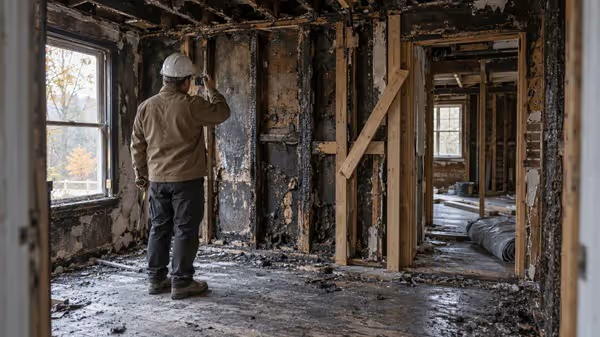
When insurance claim denial lawyers may review a fire claim
When an insurer cites an exclusion or disputes the damage’s cause or extent, legal review may help. Seek review for repeated delays in getting a decision or for offers substantially below the losses you’ve documented. Bad faith isn’t proven by denial alone. Legitimate disagreements may stem from policy wording, causation evidence, missed post-loss duties, or conflicting damage estimates.
Alabama and Mississippi property owners may choose to consult insurance claim denial lawyers while the record is still disputed; the policy and facts shape their options under applicable law.
Along with unanswered requests and your latest repair estimate, bring the complete policy and denial letter to your consultation.
Steps to Dispute a Rejected Fire Damage Claim
Start with the policy language for each denial reason, then collect evidence that answers the insurer’s stated concerns. Before the deadline in your policy or applicable law, send your documented response.
-
Read the complete policy alongside the denial letter. Check the insurer’s cited exclusion or the fact it disputes. Along with endorsements, review post-loss duties such as notice requirements and proof-of-loss forms.
-
Preserve records showing loss. Alongside inventories and receipts, save your photos and videos. Keep temporary repair invoices, fire department records, and all versions of the estimates. Unless safety concerns or official orders require removal, don’t discard damaged property before inspection or written permission. Document any disposal that’s necessary.
-
Build your evidence around the denial. Instead of lump sums, get itemized estimates. For smoke spread and structural damage, seek qualified opinions that also cover code-related work. Separate emergency mitigation costs from the permanent repair expenses.
-
Submit the challenge and track it. With supporting records, respond in writing to disputed findings. Request confirmation that it arrived. Use a dated communication log to summarize calls.
Reconsideration or extra documents may be what your “appeal” involves. Your policy and jurisdiction determine whether appraisal or mediation is available. A regulator complaint or litigation may also be options. Appraisal usually focuses on valuation disputes.
|
Record |
What it can establish |
Common problem to avoid |
|
Denial letter and policy |
The insurer’s stated reason and coverage terms |
Reviewing only the declarations page |
|
Visual records and inventory |
The condition of property and contents |
Discarding items before documentation |
|
Itemized estimates and invoices |
Repair scope and temporary costs |
Unsupported lump-sum figures |
|
Communication log |
The timing and content of insurer responses |
Relying on unconfirmed phone calls |
What to do after a partial fire claim denial
Separate the losses accepted after a partial denial from the amounts you’re disputing. Before accepting an undisputed payment, which does not always settle everything, read the release language and check state law.
Partial denial of a fire damage claim
Ask the insurer for the scope and calculations in writing if it accepts flame damage but denies smoke remediation elsewhere. With a qualified remediation professional’s proposed protocol as support, respond with photographs and an itemized, room-by-room cleaning estimate.
Low fire insurance settlement offer
Compare a low offer line by line with contractor estimates and the value of damaged property. Check the calculations for depreciation and your deductible against your policy’s terms and limits. Low offers don’t automatically establish bad faith. Where the calculation strays from your policy or documented loss, point it out.
Lawsuits over denied fire claims
For breach of contract or, in some circumstances, bad faith, you may be able to sue. State law, your policy, and the evidence determine which claims are available. When an insurer holds its position despite a well-supported challenge, litigation can become relevant.
An incorrect decision isn’t necessarily enough to establish actionable bad faith. The insurer’s conduct requires a separate legal assessment.
During reconsideration, don’t assume the deadline for filing a lawsuit pauses. When you must file can be affected by contractual limits and statutes of limitation. Other conditions can affect timing too, including notice duties and appraisal provisions. A regulator complaint doesn’t necessarily extend that deadline either. Seek prompt review of your policy’s suit clause.
Related insurance and settlement questions
Medical insurance claim denials
Get the denial reason and your medical records while following your health plan’s internal appeal process. You may have external review available. Because health plans use different procedures than homeowners fire claims, check your plan’s written appeal instructions.
Insurance coverage lawyers
Insurance coverage lawyers handle disputes over whether an insurer must pay, and how much, by interpreting policies. Some represent policyholders, with others representing insurers. Ask about conflicts before you share claim documents.
Healthcare attorney fees
The matter determines your fees. Hourly or flat fees may apply, and contingency arrangements may be available where permitted. Get the fee calculation and any separate expenses in writing.
The potential value of a bad faith lawsuit
There’s no standard value. Under state law, proven policy benefits and other legally recoverable losses determine what you can recover, and evidence of the insurer’s conduct can also affect that amount.
Calculating the net amount from a $25,000 settlement
Subtract applicable fees and case expenses from the gross settlement to calculate your net amount. Other authorized deductions may also come out, along with valid liens and unpaid bills. Before calculating your net settlement, you need to know those amounts.
Deciding whether to sue an insurance company
With litigation risk in mind, weigh the disputed amount and supporting evidence against likely costs and delay. Have counsel assess the alternatives available to court, together with the legal fees you should expect.
Protect the record before taking the next step
Put every stated deadline on your calendar after securing your policy and denial letter today. Before cleanup changes it, preserve the property record. To address the disputed terms, make your next move a written response backed by supporting evidence. Keep your complete claim file in one dated folder.