Passengers expecting an MSC Poesia cruise from Miami instead faced a prolonged wait and a canceled trip after the U.S. Coast Guard detained the ship for inspection. On November 1, 2026, authorities began an expanded examination of the vessel at PortMiami. MSC Cruises subsequently canceled the sailing and announced refunds. The incident illustrates how maritime safety authority can interrupt a commercial voyage even before regulators publicly describe every technical defect.
Why was MSC Poesia detained?
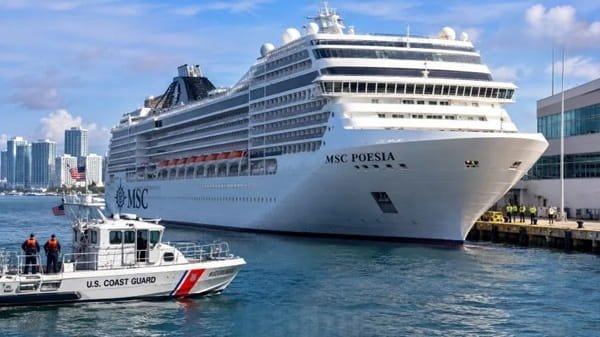
The Coast Guard said its personnel were checking compliance with U.S. regulations and international maritime standards. By November 3, officials had reported deficiencies involving systems aboard the vessel, but public statements did not provide a complete inventory of the problems or a final enforcement ruling.
The word “detained” refers to the ship being prevented from departing while authorities conducted their regulatory work. It does not mean that passengers were under criminal arrest or that the operator had been convicted of wrongdoing.
MSC initially described the delay as a regulatory matter and said it was cooperating with authorities. When the matter could not be resolved in time, the company canceled the scheduled departure.
What happened to the passengers?
The ship had been preparing for an 11-night itinerary involving Caribbean and Central American ports. Passengers spent extended time waiting in Miami while the inspection continued. MSC announced a full refund of cruise fares and said it would help guests return home.
A refund of the fare does not necessarily resolve every possible expense. Travelers may also have paid for flights, hotels, excursions or other arrangements. Whether those costs are reimbursable depends on the cruise contract, insurance terms, the timing of notice and any applicable consumer-protection rules.
What authority does the Coast Guard have?
The Coast Guard performs port-state-control inspections of foreign-flagged vessels calling at U.S. ports. Its work is aimed at verifying compliance with safety, security and environmental obligations. U.S. regulations and international conventions may address fire safety, machinery, lifesaving appliances, navigation and shipboard procedures.
Where deficiencies present legally significant concerns, authorities may prevent a vessel from sailing until those issues are addressed. A detention is principally a protective regulatory step, not necessarily a punishment. The Coast Guard also maintains records of detained foreign ships and provides mechanisms for operators to appeal certain detention decisions.
The fact that the agency ordered an expanded examination does not by itself identify which particular convention, system or rule was violated in this case. Any article naming a specific mechanical defect would need documentation beyond the early public statements.
Are passengers entitled to compensation?
MSC’s stated full cruise-fare refund was a concrete response to the cancellation. Additional rights are more complicated. Cruise ticket contracts often limit or define remedies when itineraries change, and travel insurance may cover some nonrefundable costs if the policy conditions are met.
Passengers should preserve booking confirmations, the cancellation notice, receipts and the fare-refund communication. They can then compare the company’s written offer with the actual contract and any travel-insurance coverage. A chargeback or claim against another service provider may have its own deadlines and documentation rules.
No reported court decision had established that every affected traveler was entitled to extra damages. Promising an automatic cash settlement would therefore be inaccurate.
Could the cruise line contest the detention?
Maritime detention decisions can be challenged through Coast Guard administrative procedures, although an appeal does not necessarily allow a detained ship to sail immediately. The compliance process and any later challenge are different from passengers’ contract rights.
What is the legal takeaway?
As of November 6, the confirmed position was that an expanded Coast Guard inspection had interrupted the cruise, MSC canceled the sailing and the company offered full fare refunds. The precise technical findings and any ultimate regulatory consequences required further official confirmation.
The case is best understood as a maritime safety and consumer-contract matter. It shows why passenger protection and vessel compliance can outweigh a published departure schedule, while leaving the scope of compensation to the governing documents and law.