No, Minnesota does not recognize common law marriage. Living together, sharing finances, or calling each other spouses does not create a legal marriage in Minnesota—no matter how long the relationship lasts.
Minnesota’s position is straightforward but often misunderstood. Many couples assume that time and commitment eventually lead to marital rights. In Minnesota, that assumption can cause serious legal trouble. Let’s understand how the state treats marriage, cohabitation, and long-term relationships.
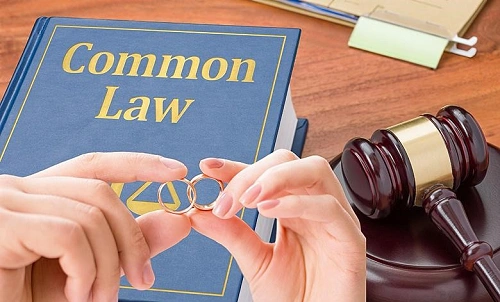
Marriage Under Minnesota Law
In Minnesota, marriage is not something that develops over time. It is a legal status that begins on a specific date, created through a formal process.
To be legally married in Minnesota, a couple must:
- Apply for and receive a marriage license
- Meet legal eligibility rules
- Have the marriage solemnized by an authorized person
If those steps are not completed, the couple is not married under Minnesota law. There are no shortcuts, exceptions, or informal alternatives.
Minnesota has never allowed couples to become married through cohabitation alone.
Why “Common Law Marriage” Doesn’t Exist in Minnesota
The idea behind common law marriage is that a relationship can turn into a marriage through behavior instead of paperwork. In some states, courts may look at how a couple lived, whether they intended to be married, and how others viewed their relationship.
Minnesota rejects that idea completely.
From the state’s perspective, marriage should never be something people have to argue about after the fact. The law intentionally avoids guessing games about intent, labels, or lifestyle. Either a marriage license exists, or it doesn’t.
That clarity is deliberate.
Long-Term Relationships vs. Legal Marriage
Minnesota law draws a hard line between:
- Committed relationships, and
- Legal marriages
A couple can:
- Live together for decades
- Own property together
- Raise children together
- Be seen by everyone as spouses
And still be legally unmarried.
Emotional commitment and legal marriage are treated as two separate things.
What Happens When Unmarried Couples Break Up?
Because common law marriage does not exist, the end of an unmarried relationship is not handled like a divorce.
Property Issues
Minnesota’s marital property rules apply only to married spouses. For unmarried couples:
- Property usually belongs to whoever paid for it or holds title
- Joint property is divided based on ownership percentages
- Courts do not assume a 50/50 split
This can lead to harsh outcomes when one partner contributed informally or financially without legal documentation.
No Spousal Support
Alimony is available only in a legal marriage. Unmarried partners generally have no right to ongoing financial support after separation.
Children Are Treated Separately
Parental rights and responsibilities exist regardless of marriage. Child custody and child support are decided based on the child’s best interests, not marital status.
Death and Inheritance: Where Assumptions Hurt Most
This is where misunderstandings become most expensive.
If one partner dies without a will:
- The surviving unmarried partner does not automatically inherit
- Assets go to legal heirs such as children, parents, or siblings
It does not matter how long the couple lived together. Minnesota law does not treat a partner as a spouse without a legal marriage.
What About Couples Who Moved to Minnesota?
Minnesota will recognize a common law marriage only if:
- It was legally formed in another state that allows common law marriage, and
- It met that state’s legal requirements at the time
Minnesota itself does not create or extend common law marriages. Simply moving to the state does not change a couple’s legal status.
Common Beliefs That Cause Legal Problems
Many disputes start with these incorrect assumptions:
- “We’ve been together long enough to be married”
- “Everyone knows we’re husband and wife”
- “We share everything, so the law will treat us like spouses”
- “Marriage is just paperwork anyway”
In Minnesota, paperwork is exactly what creates marriage.
Legal Tools Unmarried Couples Actually Need
Since common law marriage is not an option, planning matters.
Cohabitation Agreements
These can clarify:
- Who owns what
- How expenses are handled
- What happens if the relationship ends
Courts often enforce clear, voluntary agreements.
Estate Planning
Unmarried couples should strongly consider:
- Wills
- Beneficiary designations
- Powers of attorney
Without these, a surviving partner may have no legal voice at all.
Why Minnesota Takes This Approach
Minnesota law prioritizes certainty over assumption. The goal is to avoid situations where:
- Courts must reconstruct relationships
- Families fight over inheritance
- Partners dispute marital status after death or separation
Clear rules reduce conflict—even if they feel harsh in individual cases.
Final Takeaway
There is no common law marriage in Minnesota.
No amount of time, commitment, or shared life creates a marriage without a license and solemnization. Couples who want marital rights must take deliberate legal steps. Couples who do not should plan carefully to protect themselves.