In the U.S. business world, ideas move fast—but ownership matters even more. You might build a strong brand, create original content, or develop a new product, but without the right legal protection, all of it can be copied, reused, or even claimed by someone else.
This is where Intellectual Property (IP) law comes in. It gives businesses the legal tools to protect what they create and build. But here’s the problem—many business owners confuse trademarks, copyrights, and patents, or assume one type of protection covers everything.
It doesn’t.
Each of these laws protects a completely different part of your business. If you choose the wrong one, you leave gaps. And in today’s competitive environment—especially in 2026 with digital businesses, AI tools, and global competition—those gaps can cost you money, control, and long-term value.
A brand name needs trademark protection. A blog, video, or software code needs copyright. A new invention or system needs a patent. Understanding where each one applies is what separates protected businesses from vulnerable ones.
Most successful companies don’t rely on just one—they use all three strategically. That’s how they build strong legal protection around their identity, creativity, and innovation.
Now let’s look at how each one works and where the differences really matter.
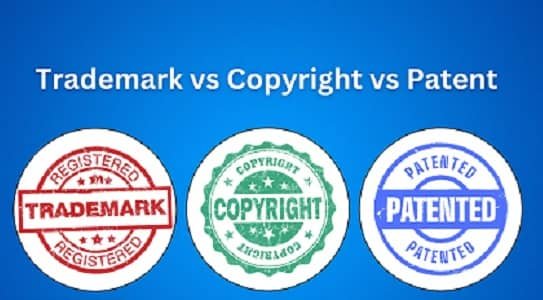
1. What Do They Protect?
The biggest difference is what each law is designed to protect.
Trademark (Brand Identity)
A trademark protects anything that identifies your business in the market.
This includes:
- Business names
- Logos
- Taglines
- Sounds or brand elements
The goal is to prevent customer confusion. If another business uses something too similar, it can be challenged legally.
Copyright (Creative Work)
Copyright protects original creative content.
This includes:
- Articles and blogs
- Music and videos
- Designs and images
- Software code
Protection starts automatically once the work is created and fixed in a tangible form.
Patent (Inventions and Functionality)
Patents protect how something works.
This includes:
- Machines
- Technical processes
- Software systems (with conditions)
- Product designs
There are two main types:
- Utility patents (function)
- Design patents (appearance)
2. How Do You Get Protection?
Each type follows a different process.
Trademark
- Basic rights come from using the name in business
- Strong protection comes from registering with the
United States Patent and Trademark Office
Requires:
- Name search
- Application
- Approval process
Copyright
- Automatic upon creation
- Registration with the
United States Copyright Office
is optional but important
Benefits of registration:
- Stronger legal rights
- Ability to claim damages
Patent
- Must be applied for and approved
- Filed with the
United States Patent and Trademark Office
Requires:
- Detailed technical description
- Legal claims
- Examination
This is the most complex and costly process.
3. Duration of Protection
Each type lasts for a different period.
Trademark
- Can last forever
- Requires continued use and renewal every 10 years
Copyright
- Individual: Life of the author + 70 years
- Corporate works: Up to 95 years
Patent
- Utility patents: 20 years
- Design patents: 15 years
After expiration, the invention becomes public.
4. Legal Standards for Infringement
Each law uses a different standard in court.
Trademark → Consumer Confusion
If customers might confuse two brands, it’s infringement.
Copyright → Copying
If someone copies your work without permission, it’s infringement—even without confusion.
Patent → Technical Use
If someone uses the same process or method described in your patent, it’s infringement.
5. Quick Comparison Table
| Feature | Trademark | Copyright | Patent |
| Protects | Brand identity | Creative work | Inventions |
| Start of protection | Use in commerce | Automatic | After approval |
| Registration | Recommended | Optional | Mandatory |
| Duration | Indefinite | Long-term | Limited |
| Cost | Moderate | Low | High |
6. Real-World Example
A single product often uses all three protections.
Take a smartphone:
- Trademark: Brand name and logo
- Copyright: Software, UI design, manuals
- Patent: Touchscreen technology and internal systems
Each protects a different part of the same product.
Final Thoughts
Trademarks, copyrights, and patents are not interchangeable. Each one protects a specific type of asset.
- Use trademark for your brand
- Use copyright for your content
- Use patent for your inventions
The strongest businesses understand this and apply the right protection at the right time.
Intellectual property is not just a legal concept—it’s a business strategy. When used properly, it protects your work, strengthens your position in the market, and increases the long-term value of what you build.