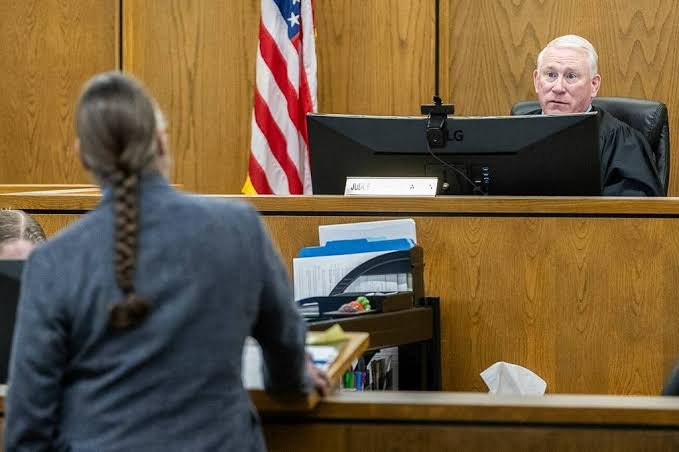
A federal lawsuit over the long-delayed plaque honoring police officers who defended the U.S. Capitol on January 6, 2021, has ended at the district-court level. On September 30, 2026, U.S. District Judge Dabney L. Friedrich dismissed the case brought by former U.S. Capitol Police officer Harry Dunn and Metropolitan Police Department officer Daniel Hodges against the Architect of the Capitol.
The officers argued that the government had failed to carry out a 2022 congressional mandate requiring an honorific plaque listing the names of responding officers and placing it permanently on the western front of the Capitol. Although a plaque was eventually installed in 2026, Dunn and Hodges maintained that its design and location did not satisfy the law. The court, however, never reached that central compliance question. Instead, it dismissed the lawsuit because the officers had not established the Article III standing required for a federal court to hear the case.
What Was the Capitol Police Plaque Lawsuit About?
The dispute arose from Section 214 of the Consolidated Appropriations Act of 2022. Congress used that provision to express its gratitude to U.S. Capitol Police officers, Metropolitan Police Department officers, and other law-enforcement personnel who protected the Capitol, members of Congress, and staff during the January 6 attack.
The law directed the Architect of the Capitol to obtain an honorific plaque listing the names of the responding officers and to place it at a permanent location on the western front of the U.S. Capitol within one year of enactment.
That deadline passed without the required plaque being installed. Dunn and Hodges filed suit on June 12, 2025, seeking to compel the Architect of the Capitol to carry out Congress’s directive. Their complaint asserted a Fifth Amendment equal-protection claim and sought mandamus relief requiring compliance with the statute.
What Happened to the Plaque Before the Case Was Dismissed?
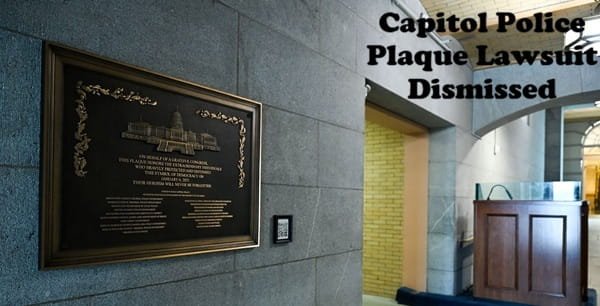
During the litigation, a plaque was installed in March 2026. But the installation did not end the dispute. According to the court record, the physical plaque identifies law-enforcement agencies and organizations rather than displaying every responding officer’s name directly. A QR code provides access to the individual names.
The plaque also was placed in a non-public Senate wing while awaiting a permanent location. Dunn and Hodges argued that this arrangement still did not satisfy Congress’s instruction that the plaque list the officers’ names and be permanently located on the western front of the Capitol.
Why Did Judge Friedrich Dismiss the Lawsuit?
The court dismissed the case under Federal Rule of Civil Procedure 12(b)(1) for lack of subject-matter jurisdiction. The decisive issue was Article III standing.
To sue in federal court, a plaintiff must generally show three things: a concrete and particularized injury, a sufficient causal connection between that injury and the defendant’s conduct, and a likelihood that the requested court order would remedy the injury. Judge Friedrich concluded that Dunn and Hodges had not satisfied those constitutional requirements.
Psychological Harm Was Not Enough to Establish Standing
Dunn and Hodges alleged that the government’s failure to provide the recognition Congress had ordered worsened psychological injuries they experienced after January 6. They argued that the continued failure to honor responding officers in the prescribed way suggested that their service was not worthy of recognition and compounded the emotional consequences of the attack.
The court acknowledged the officers’ unusually personal connection to the plaque. But Judge Friedrich explained that a strong personal interest in government action is not the same as a legally cognizable injury for Article III purposes. Psychological distress arising from disagreement with, or disappointment in, government conduct does not by itself create federal standing.
The court also rejected the idea that an interest in having the government follow the law was sufficient. Federal courts require a personal injury beyond a generalized desire to see government officials comply with statutory requirements.
Threats and Harassment Presented a Different Problem
The officers also alleged that they had been subjected to threats, harassment, accusations that they were ‘crisis actors,’ and other attacks connected to their service on January 6. Dunn also alleged racial abuse. Judge Friedrich recognized that this type of mistreatment could qualify as a concrete harm.
The problem was causation. The alleged threats and harassment came from independent third parties, not from the Architect of the Capitol. The officers’ theory required several additional steps: that failure to install the plaque as Congress directed communicated disrespect, that members of the public interpreted that message in a particular way, and that those perceptions then contributed to threats or harassment.
The court found that chain too indirect and speculative to make the injuries fairly traceable to the Architect’s failure to install the plaque as mandated.
Why the Requested Court Order Would Not Clearly Redress the Harm
Standing also requires redressability. The officers had to show that ordering the Architect to install the plaque in the form required by Congress was likely to alleviate the injuries they relied on for standing.
Judge Friedrich concluded that this showing was missing as well. Whether a properly installed plaque would change public opinion, reduce harassment, or ease the officers’ psychological injuries depended largely on how independent third parties might react. The court found that sequence too speculative to satisfy Article III’s redressability requirement.
Did the Judge Rule That the Current Plaque Is Legal?
No. This is the most important limitation of the September 30 ruling.
The court did not decide that the existing plaque fully complies with Section 214 of the 2022 appropriations law. It did not rule that identifying agencies on the physical plaque instead of printing every officer’s name was sufficient. It also did not decide whether the plaque’s temporary placement in the Senate wing satisfies the statutory direction concerning the western front of the Capitol.
Because the case failed on standing, Judge Friedrich did not reach the merits of the officers’ Fifth Amendment claim or the broader legal arguments over mandamus relief. A jurisdictional dismissal answers whether these plaintiffs can obtain a federal-court ruling; it does not necessarily answer whether the government has complied with the underlying statute.
Who Were the Parties in Dunn v. Austin?
The plaintiffs were Harry Dunn, a former U.S. Capitol Police officer, and Daniel Hodges, an officer with the Metropolitan Police Department of the District of Columbia. Both participated in the law-enforcement response at the Capitol on January 6, 2021.
The defendants were the Architect of the Capitol and Thomas Austin in his official capacity. The case was filed in the U.S. District Court for the District of Columbia as Dunn et al. v. Austin et al., No. 25-cv-1844 (DLF).
What Does the Capitol Police Plaque Lawsuit Dismissal Mean?
For Dunn and Hodges, the ruling ends the case in the district court unless further appellate proceedings change that result. For the plaque itself, the decision leaves the underlying compliance dispute unresolved in this lawsuit.
The ruling is also a useful example of how standing can determine a federal case before a judge addresses the merits. Even where Congress has enacted a clear directive and plaintiffs have a powerful personal connection to the subject, they still must demonstrate a concrete personal injury, traceability, and redressability before a federal court can exercise jurisdiction.
That distinction matters in reporting on the case. Saying that the plaque lawsuit was dismissed is accurate. Saying that the court ruled the government fully complied with the plaque law would go beyond what Judge Friedrich decided.
Legal Note
This article is for general informational purposes only and is not legal advice. Court decisions may be appealed, modified, or affected by later proceedings, legislation, or administrative action.