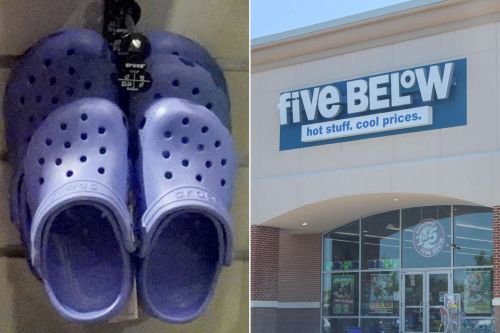
Crocs and its Jibbitz subsidiary sued discount retailer Five Below in September 2026, alleging that inexpensive clogs and shoe accessories sold by the chain infringe a collection of intellectual-property rights. The dispute goes beyond a superficial resemblance between two pairs of foam shoes. Crocs claims Five Below copied protected elements of its distinctive clog appearance, while Jibbitz alleges infringement of patents relating to how decorative shoe charms attach to footwear and other items. The federal complaint combines trademark, trade dress, design-patent, utility-patent and unfair-competition theories. Each has different legal requirements, and the filing is an allegation of infringement rather than proof that Five Below violated those rights.
Where and When Was the Case Filed?
Crocs Inc. and Jibbitz Inc. filed the lawsuit on September 18, 2026, in the U.S. District Court for the District of Colorado. The case is captioned Crocs, Inc. et al. v. Five Below, Inc., No. 1:26-cv-04606. The public docket identifies Five Below as the defendant and lists the complaint and multiple patent and trademark exhibits. Crocs is based in Broomfield, Colorado, while Five Below is headquartered in Philadelphia. The filing invokes federal trademark and patent statutes as well as Colorado unfair-competition theories. A complaint starts the civil case; it does not mean the court has ruled the products are unlawful.
Which Products Are Disputed?
Crocs challenges the appearance of certain low-priced clog-style shoes and related accessories marketed by Five Below. Reporting highlights a product identified as the Juniors Charm Clog and its alleged resemblance to the Crocs Saru Clog. The company also points to shoes that it says closely track the protected visual identity of its Classic Clog, including the overall shape and arrangement of features. The accessory allegations concern charm-fastening methods covered by patents held by Jibbitz. To evaluate the claims, a court may compare the accused products with the precise patent claims, registered trademarks and alleged trade dress. General similarities between shoes are not automatically enough to establish infringement.
Trademark and Trade Dress Claims
Trademark law protects source-identifying words, symbols and, in appropriate circumstances, product features. Trade dress can protect the distinctive overall appearance of a product where the relevant legal conditions are satisfied. Crocs cites U.S. Trademark Registration Nos. 5,149,328 and 5,273,875 for aspects of its footwear’s appearance. Its case alleges that Five Below’s designs could cause confusion or exploit the distinctiveness of protected Crocs designs. Five Below may contest whether the asserted features are protectable, whether consumers are likely to be confused, or whether the designs are meaningfully similar. The outcome depends on evidence and the relevant infringement tests, not brand popularity alone.
Design and Utility Patent Allegations
The complaint also identifies U.S. Design Patent No. D1,100,450, along with utility patents Nos. 7,698,836, 8,122,519 and 8,782,814. A design patent protects the ornamental design shown in its drawings; a utility patent protects specified functional inventions described in its claims. Jibbitz’s allegations concern mechanisms for securing decorative charms or accessories, and Crocs asserts that the accused shoes embody a protected design. Patent infringement requires close attention to the patent language and drawings, the accused product’s features and any applicable defenses. The presence of patent exhibits in the complaint is particularly important because an article describing this case solely as a trademark fight would omit central allegations.
Notice, Remedies and Defenses
Crocs’ lawyers reportedly notified Five Below of the asserted intellectual-property rights before the September filing and allege continued sales afterward. A notice letter may matter to certain damages or willfulness arguments, but receipt of a letter does not itself establish wrongdoing. Crocs and Jibbitz seek judicial relief for the alleged infringement, potentially including an injunction and monetary remedies as permitted by law. Five Below retains the ability to challenge infringement, the validity or scope of asserted rights and any claimed damages. Different causes of action may survive or fail independently.
Case Status
The verified milestone is the September 18 federal filing and the attached intellectual-property claims. The docket material reviewed does not establish a final judgment, a settlement, or a finding that Five Below sold counterfeit goods. Later procedural developments should be checked against the updated court docket before publication. The lawsuit presents an especially useful example of how a product’s commercial appearance, ornamental design and mechanical features may be covered by distinct legal rights, even when all the allegations concern the same retail goods.