No federal law generally prohibits collecting rainwater in the United States. Rooftop harvesting is permitted across the country, but the rules for storage, plumbing, and water use can differ by state and locality. A simple garden barrel may need little oversight, while a large cistern or indoor drinking-water system may be subject to water-rights rules, construction permits, and public-health safeguards.
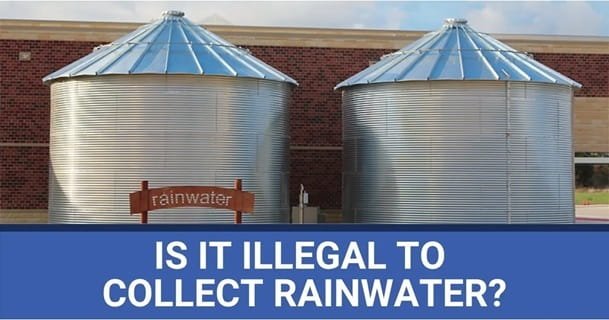
- There is no general nationwide federal ban on collecting rainwater.
- State and local rules govern storage, installation and use.
- Larger or indoor systems may need permits or special safeguards.
The Nationwide Legal Position
There is no nationwide federal prohibition on ordinary residential rainwater harvesting. State law governs most water-rights questions, while cities, counties, and public water suppliers may impose construction and public-health requirements. The National Conference of State Legislatures notes that most states and territories generally allow collection, although some have restrictions. Legal permission to capture rooftop rainwater should not be confused with permission to divert water from a stream, public drainage system, or another person’s land. Those activities can be subject to different water-rights and property laws.
Why Rainwater Collection Is Regulated
Western states historically developed prior-appropriation systems under which senior water-right holders may have legal claims to the use of water flowing into streams. Legislatures have had to reconcile those rights with household rain barrels and water-conservation efforts. Modern statutes frequently carve out limited rooftop harvesting for domestic or landscape use. Other regulations address the physical system, including cistern foundations, mosquito control, cross-connections, potable-water safety, and potential effects on neighboring property. The issue is rarely that rain itself is prohibited; it is whether a particular capture system meets applicable rules.
How State Rules Differ
California expressly states in Water Code Section 10574 that rainwater collected from rooftops does not require a water-right permit. Texas actively encourages the practice and offers tax advantages for qualifying equipment, though certain installations connected to drinking-water plumbing face additional safeguards. Colorado has more specific limits on the number and capacity of residential rain barrels and how collected water may be used. The different approaches show why an article asserting that rain barrels are universally legal without restriction would also be misleading. A state rule can authorize collection while still limiting the equipment or purpose.
Rain Barrels Versus Whole-House Systems
A basic barrel attached to a downspout normally collects water for landscaping, ornamental plants, or other outdoor purposes. More elaborate systems can contain pumps, filters, buried tanks, and pipes connected to toilets or household fixtures. Local permits or inspections may become necessary when plumbing or structural work is involved. Water that looks clean is not automatically potable: roofing materials, animal waste, airborne contaminants, and poorly maintained tanks can affect its quality. Drinking-water systems require appropriate design, treatment, and inspection under applicable requirements.
HOA Restrictions and Local Ordinances
Homeowners associations do not necessarily have unlimited power over installations. Texas Property Code Section 202.007 restricts association bans on rainwater harvesting but preserves certain design and placement limitations. Elsewhere, community rules, building codes, historic-district requirements, and municipal ordinances may affect the equipment’s location. Residents should review state law first, then ask their local building or water authority whether the planned system needs approval. A general restriction on exterior structures is not automatically the same thing as a legal prohibition on rainwater harvesting.
Possible Consequences of Noncompliance
Consequences depend on the rule violated. A homeowner might receive an inspection notice, be required to modify noncompliant plumbing, face local code enforcement, or become involved in a dispute with an association or neighbor. Penalties for unauthorized water diversion can be more serious than those for an ordinary household barrel. No single national fine or criminal sentence applies to every noncompliant system. Enforcement questions should be evaluated under the particular statute or municipal ordinance involved.
Practical Compliance Checklist
Before purchasing a tank, identify the state and local rules that apply to the property. Determine whether water will be used exclusively outdoors or routed into home plumbing. Check siting, drainage, backflow-prevention, and installation requirements, and use covered containers maintained to prevent mosquitoes and contamination. If the project involves a public drinking-water connection, consult a qualified plumbing professional and the local water supplier. These steps make the system both safer and easier to maintain.
Summary of Key Rules
Rainwater harvesting is generally legal in the United States, and many jurisdictions encourage it as a conservation measure. Restrictions tend to concern water rights, system design, location, and potable use rather than the basic act of collecting rooftop rainfall. The applicable state statute and local code—not a nationwide internet claim—determine whether a specific installation is permitted.