Oscar-winning actress Susan Sarandon was arrested in New York City on September 24, 2026, while participating in a demonstration near United Nations headquarters ahead of Israeli Prime Minister Benjamin Netanyahu’s address to the General Assembly. Police moved in after demonstrators occupied a roadway and were instructed to clear the area. Sarandon was among those taken into custody, alongside actress Hannah Einbinder and other participants. It was not Sarandon’s first protest-related arrest: she had previously been detained in Washington in 2018 during demonstrations against family separations at the U.S.-Mexico border and in Albany in 2023 while campaigning for better wages for tipped workers. These incidents involved civil disobedience and public-order enforcement; they should not be presented as arrests for violent crimes. As of October 30, 2026, available reporting did not establish a custodial prison sentence arising from the September demonstration.
What Happened Outside the United Nations in 2026?
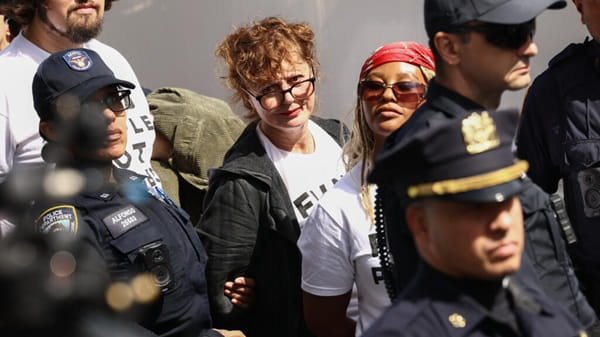
On September 24, demonstrators gathered in Manhattan as Netanyahu prepared to address the United Nations General Assembly. Organizers and participants expressed opposition to Israel’s military campaign in Gaza and to United States military support for Israel. Coverage identified Jewish Voice for Peace among the groups involved. Some participants sat on the roadway, interrupting vehicle traffic. Officers directed demonstrators to move, then detained those who remained. Video and photographs showed Sarandon being handcuffed and escorted away. Reports varied in their totals for arrests and detentions, partly because demonstrations occurred at multiple locations and counts changed over the day. Descriptions of the event should therefore avoid attaching one uncertain figure to every protest location.
Was Sarandon Charged With a Crime?
Police custody at a demonstration does not by itself establish a conviction. Contemporary reports documented the September arrest but did not provide a complete public disposition for any charge specifically against Sarandon. The reported police response centered on blocking streets and compliance with dispersal directions, rather than an allegation of assault by the actress. A claim that she was convicted or sentenced because of the 2026 demonstration would require a separate court record or reliable subsequent report. Protest arrests commonly involve summonses, lower-level public-order offenses or release after processing, but those general possibilities cannot substitute for the actual outcome of a named person’s case.
Her 2018 Arrest in Washington
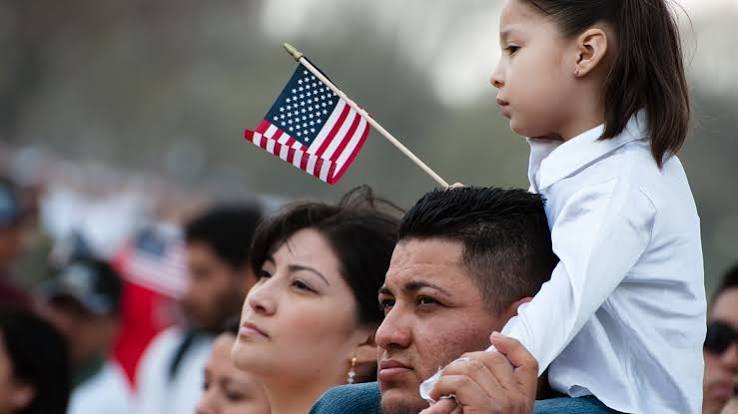
Sarandon was one of about 575 people arrested on June 28, 2018, during a protest in the Hart Senate Office Building in Washington, D.C. Demonstrators objected to the Trump administration’s immigration enforcement policy and the separation of children from parents at the southern border. U.S. Capitol Police reported unlawful-demonstration allegations and processed protesters before releasing them. The civil-disobedience action involved a sit-in inside a congressional office building. The public record of that arrest illustrates the difference between participating in a protest and being found guilty of a serious criminal offense.
Her 2023 Arrest in Albany
Another arrest occurred in May 2023 at the New York State Capitol in Albany. Sarandon supported the One Fair Wage campaign, which sought changes to pay rules affecting tipped service workers. New York State Police reported that a small group of protesters sat in a legislative lobby, obstructed pedestrian movement and refused requests to move. Eight people, including Sarandon, were arrested on suspicion of disorderly conduct. Authorities described the action as a response to the physical obstruction, while campaigners emphasized their wage-policy demands. This incident was separate from both the earlier immigration protest and the later UN demonstration.
Protest Rights and Arrests
The First Amendment protects speech, peaceful assembly and petitioning the government. It does not guarantee unlimited access to roads, legislative buildings or restricted areas. Police may enforce content-neutral traffic and building-access rules, subject to constitutional limits and the circumstances of a particular intervention. That legal distinction explains how a peaceful political demonstration can still lead to an arrest when demonstrators intentionally remain in a prohibited place. Whether any individual officer acted lawfully or a particular charge was sustainable must be examined using that incident’s facts.
Current Status
The latest widely reported arrest concerned the September 24 protest near UN headquarters. No reliable report reviewed for this account established a subsequent prison sentence for Sarandon in that matter. Her previous publicized protest arrests were distinct incidents in different jurisdictions. It would be inaccurate to suggest that all of her arrests formed one continuing criminal prosecution or that an arrest record alone proves wrongdoing. The supported description is that Sarandon has repeatedly taken part in civil-disobedience demonstrations and was among the people arrested during the September 2026 protest.