Owls are admired for their quiet flight, large eyes, and unusual behavior, but keeping one at home is a very different legal matter from owning an ordinary pet bird. In the United States, most native owl species are protected by federal wildlife law, which generally prevents a private person from simply buying, capturing, or keeping one as a household pet.
For most people, owning a native owl as a personal pet is not legal. Limited possession may be allowed under specific federal and state permits for purposes such as falconry, rehabilitation, scientific work, or conservation education. Nonnative owls can present a different legal question, but state and local rules may still restrict ownership.
Why Are Most Owls Federally Protected?
The Migratory Bird Treaty Act, or MBTA, is the main federal law affecting owl possession. Unless authorized by regulation or permit, it prohibits activities including taking, capturing, possessing, buying, selling, transporting, importing, or exporting protected migratory birds. The law also covers their parts, nests, and eggs.
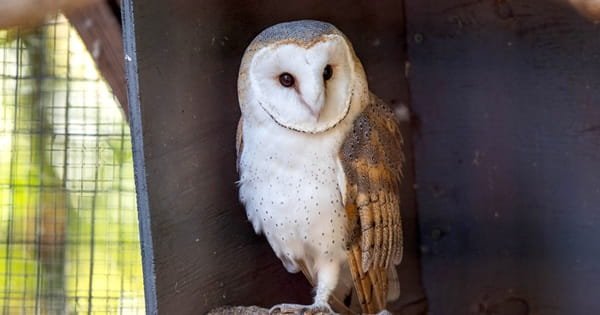
The U.S. Fish and Wildlife Service’s protected-bird list includes the order Strigiformes, which covers owls. The Act applies to migratory bird species native to the United States and its territories. A person therefore generally cannot catch a great horned owl, barn owl, barred owl, or another protected native owl and keep it as a pet.
Can You Get a Permit to Keep an Owl?
Federal permits exist, but they are not ordinary pet licenses. The U.S. Fish and Wildlife Service issues migratory-bird permits for qualified activities such as rehabilitation, scientific collecting, conservation education, raptor propagation, and falconry.
An education permit, for example, can authorize possession for legitimate conservation programs but not personal use. Wildlife rehabilitators also work under permits and are generally expected to release recovered birds or arrange authorized placement for birds that cannot be released.
What About Owls Used in Falconry?
Falconry is one narrow situation in which a qualified person may legally possess certain raptors, including some owls. It is not casual pet ownership. Falconers must meet licensing, experience, housing, recordkeeping, and species requirements established by their state or territory.
Washington, for example, specifically allows appropriately licensed general falconers to possess certain raptors and includes great horned owls and barred owls among species that may be taken from the wild under its falconry rules.
Can You Own a Nonnative Owl?
A genuinely nonnative owl can be legally different because the MBTA’s protection applies to native migratory species. That does not make an exotic owl automatically legal. State exotic-animal laws, local ordinances, import requirements, and the lawful source of the bird still matter.
International importation can trigger additional federal wildlife controls and, for some species, CITES documentation. An online seller’s statement that an owl is legal should never replace a check of the law where the buyer lives.
Can You Keep an Injured or Baby Owl You Find?
Finding an injured owl or a young owl on the ground does not give you ownership rights. Taking a protected owl home without authorization can itself create a legal problem, even when the intention is to help.
Contact a licensed wildlife rehabilitator, state wildlife agency, or local animal-control authority instead. Federally permitted rehabilitators are authorized to care for protected migratory birds under specific conditions.
Are Owl Feathers, Eggs, and Nests Protected Too?
Yes. Federal protection is broader than possession of a live bird. The MBTA can also restrict possession of protected owl feathers, body parts, nests, and eggs. Finding a feather outdoors does not necessarily make it lawful to take it home.
What Are the Penalties for Illegal Owl Possession?
An MBTA violation can lead to confiscation and federal criminal penalties. Under current federal law, an ordinary violation can be prosecuted as a misdemeanor carrying a fine of up to $15,000, imprisonment for up to six months, or both. Certain knowing commercial violations involving sale or barter can be felonies. State penalties may also apply.
The Bottom Line
For an ordinary private owner, keeping a native U.S. owl as a pet is generally not legal. Most native owls are federally protected, and permits are intended for regulated purposes such as falconry, rehabilitation, research, propagation, or conservation education rather than household companionship.
A nonnative owl may fall outside the MBTA’s native-species protection, but state wildlife law, local ordinances, import rules, and the bird’s lawful source must still be checked. Before acquiring any owl, verify the exact species with the relevant state wildlife agency and the U.S. Fish and Wildlife Service.