Criminal liability usually depends on more than proving that a prohibited act occurred. The prosecution often must also establish a required mental state, such as purpose, knowledge, recklessness, or negligence. That is why a defendant’s mistake can matter. But the law treats a mistake about facts very differently from a mistake about what the law allows.
A mistake of fact occurs when a person is wrong about a factual circumstance. Someone takes property believing it belongs to them, for example, or acts based on an incorrect belief about another material fact. If that mistake prevents the prosecution from proving the mental state required for the offense, it may provide a defense.
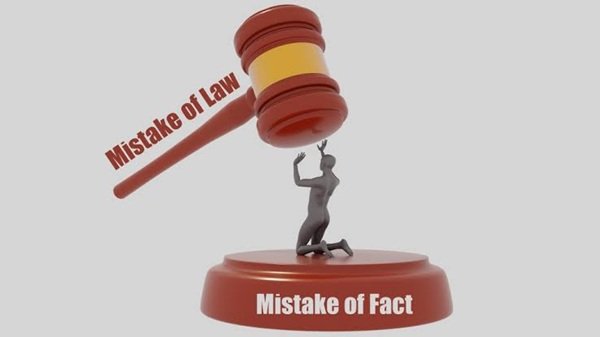
A mistake of law is different. It involves misunderstanding the legal effect of known facts or simply not knowing that conduct is prohibited. The traditional rule is strict: ignorance of the law is generally not a defense. Yet that rule has exceptions and qualifications. Some statutes make knowledge of illegality part of the offense, and reliance on certain official statements of law may sometimes matter.
The real legal question is therefore not whether the defendant was mistaken in some broad sense. It is what the defendant was mistaken about, what mental state the crime requires, whether the mistake was reasonable where reasonableness matters, and whether a recognized exception applies.
What Is a Mistake of Fact?
A mistake of fact is a misunderstanding about a material factual circumstance rather than a misunderstanding of the governing law. In criminal cases, the defense matters because the mistake may negate mens rea, the mental state that the prosecution must prove.
Consider a person who leaves a restaurant with an umbrella honestly believing it is their own. If the charged theft offense requires an intent to take property belonging to another, the mistaken belief about ownership can undermine that required intent.
The analysis depends on the offense. For crimes requiring purpose or knowledge, an honest factual mistake may sometimes defeat the required mental state even if the mistake seems unreasonable. For offenses based on recklessness or negligence, the reasonableness of the belief can become more important because the offense itself measures the defendant’s conduct against awareness of risk or a reasonable-person standard.
The Model Penal Code expresses the issue in terms of whether the mistake negates the purpose, knowledge, belief, recklessness, or negligence required for a material element. State law does not always follow the Model Penal Code exactly, so the applicable statute and local precedent remain decisive.
What Is a Mistake of Law?
A mistake of law occurs when a person understands the basic facts but misunderstands whether the law prohibits, permits, or requires the conduct. The classic example is a defendant who knows exactly what they did but claims they did not know the conduct was criminal.
As a general rule, that argument fails. Criminal law has long followed the principle that ignorance of the law ordinarily does not excuse a violation. Otherwise, defendants could routinely avoid responsibility by claiming unfamiliarity with statutes.
But the rule is not absolute. A mistake of law may matter where the statute itself requires the government to prove knowledge that the conduct was unlawful. It may also matter in limited circumstances where a person reasonably relies on an official statement of law that later proves incorrect, such as certain statutes, judicial decisions, or authorized official interpretations.
Those exceptions are narrow. Advice from a friend, internet post, or private lawyer does not automatically create a complete mistake-of-law defense simply because the defendant relied on it.
Mistake of Law vs Mistake of Fact: Key Differences
| Issue | Mistake of Fact | Mistake of Law |
| Nature of error | Wrong belief about a factual circumstance | Wrong belief about what the law means or requires |
| General criminal-law effect | May negate the required mental state | Usually not a defense |
| Reasonableness | Can matter depending on the offense and mens rea | Reasonable belief alone usually does not create a defense |
| Typical example | Believing property taken is one’s own | Believing prohibited conduct is legally permitted |
| Main legal question | Did the factual mistake prevent proof of mens rea? | Does a recognized exception or statutory knowledge requirement apply? |
The difference can appear simple in theory but difficult in real cases. A single belief can contain both factual and legal components. Courts may therefore ask what precisely the defendant misunderstood and how that misunderstanding relates to the elements of the charged offense.
Why Mens Rea Is Central to the Defense
Mistake defenses cannot be analyzed without first identifying the mental state required by the criminal statute. If the prosecution must prove that the defendant acted knowingly, a factual mistake may show that the defendant lacked the required knowledge. If the offense requires intent to deprive another person of property, an honest ownership mistake may negate that intent.
Strict-liability offenses are different. If the law does not require proof of a particular mental state for a material element, a mistake may not help because there is no mens rea to negate. Legislatures sometimes create strict-liability rules in regulatory areas, although criminal courts often interpret statutes carefully before concluding that serious offenses dispense with a mental-state requirement.
Reasonableness also depends on the offense. Traditional common-law doctrine often distinguished between general-intent and specific-intent crimes, allowing an unreasonable but honest factual mistake to defeat specific intent while requiring reasonableness for some general-intent offenses. Modern statutes increasingly state mental elements directly, making the better question whether the mistake prevents proof of the particular state of mind the statute demands.
When a Mistake of Law Can Actually Matter
Although the general rule is that ignorance of the law is no excuse, several situations require closer examination.
First, the criminal statute may make awareness of illegality part of the offense. When Congress or a state legislature uses terms such as “willfully” in a way that requires proof the defendant knew the conduct was unlawful, misunderstanding the law can become relevant to whether the prosecution has established that element.
Second, some jurisdictions recognize a limited defense based on reasonable reliance on an official statement of law. The Model Penal Code, for example, addresses reliance on an official statement later determined to be invalid or erroneous. The precise sources that qualify vary, but the concept generally concerns authoritative statements, not casual or unofficial advice.
Third, due-process principles can become relevant where the government affirmatively misleads a person about the legality of conduct and then prosecutes that person for relying on the government’s representation. This is sometimes discussed under doctrines such as entrapment by estoppel. It is not a general permission to claim ignorance; it is a much narrower fairness-based principle.
Finally, some complex federal statutes define “willfulness” more strictly because regulated conduct can be highly technical. Tax law is a well-known example of a field in which a genuine misunderstanding of legal duties may be relevant to willfulness, although the exact standard depends on the offense.
Examples That Show the Difference
Suppose Alex takes a laptop from an office believing it is the identical laptop Alex brought to work. If charged with theft, the mistake concerns ownership and identity of property. That is a factual mistake and may negate an intent to steal.
Now suppose Jordan knowingly takes another person’s laptop but believes that taking low-value property is not a crime if it is returned within 24 hours. The facts are understood; the error concerns the legal rule. That is a mistake of law and ordinarily does not excuse the conduct.
A harder case arises when a statute prohibits possession of a particular regulated item only when the defendant knows a specified factual characteristic. If the defendant reasonably believes the item lacks that characteristic, the mistake may be factual. But if the defendant knows the characteristic and merely believes the law does not regulate it, the mistake is legal.
These distinctions explain why lawyers often break the charged offense into individual elements before evaluating a mistake defense. The label alone is not enough.
Mistake in Contract Law Is a Different Issue
The phrase “mistake of fact” also appears in contract law, but the consequences are different from criminal defense. A mutual mistake about a basic assumption underlying a contract can, in some circumstances, support rescission or avoidance. A unilateral mistake may also have consequences where additional requirements are met, such as the other party knowing of the error or enforcement becoming unconscionable.
That civil doctrine should not be confused with criminal-law mens rea. In a criminal case, mistake is primarily analyzed in relation to the elements of an offense and the prosecution’s burden of proof. In a contract dispute, the focus is instead on consent, allocation of risk, material assumptions, and whether the agreement should be enforced.
Conclusion
Mistake of fact and mistake of law are not interchangeable defenses. A factual mistake can be powerful because it may prevent the prosecution from proving the mental state required for a crime. A legal mistake usually receives much less protection because criminal law generally expects people to comply with applicable law even when they do not know every rule.
The decisive analysis is element by element. What did the defendant believe? Was the error factual or legal? What mens rea does the statute require? Did the mistake negate that mental state? And does the jurisdiction recognize a specific exception? Those questions are more important than the label attached to the defense.
Frequently Asked Questions
1. Is an unreasonable mistake of fact always rejected?
No. The answer depends on the mental state required by the offense. For some purpose- or knowledge-based crimes, an honest factual mistake may negate the required intent even if it was unreasonable. For negligence-based offenses, an unreasonable mistake may provide little or no protection because reasonableness is built into the standard.
2. Does not knowing a law exists excuse a criminal violation?
Usually not. The general rule is that ignorance of the law is no defense. Exceptions can arise where knowledge of illegality is itself an element of the offense or where another recognized doctrine applies.
3. What if a government official incorrectly says the conduct is legal?
That can matter in limited circumstances. Some mistake-of-law doctrines recognize reasonable reliance on certain official statements, and due-process principles may protect a defendant who was affirmatively misled by an authorized government actor. The source, authority, wording, and reasonableness of the reliance are critical.
4. Can mistake of fact be used against a strict-liability offense?
Often not with respect to an element for which no mental state is required. A factual mistake works mainly by negating mens rea. If the legislature validly created strict liability for the relevant element, there may be no mental state for the mistake to negate.
5. Who has the burden of proving or disproving a mistake defense?
The answer varies by jurisdiction and by how the defense is characterized. Frequently, once evidence of mistake is properly raised, the prosecution still bears the ultimate burden of proving every element of the offense beyond a reasonable doubt. Some affirmative defenses can involve different burdens, so the specific statute and state or federal law must be checked.