Trader Joe’s has faced a wide range of class-action lawsuits in the United States involving employee wages, customer receipts and the labeling of its private-label foods. Some have resulted in multimillion-dollar settlements, while other consumer cases have been dismissed after courts concluded that plaintiffs could not establish the legal requirements for their claims.
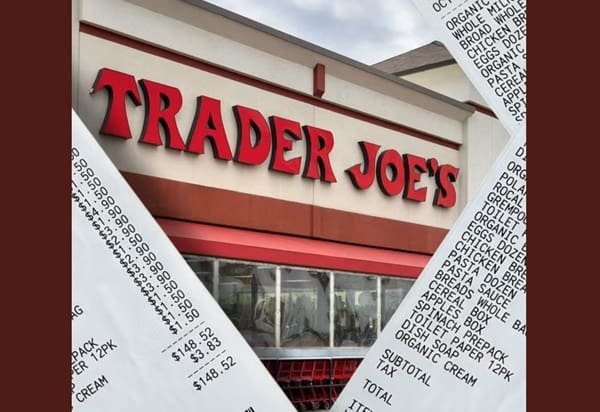
The most significant recent development is a proposed $12.47 million California employee settlement announced in 2026. Trader Joe’s has also received final approval for a separate $7.4 million settlement involving credit and debit card receipts.
$12.47 Million Trader Joe’s Wage and Hour Settlement
One of the largest current Trader Joe’s class-action matters involves thousands of California employees.
Several lawsuits were coordinated as Trader Joe’s Wage and Hour Cases, JCCP No. 5196. They involve employees classified as Crew, Merchants and Mates who worked at California Trader Joe’s stores.
The workers alleged that Trader Joe’s violated California labor law in several ways, including:
- Rounding employee time records in a way that allegedly reduced wages
- Failing to properly include certain “Thank You” payments when calculating overtime rates
- Failing to provide legally compliant meal and rest periods
- Failing to pay all minimum and overtime wages
- Issuing allegedly inaccurate wage statements
- Failing to reimburse certain business expenses
Trader Joe’s denied liability but agreed to resolve the coordinated cases for $12.47 million. Approximately $710,000 of the settlement is allocated to penalties under California’s Private Attorneys General Act.
The court granted preliminary approval on March 12, 2026. Final approval is not yet complete; the final approval hearing is currently scheduled for April 22, 2027. Therefore, the $12.47 million agreement should still be described as a proposed or preliminarily approved settlement as of September 2026.
$7.4 Million Credit Card Receipt Class Action
Trader Joe’s has finalized another major settlement involving customer payment-card information.
The case, Keim v. Trader Joe’s Company, alleged that Trader Joe’s issued receipts containing too many digits from customers’ credit or debit card numbers.
Federal law under the Fair and Accurate Credit Transactions Act, or FACTA, generally prohibits merchants from printing more than the last five digits of a payment-card number on electronically generated customer receipts.
Plaintiff Brian Keim alleged that certain Trader Joe’s receipts printed the first six and last four digits of customers’ cards, creating an unnecessary identity-security risk.
Trader Joe’s agreed to establish a $7.4 million settlement fund without admitting wrongdoing.
On August 10, 2026, Los Angeles Superior Court Judge Elaine Lu gave the settlement final approval, finding the agreement fair, adequate and reasonable. Only four class members filed objections, and none challenged the overall adequacy of the settlement.
This makes the FACTA case one of the clearest completed Trader Joe’s class-action settlements in 2026.
Trader Joe’s Dark Chocolate Heavy Metals Lawsuit
Trader Joe’s was also sued over allegations that some of its dark chocolate contained lead, cadmium and arsenic.
The consolidated proceeding involved products including:
- Trader Joe’s Dark Chocolate 72% Cacao
- Trader Joe’s The Dark Chocolate Lover’s Chocolate 85% Cacao
Consumers alleged that Trader Joe’s should have disclosed the alleged presence or risk of heavy metals on its packaging.
Several claims survived an early dismissal ruling in 2024. However, Trader Joe’s later obtained a much more significant victory.
On March 27, 2025, U.S. District Judge Ruth Bermudez Montenegro granted Trader Joe’s motion for summary judgment on the remaining claims. The court concluded that plaintiffs had not established the type of exclusive knowledge necessary to support their omission-based claims under the applicable state laws.
Therefore, the dark chocolate litigation did not result in a class-wide settlement or damages award against Trader Joe’s.
Trader Joe’s Avocado Oil Class Action
Trader Joe’s has also been sued over its avocado oil.
Plaintiffs Kevin Smith and Clair Awad filed a proposed class action alleging that Trader Joe’s avocado oil was marketed as pure avocado oil even though testing allegedly indicated that some avocado oil products in the marketplace contained cheaper seed or vegetable oils.
The Trader Joe’s case became part of a broader group of lawsuits filed against retailers including Walmart, Aldi, Target and others.
Plaintiffs attempted to consolidate the cases into a federal multidistrict litigation.
However, on February 6, 2025, the U.S. Judicial Panel on Multidistrict Litigation rejected the request. The panel concluded that centralization was unnecessary because most cases concerned different defendants, brands, labeling and testing evidence.
The decision did not determine whether Trader Joe’s avocado oil was mislabeled. It simply required the individual lawsuits to proceed separately rather than through one nationwide MDL.
“100% Juice” Organic Freezer Pops Lawsuit
Another proposed class action targets Trader Joe’s Organic Freezer Pops.
Plaintiff Mario Palacios alleges that the front of the packaging prominently describes the product as “100% Juice” even though it is made from concentrate and contains other ingredients.
The complaint argues that consumers could reasonably interpret the label to mean the freezer pops contain only juice or are substantially less processed than they actually are.
Trader Joe’s disputes the allegations and filed a motion seeking dismissal of the case. The lawsuit, Palacios v. Trader Joe’s Company, was filed in California and remains a contested consumer-labeling case.
Where Trader Joe’s Class Actions Stand
As of September 2026, Trader Joe’s class-action record is mixed.
The company has agreed to significant settlements in employment and receipt-privacy cases, including the $12.47 million proposed California wage settlement and the finally approved $7.4 million FACTA settlement.
Consumer food-labeling cases have been less successful. Trader Joe’s defeated the consolidated dark chocolate claims at summary judgment, while avocado oil and other labeling disputes have faced procedural and evidentiary challenges.
The cases show that Trader Joe’s faces legal exposure on several fronts, but the existence of a class-action complaint does not itself establish that the company violated the law. Each lawsuit depends heavily on the specific product label, consumer evidence and state or federal statute involved.