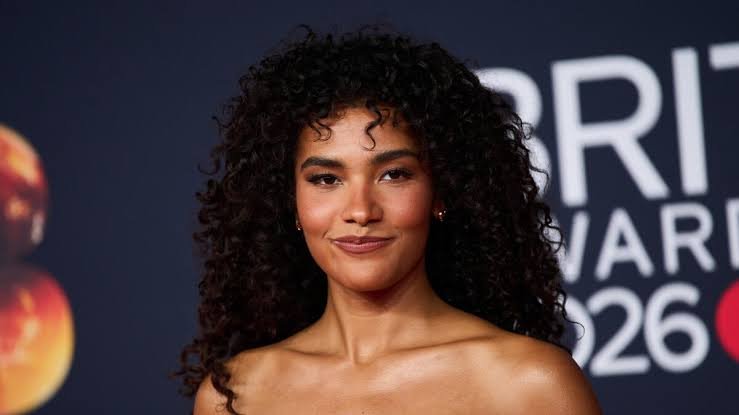
A melody can make a song instantly recognizable. It can also become the center of an expensive legal dispute. British singer Olivia Dean’s 2025 track “I’ve Seen It” is now under scrutiny after a music publisher alleged that it copied protectable elements of Bill Withers’ classic “Just the Two of Us.” The case was filed in Los Angeles on October 1, 2026. Although headlines have described it as the Olivia Dean copyright lawsuit, Dean herself is not a named defendant. The lawsuit instead targets the companies that released, published and commercially exploited the song.
How the Olivia Dean Copyright Lawsuit Began
Mattie Music Group, doing business as Bleunig Music, brought the action in the U.S. District Court for the Central District of California. The case is titled Mattie Music Group v. Capitol Records, LLC et al., No. 2:26-cv-11383. The plaintiff claims copyright interests in “Just the Two of Us,” the 1981 song co-written by Withers, Ralph MacDonald and William Salter.
The older composition became a major hit through Grover Washington Jr.’s recording featuring Withers on vocals. Dean’s “I’ve Seen It” appears on her second album, The Art of Loving, released in September 2025. The complaint centers on the underlying musical composition, rather than alleging that Dean directly sampled the original sound recording.
What Does the Publisher Say Olivia Dean Copied?
The complaint alleges repeated use of a distinctive, copyright-protected melody. Mattie Music Group says its representatives noticed the similarities in August 2026 and commissioned musicologist Alexander Stewart to compare the works. According to the filing, Stewart’s preliminary analysis identified substantial similarities in protectable musical expression.
That conclusion is evidence presented by the plaintiff, not a court finding. Similar-sounding passages alone do not establish infringement. The legal question is whether the later song unlawfully copied original expression protected by copyright, as opposed to common musical devices or material outside copyright protection.
Which Record Labels and Publishers Are Named?
The defendants identified in the lawsuit are Capitol Records, Universal Music Group, Sony Music Publishing’s U.S. entity and Kobalt Music Publishing America. The plaintiff alleges that the recording companies distributed and monetized the track while the publishing companies licensed and exploited rights connected to the composition.
Dean and her collaborators Bastian Langebæk and Max Wolfgang are not individually named as defendants. Their involvement as credited writers is relevant to how the disputed song was created, but the filed case seeks relief against the commercial entities identified in the complaint.
How Copyright Law Will Shape the Case
Under U.S. copyright law, a claimant generally must show ownership of a valid copyright and copying of protected original elements. Courts consider evidence of access and similarities between the compositions, and may examine expert musicological testimony. Widespread popularity can be relevant to access, but familiarity with a successful song does not itself prove copying.
Mattie Music Group argues that “Just the Two of Us” was sufficiently famous for Dean and her co-writers to have encountered it. The defendants may contest the alleged similarities, the scope of the publisher’s rights or whether any overlap involves musical conventions that copyright law leaves free for other artists to use. Independent creation is another possible defense.
Did the Companies Receive a Warning?
The publisher says it sent written notices to the defendants around August 17, 2026, identifying the registration and alleged melodic overlap. It claims the companies continued distributing, licensing and exploiting “I’ve Seen It” after receiving those letters.
That timeline matters because the plaintiff characterizes the alleged infringement as willful. Receiving a complaint, however, does not establish that the recipient actually infringed or acted knowingly. Those issues require evidence and, if contested, a judicial determination.
How Much Money Is Being Sought?
The lawsuit seeks damages based on alleged losses and profits attributable to any infringement. As an alternative, the plaintiff may pursue statutory damages if the applicable legal requirements are met. Federal copyright law can allow up to $150,000 for willful infringement of a single work, but that figure is a statutory ceiling, not a confirmed claim value, settlement or automatic award.
Mattie Music Group also requests attorneys’ fees, costs and a permanent injunction restricting further infringing uses. The complaint seeks remedies concerning allegedly infringing copies. A request for an injunction does not mean that streaming platforms must immediately remove the track; a court must first decide whether the requested relief is justified.
Latest Status of the Olivia Dean Lawsuit
As of October 10, 2026, the case is at an early stage. The publicly available docket confirms that the complaint was filed on October 1, but no judgment, settlement or infringement verdict has been verified. Reports published during the first week of October indicated that representatives for Dean and the named music companies had not issued substantive public responses to the allegations.
Further proceedings may involve defense filings, evidence from music experts, document discovery and arguments about which melodic features are legally protectable. Settlement is possible, but its likelihood and terms cannot be established from the complaint alone.
Why the Dispute Matters to the Music Industry
This lawsuit is part of a continuing debate about the boundary between musical inspiration and unlawful copying. Popular songs often use familiar progressions, rhythms and short melodic patterns. Protecting genuinely original expression while preserving room for new songwriting is the balance courts must maintain.
For now, the Olivia Dean copyright lawsuit is an allegation against publishers and record companies, not proof that the singer plagiarized another artist. Its outcome will depend on the musical evidence, ownership rights and application of federal copyright law.