Buc-ee’s is famous for enormous travel centers, clean restrooms, barbecue, snacks and its smiling buck-toothed beaver. But outside its stores, the Texas-based company has also developed a reputation for aggressively protecting its trademarks. Over the years, Buc-ee’s has sued convenience stores and other businesses over beavers, alligators, moose and even similar-sounding business names.
The issue returned to national attention in 2026 after Buc-ee’s filed trademark lawsuits against businesses in Ohio, including a small store called Beaver’s Mini Mart. The cases have sparked a wider debate: when does legitimate trademark protection become too aggressive?
The Beaver’s Mini Mart Lawsuit
Buc-ee’s filed a federal lawsuit against Hanes Road Carryout Inc., which operates Beaver’s Mini Mart in Beavercreek, Ohio, on July 28, 2026. The company argues that the mini mart’s cartoon beaver branding could create confusion with Buc-ee’s famous mascot.
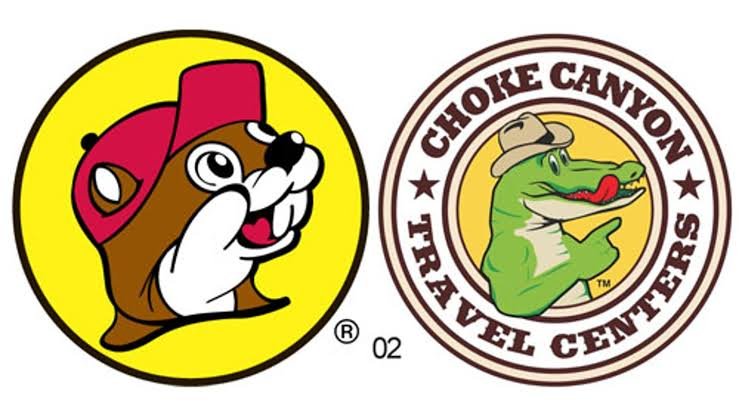
The two logos are not identical. Buc-ee’s uses the head of a smiling beaver wearing a red cap inside a yellow circle. Beaver’s Mini Mart uses a full-body smiling and waving beaver. However, Buc-ee’s argues that the combination of a beaver character, convenience-store services and certain branding elements is close enough to potentially confuse customers.
Buc-ee’s says litigation was not its first move. According to a company statement, it attempted to contact the mini mart’s owner several times between March and June 2026 but received no response before filing suit.
The lawsuit has produced an unusually strong public reaction. Beavercreek businesses and residents rallied behind the mini mart, while the city council formally recognized the beaver as part of the city’s history. Ohio Governor Mike DeWine publicly called the lawsuit “absurd.”
As of August 23, 2026, the case remains pending.
Buc-ee’s vs. Mickey Mart
Beaver’s Mini Mart is not Buc-ee’s only recent Ohio trademark target.
In February 2026, Buc-ee’s sued Coles IP Holdings, associated with the Mickey Mart convenience-store business. Buc-ee’s challenged branding featuring Mickey the Moose, arguing that elements of the mascot and logo could cause confusion with Buc-ee’s branding.
The defendant has contested the claims and filed counterclaims. Court records currently show a settlement conference scheduled for September 15, 2026, meaning the dispute has not yet reached a final judgment.
The Choke Canyon Alligator Case
One of Buc-ee’s best-known victories involved Choke Canyon, another Texas convenience-store operator.
Instead of a beaver, Choke Canyon used a smiling alligator. Buc-ee’s argued that the overall presentation — including an animal head appearing within a yellow circular design — was confusingly similar to its established branding.
The federal case went to a jury, which ruled in Buc-ee’s favor in May 2018. The litigation demonstrated an important trademark principle: two logos do not necessarily need to contain the same animal or identical wording for infringement to become an issue. Courts can consider the overall commercial impression and likelihood of consumer confusion.
The Frio Beaver Dispute
Buc-ee’s also took action against B&B Grocery, whose Frio River Grocery used a mascot known as the “Frio Beaver.”
The 2014 lawsuit alleged that the beaver mascot and surrounding logo design were too similar to Buc-ee’s branding. The dispute was settled, and the grocery store stopped using the challenged Frio Beaver mascot.
This case helped establish the pattern that Buc-ee’s would actively challenge businesses using beaver imagery in markets related to convenience stores and fuel retailing.
Buc-ee’s vs. Bucky’s
A more complicated battle involved Nebraska-based Buck’s Inc., which operated stores under the Bucky’s name.
The companies had previously entered into a coexistence agreement permitting use of their respective trademarks. When Bucky’s later expanded into the Houston area, Buc-ee’s sued, claiming infringement and other violations.
The dispute did not end well for Buc-ee’s. In 2018, a Nebraska federal court confirmed an arbitration award requiring Buc-ee’s to pay Buck’s and its owner $400,000.
Why Does Buc-ee’s Sue So Often?
Trademark owners have a legitimate reason to police unauthorized or confusingly similar uses of valuable marks. A company that ignores widespread imitation can make protecting its brand more difficult.
But Buc-ee’s strategy has attracted criticism because some defendants are much smaller businesses and some challenged mascots appear noticeably different from its beaver.
That tension is what makes the lawsuits interesting. Buc-ee’s sees a nationally recognized mascot worth defending. Critics see a powerful corporation stretching trademark protection too far.
The pending Beaver’s Mini Mart case may become particularly important because it puts those competing arguments directly before a federal court — while a very public battle over the meaning of one smiling beaver continues outside the courtroom.