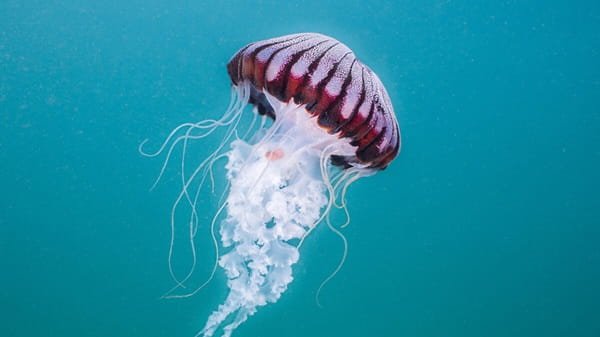
Keeping jellyfish at home has become more practical as specialized aquariums and captive-bred moon jellies have entered the pet trade. Legally, that makes them very different from many exotic mammals or protected birds. There is no broad federal law that makes an ordinary captive-bred jellyfish illegal to keep, but not every species can be bought, collected, shipped, or imported without restriction.
For most owners, legality turns on the exact species, its source, whether it crossed a state or international border, and whether wildlife or invasive-species rules apply. A captive-bred moon jelly from a lawful U.S. supplier may be straightforward, while wild collection or importation can involve permits and limits.
Is There a Federal Ban on Pet Jellyfish?
No general federal ban applies simply because an animal is a jellyfish. However, U.S. Fish and Wildlife Service import and export rules define wildlife broadly enough to include coelenterates and other invertebrates, including animals bred in captivity.
Importing or exporting live jellyfish can therefore trigger federal wildlife declaration and port requirements. U.S. Fish and Wildlife Service guidance generally requires wildlife shipments to be declared on Form 3-177 unless an exemption applies.
Can You Own a Moon Jellyfish?
Moon jellyfish are among the most common species sold for home aquariums. In much of the United States, a lawfully obtained captive-bred moon jelly is not subject to a blanket pet ban.
Owners still need to check state and local rules. Some jurisdictions regulate nonnative aquatic animals, and a seller’s willingness to ship does not prove that the destination state allows possession.
What Are the Rules in Florida?
Florida illustrates the difference between keeping an aquarium animal and collecting or importing wildlife. Its Captive Wildlife Office regulates mammals, birds, reptiles, and amphibians, not invertebrates such as jellyfish.
Other Florida laws still matter. The state regulates nonnative aquatic species and commercial harvest of jellyfish and other saltwater products. Recreational marine-life collection is also subject to licensing, bag limits, gear rules, and closed areas.
Can You Collect a Jellyfish From the Ocean?
Not automatically. Wild collection is a separate legal question from possession of a captive-bred aquarium animal.
California regulates recreational take of ocean invertebrates. General rules impose bag limits and prohibit take within state marine reserves, while tidepool collection is limited to specifically listed invertebrates.
Florida likewise regulates recreational marine-life harvest and protected areas. A jellyfish floating near shore should not be assumed free to take.
Does Hawaii Allow Pet Jellyfish?
Hawaii has some of the strictest animal-import rules in the country. Non-domestic animals are placed on conditionally approved, restricted, or prohibited lists, and unlisted animals are treated as prohibited unless the required approval process is completed.
A jellyfish that is legal on the mainland should therefore not be shipped to Hawaii without checking its scientific species and import status first.
Can You Release a Pet Jellyfish Into the Wild?
A legal aquarium animal is not automatically legal to release. States regulate introductions of nonnative aquatic organisms because of ecosystem risks.
Florida restricts the release or introduction of nonnative aquatic animals without authorization. Similar invasive-species rules exist elsewhere, so owners should not release pet jellyfish into natural water.
What Happens if the Species Is Restricted?
Possessing, importing, transporting, or releasing a prohibited aquatic species can lead to confiscation, fines, or permit violations. International shipments can also be detained when federal wildlife requirements are not met.
The Bottom Line
Yes, common captive-bred jellyfish such as moon jellies can generally be legally owned in many parts of the United States. There is no nationwide pet ban simply because the animal is a jellyfish.
Legal complications usually arise from the species, wild collection, importation, protected areas, invasive-species rules, and state restrictions. Check the scientific species and destination-state rules before ordering one, and check local marine regulations before collecting from the wild.