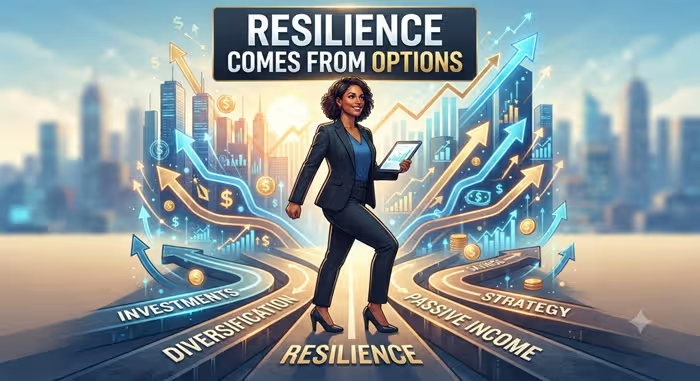
Resilience is often described as the ability to endure difficult situations. That description can make resilience sound like a test of toughness, as though the strongest person is the one who can tolerate the most pressure without changing course. In practice, resilience usually comes from having enough options to avoid remaining trapped in one bad situation.
Those options can take many forms. Money in reserve, flexible skills, supportive relationships, extra time, and backup plans all create alternative paths when the original route closes. Building emergency savings, for example, does more than cover an unexpected bill. It gives you the option to respond without immediately borrowing, missing another payment, or accepting the first solution available.
The goal is not to prepare a perfect answer for every possible crisis. That would be impossible. The goal is to create enough practical choices that one setback does not control your entire future.
Feeling Trapped Makes Problems Feel Bigger
A difficult situation becomes more stressful when it appears to offer only one possible outcome. If you believe you must keep a harmful job because you have no savings, every bad day at work carries extra weight. If one broken appliance could empty your checking account, a minor repair can feel like a major threat.
The problem itself is real, but the absence of alternatives makes it feel even larger. Your attention narrows because the brain is searching urgently for a way out. You may become more willing to accept high costs, unfair terms, or rushed decisions simply because they appear to be the only available choices.
Options create psychological space. Even when none of them is ideal, knowing that you could delay a purchase, use a temporary replacement, ask for help, or choose a different provider reduces the sense of being cornered. That space makes clearer thinking possible.
Resilience Begins Before the Crisis
People often think resilience appears after something goes wrong. A person experiences a setback, finds inner strength, and somehow recovers. While recovery matters, much of resilience is created earlier through ordinary preparation.
Saving a small amount each month creates a financial option. Learning a new skill creates a career option. Maintaining relationships creates a support option. Keeping important documents organized creates an administrative option when time is limited.
None of these actions may feel dramatic when you complete them. Their value becomes clear when circumstances change and you are not forced to begin from zero.
The American Red Cross encourages households to create and practice an emergency plan before a crisis occurs. The same principle applies beyond natural disasters. Preparation allows you to make decisions while conditions are calm instead of inventing every response under pressure.
Money Is Valuable Because It Buys Choices
Money is often discussed in terms of what it can purchase, but one of its most important functions is creating options. A financial cushion can buy time, flexibility, and negotiating power.
Suppose your car needs an urgent repair. Without available savings, you may have to use an expensive credit card, accept unfavorable financing, or postpone the repair and risk losing transportation. With money set aside, you can compare repair shops, ask questions, and choose a solution based on value rather than panic.
The same idea applies to larger decisions. Savings may allow you to leave an unsafe housing situation, reduce work hours during a family emergency, or wait for a more suitable job offer. The money does not remove the difficulty, but it changes the number of responses available.
This is why financial resilience is not only about accumulating a large balance. It is about building enough margin that every unexpected event does not demand an immediate sacrifice somewhere else.
Skills Create Portable Options
A job title can disappear, an industry can change, and a role that once felt secure can become less valuable. Skills are often more resilient because they can move across employers, industries, and situations.
Technical knowledge can create new job opportunities, but adaptable skills matter too. Clear communication, project management, research, problem solving, and the ability to learn unfamiliar systems can remain useful even when a specific position changes.
You do not need to collect qualifications without purpose. Instead, notice which abilities would expand your choices if your current situation changed. A certification, software skill, professional license, or stronger portfolio might make it easier to apply for a different role or negotiate better terms.
Skills can also create options outside traditional employment. Someone who understands bookkeeping, design, tutoring, repair work, or writing may be able to earn temporary income while searching for a permanent position. Even a modest secondary skill can reduce dependence on one employer.
Relationships Are Part of Your Backup System
Self reliance is often treated as the highest form of strength, but complete independence is rarely realistic. Resilient people usually know how to participate in networks of mutual support.
A trusted friend might offer a place to stay for a few nights. A former coworker may know about an open position. A neighbor could help during an emergency, while a family member may provide childcare when plans suddenly change.
These relationships cannot be created instantly when a crisis begins. They are built through regular contact, reliability, and a willingness to help other people as well.
Support does not mean asking others to solve every problem. It means recognizing that people can exchange information, encouragement, practical assistance, and perspective. A strong network increases the number of resources available to everyone in it.
Maintaining relationships can therefore be a practical resilience habit. Checking in, showing appreciation, offering help, and staying connected may seem separate from financial or career planning, but these actions build options that cannot always be purchased.
Backup Plans Should Be Specific
Telling yourself that you will “figure something out” is not the same as having an alternative. A useful backup plan identifies a realistic action you can take when a certain condition occurs.
For example, your primary plan might be driving to work. Your backup could be knowing the public transportation route, keeping a rideshare amount in your budget, or arranging a temporary ride with a coworker. Your main source of income may be your job, while your backup includes an updated resume, active professional contacts, and enough savings to cover several essential expenses.
Specific plans reduce decision fatigue. When a disruption occurs, you already know which options to examine first. You can still adjust, but you do not have to create the entire response while stressed.
The Centers for Disease Control and Prevention offers guidance for dealing with the stress of uncertainty, including practical ways to manage uncertainty and strengthen resilience. Clear alternatives can support that process because they turn a vague threat into a set of possible actions.
Too Many Options Can Become Another Problem
Options improve resilience, but an endless list can create confusion. The purpose is not to keep every possible path open. It is to maintain a few realistic alternatives that support your priorities.
For a financial emergency, you might decide that your first option is using dedicated savings. Your second could be reducing optional expenses, while your third may involve negotiating a payment plan. This order gives you a useful sequence instead of forcing you to compare ten possibilities during a stressful moment.
The same structure can guide career decisions. Your first option may be solving a problem within your current role. Your second could be transferring to another team, while your third might involve applying elsewhere.
A small number of well prepared choices is often more valuable than many vague possibilities. Good options should be realistic, understandable, and available when you need them.
Options Improve Negotiating Power
Negotiation becomes difficult when you cannot walk away. If you desperately need the first available apartment, loan, job, or service provider, the other party has more control over the terms.
Alternatives change that balance. When you have another housing option, additional savings, or more than one job opportunity, you can evaluate an offer rather than automatically accepting it.
This does not mean you should threaten to leave every conversation. It means you can set reasonable boundaries because saying no is possible.
Even one credible alternative can improve confidence. You may ask for a lower fee, a better salary, more time, or clearer contract terms because rejection would not leave you with nothing.
Strong negotiating power is often built quietly. It comes from preparation, research, savings, skills, and relationships that existed before the negotiation began.
Small Options Can Prevent Large Failures
Not every alternative needs to transform your life. A small option can keep a minor problem from becoming a larger one.
Keeping a basic meal in the freezer can prevent an expensive food order during a busy evening. Maintaining a second way to access important files can protect you when a device fails. Having a small buffer in your schedule can prevent one delayed appointment from disrupting the entire day.
These options seem ordinary because they are ordinary. Resilience is often the result of small forms of redundancy placed throughout daily life.
A system with only one point of support is fragile. When that point fails, the entire structure stops working. Adding a second method, resource, or route makes the system more durable.
You do not need backups for everything. Focus first on areas where failure would be expensive, dangerous, or especially disruptive.
Review Your Options as Life Changes
An alternative that worked two years ago may no longer be realistic. A nearby family member may have moved, a professional skill may need updating, or rising expenses may have reduced the protection offered by your savings.
Review your options periodically. Ask what you would do if your income stopped, your housing changed, your transportation failed, or a major responsibility demanded more time.
This exercise should not become a search for everything that could go wrong. Its purpose is to identify important areas where one disruption would leave you with no clear response.
When you find a weak area, add one option. Save a small amount, learn one useful skill, contact one person, gather one document, or research one alternative provider. Resilience grows through these manageable additions.
Real Strength Includes the Ability to Pivot
Resilience does not mean refusing to change. Sometimes continuing on the same path requires more energy than choosing a new one, even when the new route is less familiar.
A resilient person can recognize when a strategy is no longer working and consider alternatives without treating the change as defeat. They may revise a financial goal, leave a job, ask for help, or choose a slower timeline. The original plan changes, but the deeper priority remains protected.
Options make that pivot possible. They create room to respond thoughtfully rather than react desperately.
You cannot control every setback, and you cannot guarantee that every alternative will work. You can, however, keep creating choices that reduce dependence on one outcome.
That is where resilience becomes practical. It is not only the strength to survive a difficult moment. It is the ability to see another route, choose the best available option, and continue moving with more freedom than you had before.