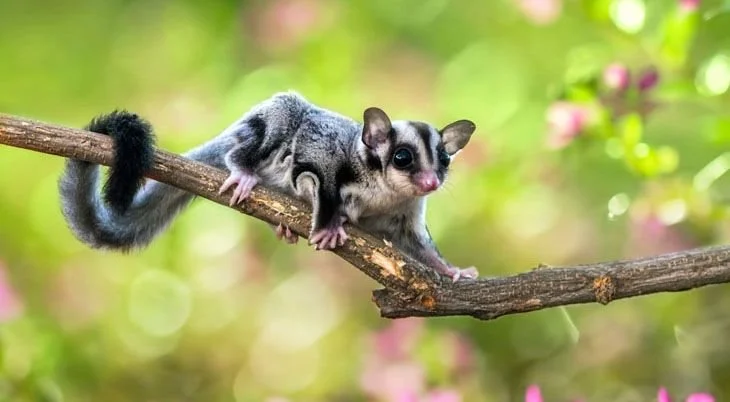
Sugar gliders are small marsupials known for their large eyes, gliding membrane, and social behavior. Their size makes them look more like a conventional pocket pet than many exotic animals, but U.S. law does not treat them uniformly. A sugar glider that is perfectly legal in one state may be prohibited just across a state line.
In much of the United States, private ownership can be legal, and some states do not require a wildlife permit for an ordinary pet owner. Other states ban sugar gliders outright, while a few impose source, import, or documentation requirements. City and county ordinances can be stricter than state law, so legality depends on exactly where the animal will be kept.
Is There a Federal Ban on Sugar Gliders?
There is no general federal law that prohibits an individual from keeping a sugar glider purely as a household pet. Most possession questions are therefore decided by state and local law.
Federal rules can still matter when sugar gliders are bred, sold, exhibited, or transported as part of a regulated business. USDA Animal and Plant Health Inspection Service guidance treats sugar gliders as exotic companion mammals under the Animal Welfare Act. Depending on the business model and applicable exemptions, breeders, dealers, exhibitors, or pet stores may need a USDA license.
A USDA license does not override a state or local ban. It regulates covered commercial activity; it does not create a nationwide right to own an exotic pet.
California Prohibits Sugar Gliders as Pets
California is one of the clearest examples of a state ban. The California Department of Fish and Wildlife lists sugar gliders among exotic animals that are not allowed as pets. California’s Department of Food and Agriculture also identifies sugar gliders as restricted species that cannot be brought into the state.
This means buying a sugar glider legally elsewhere does not make it lawful to bring the animal into California for ordinary pet ownership.
Are Sugar Gliders Legal in Hawaii and Alaska?
Hawaii also takes a strict approach. The Hawaii Department of Agriculture has specifically described sugar gliders as prohibited animals. The state’s island ecosystem makes invasive-species rules especially restrictive.
Alaska uses an approved “clean list” of mammals that may be imported or possessed as pets. Sugar gliders do not appear on the state’s approved mammal list. Alaska explains that if a mammal is not on that list, it cannot be imported or possessed as a pet, and the wildlife agency cannot issue a pet permit to make it legal.
Where Are Sugar Gliders Allowed?
Massachusetts takes the opposite approach. Its current wildlife guidance specifically lists the sugar glider, Petaurus breviceps, among mammals that may be kept as pets without a MassWildlife permit.
Georgia also allows sugar gliders as pets, but with an important condition. Georgia wildlife rules require the owner to have valid documentation showing that the animal originated from a source inspected and regulated by the USDA. That makes proof of lawful origin an important part of ownership in the state.
Can a City Ban Sugar Gliders Even if the State Allows Them?
Yes. Local law can change the answer even where state law is permissive. New York City, for example, prohibits possession of marsupials and specifically includes sugar gliders in its health code.
Prospective owners should therefore check city and county animal-control or health codes as well as state wildlife law. Apartment leases and homeowners association rules may create additional private restrictions.
Can You Buy a Sugar Glider From Any Breeder?
Not necessarily. The animal must be legal at the buyer’s location, and commercial sellers may be subject to USDA requirements. Some states, such as Georgia, also make the animal’s documented source legally important.
Before purchasing, buyers should verify the seller’s status when federal licensing applies and keep bills of sale, breeder records, health documents, and any source paperwork required by state law.
What Happens If You Own One Illegally?
Penalties vary by jurisdiction. Authorities may confiscate the animal, impose civil fines, issue citations, or pursue other enforcement authorized by state or local law. Importing a prohibited animal can create separate violations.
Sugar gliders also have specialized social, dietary, housing, enrichment, and veterinary needs. Their small size should not be mistaken for simple care.
The Bottom Line
Owning a sugar glider is legal in many parts of the United States, but it is not legal everywhere. California, Hawaii, and Alaska are notable restrictive states, while Massachusetts permits sugar gliders without a state wildlife permit and Georgia allows them when its source-documentation requirement is met.
Before buying or transporting a sugar glider, check your state wildlife agency, local animal-control rules, and any import requirements. A pet that is lawful where it was purchased may still be illegal where you live.