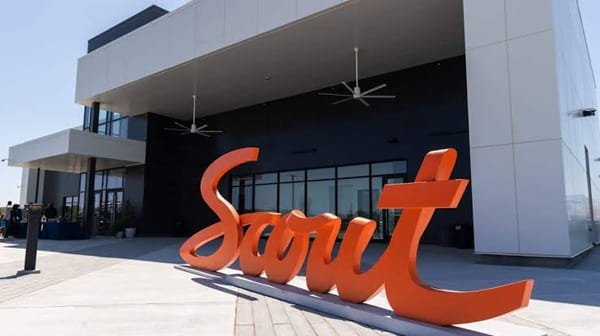
Universal Orlando Resort is facing a negligence lawsuit after a Georgia mother alleged that her nine-year-old son lost consciousness and suffered serious injuries while riding the Stardust Racers roller coaster at Epic Universe in Florida. Jennifer Lundy claims the attraction lacked adequate protection for a rider’s head and upper body, leaving her son vulnerable to injuries during the high-speed ride.
The lawsuit has attracted national attention because it follows a fatal incident involving the same roller coaster in September 2025. Lundy argues that Universal failed to introduce sufficient safety improvements despite earlier concerns about the attraction. Universal disputes responsibility and maintains that the child’s parents failed to exercise reasonable care for his safety.
The case, filed in August 2026 and subsequently moved to federal court, raises questions about amusement park safety standards, manufacturers’ responsibilities, and the legal protections available to visitors injured at major U.S. theme parks.
What Happened on the Stardust Racers Roller Coaster?
According to the lawsuit, Lundy’s son, identified in court documents as L.L., visited Universal Epic Universe on October 13, 2025. He was nine years old and met the attraction’s minimum height requirement of 48 inches.
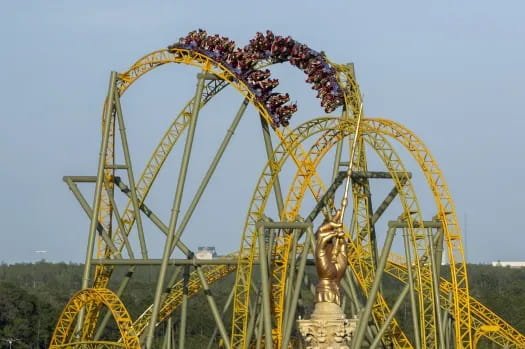
Stardust Racers is a high-speed racing roller coaster located in Epic Universe’s Celestial Park. The attraction reaches approximately 62 miles per hour and climbs as high as 133 feet.
Lundy alleges that her son lost consciousness because of the physical forces generated during the ride. While he was unconscious, his head and face allegedly struck hard surfaces inside the roller coaster vehicle.
The complaint argues that the ride’s restraint system did not adequately support his head, neck, or upper body in that situation.
A photograph captured by the attraction’s on-ride camera was included with the legal complaint. It appears to show the child slumped forward in his seat. However, the photograph alone does not establish the cause of his condition.
Lundy claims her son suffered head and facial trauma, spinal injuries, and other orthopedic complications requiring medical care. These injuries form the basis of her demand for compensation.
Who Is Being Sued, and What Are the Legal Allegations?
Jennifer Lundy filed her complaint on August 17, 2026, in Florida’s Orange County Circuit Court. The case was moved to the U.S. District Court for the Middle District of Florida on September 18, 2026.
The defendants are Universal City Development Partners, Ltd., the company associated with the resort’s operations, and Mack Rides GmbH & Co. KG, the German manufacturer of Stardust Racers.
The lawsuit alleges negligence against Universal and raises negligence and product liability claims against Mack Rides. Lundy argues that the defendants knew or should have recognized the potential dangers of the ride’s design and restraint system.
A central issue is whether the attraction provided reasonable protection against foreseeable injuries, including those arising if a passenger became unconscious during the ride.
The federal case is identified as Lundy v. Universal City Development Partners, Ltd., et al., Case No. 6:26-cv-02109.
Connection to the September 2025 Stardust Racers Death
An important element of Lundy’s complaint concerns the death of Kevin Rodriguez Zavala, a 32-year-old Florida resident who became unresponsive after riding Stardust Racers on September 17, 2025.
The medical examiner determined that Zavala died from multiple blunt impact injuries. Authorities classified his death as accidental, and a subsequent investigation did not establish criminal wrongdoing.
The roller coaster temporarily closed following the incident and reopened in early October 2025.
Lundy’s complaint alleges that Universal resumed operations without adequately changing the ride’s restraint system, reducing its forces, or introducing additional precautions to address the possibility of riders losing consciousness.
Zavala’s family later reached a confidential settlement with Universal. That resolution was separate from Lundy’s lawsuit and did not establish liability in her son’s case.
The earlier death could become relevant to questions about whether the defendants had notice of a potentially dangerous condition. However, it does not independently establish that the two incidents had the same cause.
Universal Orlando’s Response to the Lawsuit
Universal has contested the allegations rather than accepting responsibility for the child’s injuries.
In its legal response, the company argued that Lundy’s family understood the ordinary risks associated with a high-speed thrill ride. Its attorneys also alleged that the parents failed to exercise reasonable care concerning their son’s safety.
The defense specifically referenced the acceleration, deceleration, lateral forces, and body movements normally associated with roller coasters.
These arguments introduce a significant legal dispute: whether the injuries resulted from inherent risks of the attraction or from an alleged failure to provide reasonably safe equipment and adequate warnings.
Meeting the published height requirement does not automatically settle that dispute. Likewise, the fact that a person voluntarily rides a roller coaster does not, by itself, establish that the operator is legally responsible or free from responsibility for every resulting injury.
What Compensation Is Jennifer Lundy Seeking?
The complaint seeks damages exceeding $50,000, with the amount of any eventual recovery still undetermined.
Lundy is seeking compensation related to her son’s alleged injuries, including medical expenses, continuing treatment, physical suffering, disability, and potential long-term effects on his daily activities.
More recent reporting also describes claims that the boy has experienced continuing back pain, difficulties with mobility, and disruption to his schooling.
The court would need to assess medical evidence, causation, and the extent of any lasting impairment before determining whether compensation is justified and, if so, in what amount.
Why the Case Matters Under Florida Law
In a U.S. personal injury lawsuit of this kind, an injured visitor generally must establish that a defendant owed a legal duty, breached it, and caused compensable harm. Lundy’s claims against the park concern its alleged operation of the attraction and warnings to riders. Her claims against the manufacturer focus on the design and safety of the equipment itself.
Medical records, ride inspection and maintenance documents, engineering analysis, safety notices, and testimony from witnesses could all become important. The central question is not whether a roller coaster is frightening or intense, but whether the defendants met the applicable legal duties under the circumstances.
Although the lawsuit is now in federal court, that procedural move does not mean Universal was charged with violating a federal criminal or safety statute. The underlying dispute concerns civil injury and product liability claims governed by applicable law.
Latest Status of the Jennifer Lundy Lawsuit
As of October 14, 2026, Lundy’s lawsuit remains a contested civil matter. Public reporting confirms its move to federal court and Universal’s response disputing liability. No publicly verified verdict or settlement resolving Lundy’s claims has been identified.
The parties may exchange documents, question witnesses, and present expert opinions about the ride, the alleged injuries, and the adequacy of the warnings and restraints. The case could eventually be resolved through a negotiated settlement, a court ruling, or trial.
For Universal and Mack Rides, the litigation places renewed attention on the design and operation of one of Epic Universe’s most prominent attractions. For the family, the outcome will depend on whether the evidence proves the claimed injuries were caused by legally actionable failures, rather than merely the ordinary forces of a thrill ride.