An Idaho farming family has taken the state to court after being largely prevented from using groundwater to irrigate land cultivated by generations of relatives. Jerry and Valerie Bingham, who operate a 1,000-acre farm near Blackfoot, Idaho, claim that state water restrictions unfairly deprived them of irrigation supplies while allowing some farmers with newer water rights to continue pumping.
The legal battle involves two related court filings against the Idaho Department of Water Resources (IDWR): a September 15, 2026, petition challenging agency orders and a September 21 lawsuit seeking compensation for an alleged taking of private property. The family says the restrictions devastated crop production and threatened a farming operation established in 1950.
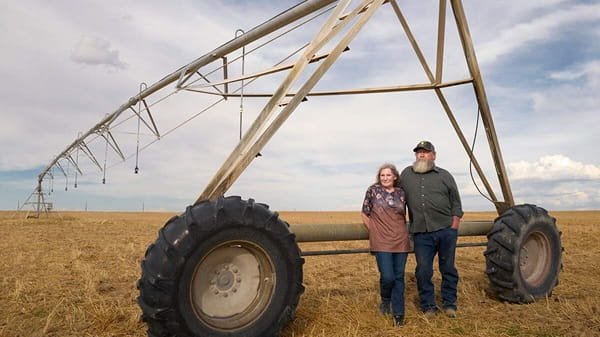
At the center of the controversy is the Eastern Snake Plain Aquifer, a major source of irrigation water across southern and eastern Idaho. The proceedings raise a difficult question: when groundwater supplies are restricted to protect older surface-water rights, can farmers with comparatively senior groundwater rights be shut off while newer users continue pumping under approved mitigation plans?
Who Are Jerry and Valerie Bingham?
Jerry Bingham grew up on his family’s farm west of Blackfoot. He and his wife, Valerie, now operate roughly 1,000 acres growing crops that include potatoes, wheat and alfalfa. The family has relied on groundwater irrigation for decades in an agricultural region where dependable water access is essential to planting and harvesting.
Their six water rights carry priority dates from 1950, 1951, 1952 and 1987. The Binghams describe five of those rights as relatively senior among groundwater users. They say that distinction matters because many other wells with later priority dates have been permitted to operate while their pumps remain shut down.
Why Did Idaho Shut Off the Farm’s Water?
The dispute grew out of a long-running request by the Surface Water Coalition, whose members hold older rights to Snake River water. Idaho regulates connected surface water and groundwater together because pumping from the aquifer can reduce water available to senior river users.
On July 25, 2025, IDWR issued an order curtailing groundwater rights with priority dates later than October 11, 1900, unless the users qualified under an approved mitigation plan. The Binghams’ rights fell within that group. Subsequent orders continued restrictions through 2026, although the couple was allowed to pump for a brief period in the spring.
According to the family, the lack of water left fields dry, damaged crops and prevented normal planting. Their lawyers say the couple has been unable to operate the farm with the predictability needed to obtain crop contracts or make seasonal business decisions.
What Is the Dispute Over Senior Water Rights?
Idaho follows the prior-appropriation principle often described as ‘first in time, first in right.’ In general, an earlier valid water right has priority over a later one when supplies cannot satisfy everyone.
The Binghams argue that the state is disregarding that order among groundwater users. Although their rights date largely to the early 1950s, they contend that people holding younger groundwater rights have continued pumping because they participate in state-approved mitigation arrangements.
IDWR responds that the relevant comparison is with the Surface Water Coalition’s 1900-era rights, not with other groundwater users. From that perspective, the Binghams’ rights are junior. The central disagreement is whether allowing newer groundwater users to mitigate their impacts lawfully justifies continued pumping when the Binghams have no approved plan.
Why Were the Family’s Mitigation Plans Rejected?
A mitigation plan allows a user who would otherwise face curtailment to continue pumping by addressing the harm that pumping would cause to senior rights. Depending on approval conditions, a plan can involve conserving water or providing other water supplies.
The Binghams proposed five approaches of their own. Their lawyers say one included a 40% reduction in water use, but none was accepted. The couple has declined to join a groundwater district simply to obtain coverage under a broader agreement.
IDWR argues that its rules permit continued out-of-priority pumping only when an approved plan adequately protects senior users. It says the lack of an approved plan, rather than any preference for farmers with younger rights, explains why the Binghams remain subject to curtailment.
Two Related Lawsuits Challenge the Water Restrictions
On September 15, 2026, the couple filed a petition for judicial review in Idaho’s Seventh Judicial District Court in Bingham County, Case No. CV06-26-1801. The petition challenges agency decisions, including a July 21 order continuing the 2026 restrictions and an August 24 denial of reconsideration. They also asked the court to stay enforcement while it reviews the dispute.
On September 21, the Binghams filed a separate inverse-condemnation complaint against the State of Idaho and IDWR, Case No. CV06-26-1837. That lawsuit alleges the government effectively took constitutionally protected water rights without paying just compensation. It invokes the Idaho Constitution and the federal Constitution’s protections against uncompensated takings.
A petition for judicial review asks whether an agency acted lawfully. An inverse-condemnation claim asks whether government action amounted to a taking of property for which compensation is owed. They concern the same restrictions but seek different judicial remedies.
How Much Money Does the Bingham Family Say It Lost?
In the compensation complaint, the family estimates approximately $300,000 in lost potato-related revenue and additional rental costs because potatoes could not be planted on its own land during 2025 and 2026. It also alleges approximately $388,000 in reduced wheat revenue in 2026 because irrigation water was inadequate.
Those numbers are the family’s estimates, not court-approved damages. The complaint describes serious additional financial pressures, including difficulty obtaining financing and crop contracts, possible loan defaults and the risk of losing the family business.
The compensation action seeks an amount to be established in court, along with applicable interest and other relief. There is no settlement or established payout.
How Has the Idaho Department of Water Resources Responded?
In a September 29 filing opposing the requested stay, IDWR maintained that its regulations require it to protect the older surface-water rights represented by the Surface Water Coalition. The agency said farmers with younger rights can legally continue pumping when their use is covered by an approved mitigation plan.
The department also argued that the Binghams were trying to challenge an underlying 2023 water-management methodology through an appeal from newer orders. According to the state, the time to challenge that earlier framework had already expired.
The Binghams rejected those arguments in an October 7 reply. They maintained that the restrictions unlawfully ignore their relative seniority and argued that limited late-season pumping could be allowed without measurable injury to senior water users. The court has not yet resolved those competing positions.
Why the Lawsuit Matters for Idaho Farmers
The case exposes the pressure created when declining water availability meets an elaborate system of priority dates, groundwater models and mitigation agreements. Participation in an approved plan can keep a pump running, while a farmer without one may be unable to irrigate even with rights older than many neighboring wells.
The eventual ruling could clarify how much discretion Idaho regulators have when administering connected groundwater and surface-water supplies. It could also address whether restrictions that prevent a farmer from exercising water rights can amount to a compensable government taking.
Latest Status of the Jerry Bingham Idaho Water Lawsuit
As of October 14, 2026, the judicial-review proceeding remains pending. The agency docket records IDWR’s September 29 opposition, the Binghams’ October 7 reply and the October 7 filing of the administrative record. The available records do not show a final ruling on the merits or a court-approved compensation award.
The immediate question is whether the family can obtain relief from continued curtailment while the courts consider its objections. A separate question is whether the state must compensate the family for the restrictions already imposed. For the Binghams, the outcome may determine whether a farm sustained for generations can continue operating.