Understanding the Core Framework of Personal Injury Law
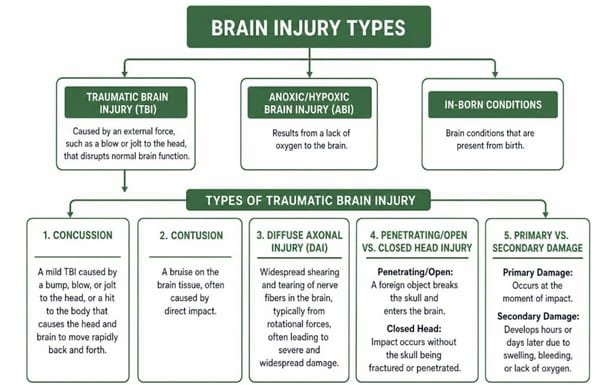
A brain injury can manifest in various ways, but in the context of personal injury law, the focus often centers on traumatic brain injury (TBI). A TBI occurs when an external force, such as a blow or jolt to the head, disrupts the normal function of the brain. This distinguishes it from other brain injuries like anoxic/hypoxic brain injuries (ABI), which result from a lack of oxygen, or in-born conditions that are present from birth.
The legal framework for pursuing a claim hinges on proving negligence. This involves establishing that another party owed you a “duty of care,” breached that duty through their actions or inactions, and that this breach was the “proximate cause” of your brain injury, leading to “legal liability” and “compensatory damages.”
Brain injuries are categorized by their nature and severity. Common types of TBI include:
- Concussion: A mild TBI resulting from a bump, blow, or jolt to the head, or a hit to the body that causes the head and brain to move rapidly back and forth.
- Contusion: A bruise on the brain tissue, often caused by direct impact.
- Diffuse Axonal Injury (DAI): Widespread shearing and tearing of nerve fibers in the brain, typically from rotational forces, often leading to severe and widespread damage.
- Penetrating/Open vs. Closed Head Injury: A penetrating injury involves a foreign object breaking the skull and entering the brain, while a closed head injury involves impact without the skull being fractured or penetrated.
- Primary vs. Secondary Damage: Primary damage occurs at the moment of impact. Secondary damage develops hours or days later due to swelling, bleeding, or lack of oxygen.
Understanding these distinctions is crucial for medical diagnosis and for building a robust legal case.
Key Elements of Negligence in Personal Injury Law
In tort law, negligence is the cornerstone of most personal injury claims. To successfully pursue a brain injury claim, we must demonstrate four key elements:
- Duty of Care: The at-fault party had a legal obligation to act reasonably to prevent harm to others. For example, drivers have a duty to operate their vehicles safely, and property owners have a duty to maintain safe premises.
- Breach of Duty: The at-fault party failed to uphold their duty of care. This could be through reckless driving, neglecting property maintenance, or providing substandard medical care.
- Causation: The breach of duty directly caused your brain injury. This is often a complex element in TBI cases, as symptoms can be delayed or difficult to definitively link to the incident without expert medical opinion.
- Damages: You suffered actual losses (economic and non-economic) as a result of the injury.
Establishing these elements requires meticulous investigation and often involves partnering with a seasoned personal injury law firm to navigate the complexities of statutory deadlines and legal strategy. For example, a negligent driver who causes a motor vehicle crash and results in a TBI would be held liable under these principles.
Common Types of Severe Injury and TBI Claims
Brain injuries can arise from a multitude of incidents, often due to someone else’s carelessness or wrongdoing. According to the Centers for Disease Control and Prevention (CDC), traumatic brain injuries are one of the leading causes of death and disability in the United States. The most common causes we encounter include:
- Motor Vehicle Crashes: Collisions involving cars, trucks, motorcycles, or pedestrians are a frequent cause of TBIs, often due to sudden impact or whiplash.
- Falls: The CDC reports that falls are the most common cause of TBI injuries, accounting for almost half of all TBI-related hospitalizations in the U.S. This includes falls from heights, slip and falls on dangerous property, or falls in nursing homes.
- Workplace Incidents: Construction accidents, machinery malfunctions, or falls in industrial settings can lead to severe head trauma.
- Sports Injuries: Concussions are prevalent in contact sports, and repeated head trauma can lead to long-term neurological issues.
- Assaults: Physical altercations, domestic violence, or criminal acts can result in direct blows to the head.
- Medical Errors: Birth injuries, surgical mistakes, or misdiagnosis can lead to anoxic brain injuries or exacerbate existing conditions.
- Product Defects: Faulty helmets, airbags that fail to deploy, or defective machinery can directly contribute to brain injuries.
Understanding the origin of the injury is paramount, as it dictates who can be held liable—whether it’s drivers, employers, property owners, healthcare providers, or product manufacturers.
The Initial Case Investigation and Evidence Gathering Process
Immediately following a suspected brain injury, protecting both your health and legal rights is critical. Seek immediate medical evaluation, even if symptoms seem mild or there was no loss of consciousness. A TBI can occur without loss of consciousness, and symptoms can be delayed. Typical delayed or evolving symptoms might include persistent headaches, dizziness, memory problems, mood changes, or difficulty concentrating.
To protect your legal claim, it’s crucial to preserve all available evidence. This includes detailed medical records, imaging results, and any incident reports. The initial investigation phase is about meticulously collecting every piece of information that can support your case.

Documenting Liability and Preserving Critical Evidence
Effective evidence preservation is the backbone of a successful brain injury claim. We focus on:
- Scene Photography and Video: Documenting the accident scene, vehicle damage, property conditions, or specific hazards.
- Police Reports and Incident Reports: Official documentation from law enforcement or workplace safety officers.
- Witness Statements: Gathering accounts from anyone who observed the incident.
- Surveillance Footage: Obtaining video from nearby businesses, traffic cameras, or private residences.
- Vehicle Telematics and “Black Box” Data: Modern vehicles often record crucial data about speed, braking, and impact forces. Sending a spoliation letter immediately is vital to prevent this data from being overwritten or destroyed.
- Maintenance Records and Safety Compliance: For workplace or property-related injuries, these records can reveal negligence.
Preserving this evidence helps us prove how the injury occurred and who was at fault. It also counters potential defense arguments.
Medical Evaluations and Diagnostic Imaging in Personal Injury Law
Medical documentation is the cornerstone of any brain injury claim. We rely heavily on:
- Neurological Exams: Assessing cognitive function, motor skills, and sensory responses.
- MRI Scans and CT Imaging: These diagnostic tools can reveal structural damage, bleeding, or swelling in the brain.
- Neuropsychological Testing: Comprehensive evaluations that measure cognitive abilities like memory, attention, and executive function, often crucial for identifying subtle or long-term TBI effects.
- Glasgow Coma Scale (GCS): An initial assessment tool used to determine the severity of a TBI shortly after injury.
- Treatment Continuity: Consistent medical care and documentation of all symptoms, treatments, and their impact are vital. Gaps in treatment can be used by insurers to challenge the severity or causation of your injury.
The costs of treating a brain injury can be staggering. Studies have found that the lifetime cost of treating a single traumatic brain injury can easily surpass $1 million. This underscores the importance of thoroughly documenting all medical aspects of your injury.
Case Valuation, Life-Care Planning, and Settlement Negotiations
Determining the true value of a brain injury case is a complex process that goes far beyond immediate medical bills. It involves a comprehensive assessment of all past, present, and future damages. This includes not only direct medical expenses but also lost wages, loss of earning capacity, and the profound impact on quality of life, often referred to as pain and suffering. Policy limits of the at-fault party’s insurance coverage also play a significant role in potential recovery.
Calculating Economic and Non-Economic Damages
When we pursue compensation, we seek to recover both economic and non-economic damages:
- Economic Damages: These are quantifiable financial losses, including:
- Past and future medical bills (hospital stays, surgeries, rehabilitation, medications, assistive devices).
- Lost wages and benefits from time off work.
- Loss of earning capacity (the difference between what you would have earned and what you can earn due to the injury).
- Household services and modifications to your home.
- Non-Economic Damages: These are subjective and harder to quantify but are crucial for full compensation:
- Pain and suffering (physical pain, discomfort, emotional distress).
- Loss of enjoyment of life (inability to participate in hobbies, social activities, or daily routines).
- Mental anguish, anxiety, depression, and PTSD.
- Loss of consortium for spouses.
In rare cases of extreme negligence, punitive damages might be awarded to punish the wrongdoer and deter similar conduct. However, these are less common and often subject to caps in certain jurisdictions.
Navigating Insurance Adjusters and Medical Liens
After an injury, you will likely be contacted by insurance adjusters. It’s crucial to understand their role: they represent the insurance company, not your best interests. We strongly advise against giving recorded statements or signing any documents without consulting with legal counsel. Adjusters may try to minimize your injuries or offer a quick, lowball settlement.
We also manage various medical liens and reimbursements. When your medical bills are paid by health insurance, Medicare/Medicaid, or workers’ compensation, these entities often have a right to be reimbursed from your settlement or judgment. This process, known as subrogation, can be complex, especially with ERISA liens or Medicare set-asides. Our role is to negotiate these liens to maximize your net recovery.
Litigation, Trial Preparation, and Resolving Complex Claims
The journey of a brain injury claim often involves several stages, from initial consultation to potential settlement or trial. After evidence gathering, if a fair settlement cannot be reached, litigation may be necessary. This involves filing a formal complaint, followed by the “discovery phase,” where both sides exchange information through interrogatories, requests for documents, and depositions (sworn testimonies outside of court).
Independent Medical Exams (IMEs) and defense neuropsychological evaluations are common in TBI cases. These are medical examinations scheduled by the defense to assess your injuries. We prepare you for these evaluations and ensure your rights are protected. Expert witnesses play a crucial role in substantiating claims, including neurologists, neuroradiologists, neuropsychologists, vocational rehabilitation specialists, and economists.
When to Settle Versus Taking a Case to Trial
The decision to settle or go to trial is one of the most significant in a personal injury case. Settlement mediation is a common step, where a neutral third party helps both sides negotiate. Many cases resolve through settlement, as it offers certainty and avoids the inherent risks of a jury trial.
However, if settlement offers are inadequate or liability is strongly contested, taking a case to trial may be necessary. Trial involves presenting your case to a judge and jury, with expert testimony, cross-examination, and legal arguments. While a jury verdict can result in substantial compensation, it also carries the risk of a less favorable outcome. We provide clear guidance on these risks and benefits, helping you make an informed decision.
Structuring Verdicts and Long-Term Payouts
For significant brain injury cases, particularly those involving long-term care needs, structuring the payout is often advisable.
- Lump-sum settlements: A single payment, which provides immediate funds but requires careful financial management.
- Structured settlements: Payments made over time, often tax-free, providing financial security for ongoing needs.
- Special needs trusts: These are vital for preserving eligibility for government benefits (like Medicaid or SSI) while still allowing the injured party to receive funds for care and quality of life. They are particularly important for individuals with permanent disabilities.
- Wrongful death and survival actions: In tragic cases where a brain injury proves fatal, these actions allow families to seek compensation for their losses, including medical expenses, funeral costs, lost financial support, and pain and suffering of the deceased before death.
These financial planning tools are essential for ensuring long-term financial security and proper care for brain injury survivors.
Frequently Asked Questions About Personal Injury Claims
How long does a personal injury claim typically take to resolve?
The duration of a personal injury claim, especially one involving a brain injury, can vary significantly. It often depends on the severity of the injury, the complexity of liability, and the willingness of both parties to negotiate. Many cases resolve within 1-3 years, but complex TBI claims, particularly those requiring extensive medical treatment and reaching “maximum medical improvement” (MMI) before full damages can be assessed, can take longer. The litigation timeline, discovery phase, settlement negotiations, and court scheduling all influence the overall duration.
What happens if I am partially at fault for my accident?
The impact of being partially at fault depends on your state’s negligence rules. Some states follow comparative negligence, where your recovery is reduced by your percentage of fault. For example, if you are 20% at fault, your damages are reduced by 20%. Other states, like North Carolina, follow contributory negligence, which is much stricter. In North Carolina, if you are found even 1% at fault, you may be completely barred from recovering any damages. This rule highlights the critical importance of strong legal representation to challenge any claims of shared fault.
How do contingency fees work in catastrophic injury cases?
Most personal injury lawyers, especially those handling catastrophic injury cases like TBIs, work on a contingency fee basis. This means you don’t pay any upfront legal fees. Instead, our fees are a percentage of the final settlement or court award. If we don’t win your case, you generally don’t owe us attorney fees. This “no-win no-fee” structure allows injured individuals to pursue justice without financial burden. Case costs and litigation expenses (e.g., expert witness fees, court filing fees, deposition costs) are typically advanced by the firm and reimbursed from the settlement or award.
Conclusion
Navigating the aftermath of a brain injury is an arduous journey, fraught with medical complexities, emotional challenges, and significant financial burdens. Understanding your legal rights and the intricate process of pursuing a claim is crucial for securing the compensation necessary for recovery and long-term well-being.
We believe in empowering brain injury survivors and their families with the knowledge and dedicated legal advocacy they deserve. From deciphering the nuances of different brain injury types to meticulously gathering evidence, proving negligence, and negotiating with insurance companies, our expertise is designed to maximize your recovery and provide legal protection.
By partnering with an experienced legal team, you gain not just representation, but a steadfast ally committed to securing your long-term financial security and guiding you through every step of this challenging process. Your focus should be on healing; our focus is on fighting for the justice and resources you need to rebuild your life.