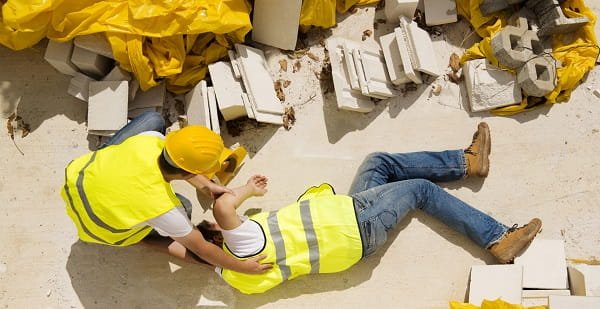
A construction worker falls from scaffolding and receives workers’ compensation benefits. Medical bills begin to get paid, and a portion of lost wages is covered. Months later, the worker realizes the injury has permanently affected future employment, earning potential, and daily life. At that point, one question becomes far more important than the amount of workers’ compensation benefits received. If you or a loved one has suffered a serious job site injury, experienced construction zone injury representation may help identify legal options beyond workers’ compensation and determine whether additional parties may be held responsible.
The biggest misconception after a construction accident is that workers’ compensation is the only path to financial recovery. While these benefits provide important protection, they often do not fully compensate injured workers for the long-term consequences of a catastrophic injury.
“One of the most common mistakes injured workers make is assuming workers’ compensation is their only option for recovery.”
Understanding where additional liability may exist can significantly affect the financial resources available during recovery.
Look Beyond Your Employer for Liability
Construction projects rarely involve a single company.
Most job sites include general contractors, subcontractors, equipment suppliers, property owners, architects, engineers, delivery companies, and specialized trade contractors working alongside one another.
That creates a complicated legal environment when an accident occurs.
A worker may receive workers’ compensation through an employer while another company’s negligence contributed directly to the incident.
The person writing your paycheck is not always the only party responsible for your injury.
Unsafe equipment placement, poorly coordinated work activities, inadequate site supervision, negligent subcontractors, or dangerous property conditions may all contribute to serious accidents.
When another party played a role, an injured worker may have grounds to pursue a third-party claim in addition to workers’ compensation benefits.
Unlike workers’ compensation, third-party claims may provide compensation for damages such as pain and suffering, emotional distress, future lost earnings, and diminished earning capacity.
Identifying every potentially responsible party often becomes one of the most important aspects of a serious construction injury case.
Do Not Overlook Defective Equipment
Construction workers depend on equipment performing safely every day.
When that equipment fails during ordinary use, the cause may involve more than operator error.
Scaffolding may collapse.
Safety harnesses may fail.
Power tools may malfunction.
Forklifts and aerial lifts may experience mechanical defects.
Protective equipment may not perform as intended.
“Equipment that fails during normal use may point to a product defect rather than simple operator error.”
In these situations, responsibility may extend to the manufacturer, distributor, supplier, maintenance contractor, or another company involved in placing the equipment into service.
Determining whether defective equipment contributed to an accident often requires detailed engineering analysis, equipment inspections, and expert evaluations.
Mechanical failures that initially appear accidental sometimes reveal preventable design flaws or manufacturing defects after closer investigation.
Safety Violations Often Tell a Larger Story
Many serious construction accidents do not occur without warning.
Unsafe job site conditions frequently exist long before someone gets hurt.
Missing guardrails.
Improper trench protection.
Insufficient fall protection.
Lack of worker training.
Failure to secure heavy equipment.
Poor housekeeping practices.
Each of these conditions increases the likelihood of serious injuries.
When safety violations have previously been identified at a work site, they may become valuable evidence during a third-party negligence claim.
Research published in the American Journal of Public Health has shown that workplace injury data helps identify recurring safety problems across high-risk industries, including construction.
Patterns of repeated safety violations often demonstrate that hazardous conditions were known before an accident occurred.
This information may help establish whether reasonable safety measures should have been implemented earlier.
Preserve Evidence Before the Job Site Changes
Construction sites evolve constantly.
Materials are delivered.
Equipment is relocated.
Temporary structures are removed.
Workers rotate between assignments.
Security footage may be routinely overwritten.
Within days, the accident scene may look completely different.
Time is one of the greatest threats to a construction injury investigation.
Prompt evidence preservation often plays a significant role in determining how a case develops.
Photographs documenting the accident scene can preserve hazardous conditions before they are corrected.
Witness interviews capture observations while memories remain fresh.
Maintenance records, inspection reports, employee training documentation, incident reports, and equipment service histories frequently provide valuable information about what occurred before the accident.
Engineering experts and accident reconstruction specialists may also evaluate equipment failures, structural conditions, or work site practices to better understand the sequence of events.
The earlier this information is collected, the greater the opportunity to preserve critical evidence before it disappears.
Serious Injuries Create Long-Term Financial Consequences
The true cost of a construction injury is rarely limited to emergency medical treatment.
Many injured workers require multiple surgeries, extended rehabilitation, physical therapy, prescription medications, adaptive medical equipment, or long-term pain management.
Some injuries permanently affect mobility, independence, or the ability to return to previous employment.
Income losses may continue for years.
Career opportunities may disappear entirely.
Families often experience additional financial strain when loved ones become full-time caregivers or household responsibilities shift following a catastrophic injury.
A complete evaluation of damages should consider both immediate expenses and future financial needs.
Medical professionals, economists, vocational rehabilitation experts, and life-care planners frequently work together to estimate the long-term impact of serious workplace injuries.
Their evaluations help create a more accurate understanding of future medical costs, reduced earning capacity, and lifelong care requirements.
Early Insurance Offers May Not Reflect Future Losses
Insurance companies understand something many injured workers do not immediately realize.
The full impact of a construction injury often cannot be measured within the first few weeks after an accident.
Recovery takes time.
Future surgeries may still be uncertain.
Permanent physical limitations may not yet be known.
Doctors may still be evaluating whether an injured worker can safely return to the same occupation.
Despite this uncertainty, settlement discussions sometimes begin very early.
“An early settlement offer may benefit the insurance company more than the injured worker.”
Accepting compensation before understanding the long-term effects of an injury may significantly limit future financial recovery.
Carefully evaluating every aspect of an injury before resolving a claim allows individuals to make more informed decisions about their future.
Looking Beyond Workers’ Compensation
Workers’ compensation remains an essential safety net for injured employees.
It provides access to medical treatment and partial wage replacement when workplace accidents occur.
However, it is not always the complete solution after a serious construction injury.
Complex construction projects involve multiple businesses, specialized equipment, independent contractors, and overlapping safety responsibilities.
When another company, defective product, unsafe property condition, or negligent third party contributed to an accident, additional legal remedies may exist beyond workers’ compensation benefits.
Understanding every potential source of liability can make a meaningful difference in long-term financial recovery.
The strongest construction injury cases often begin by asking a different question.
Not simply, “What benefits are available through workers’ compensation?”
Instead, “Who else may share responsibility for what happened?”
That broader investigation often uncovers legal options capable of providing more complete compensation for the lasting impact of a serious construction accident.