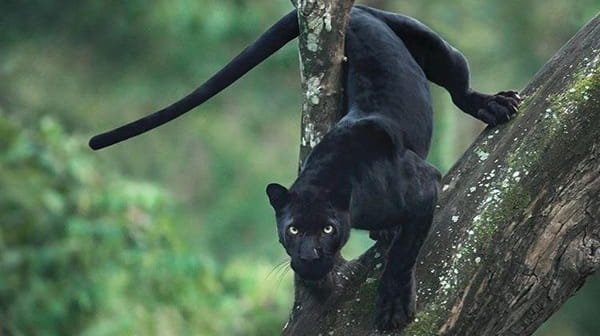
The phrase “black panther” sounds like the name of a separate exotic cat, but it usually refers to a dark-colored big cat rather than a distinct species. Most black panthers are melanistic leopards or jaguars. U.S. law regulates the underlying species, not the color of its coat.
For an ordinary person who wants a black panther as a pet, the legal position is now very restrictive. The federal Big Cat Public Safety Act generally prohibits private possession and breeding of leopards, jaguars, cougars and several other big cats. Only a narrow grandfather rule protects certain pre-existing owners.
What Does “Black Panther” Mean Legally?
A black panther is not its own species. U.S. Fish and Wildlife Service guidance notes that “panthers” can refer to black-colored big cats, including leopards, jaguars and cougars.
Leopards, jaguars and cougars are all covered by the Big Cat Public Safety Act. Calling an animal a black panther therefore creates no loophole.
What Does the Big Cat Public Safety Act Prohibit?
The Big Cat Public Safety Act took effect on December 20, 2022. Unless an exception applies, it makes breeding or possessing covered live big cats unlawful and also restricts their acquisition, sale, transport, import and export.
The law covers lions, tigers, leopards, snow leopards, clouded leopards, jaguars, cheetahs, cougars and their hybrids. An ordinary private buyer therefore cannot acquire a leopard or jaguar today simply as a pet.
Can Someone Who Already Owned One Keep It?
Only under the federal grandfather provision. Private owners who possessed a covered big cat before December 20, 2022 had to register each animal with the U.S. Fish and Wildlife Service by June 18, 2023.
That registration period is closed. A qualifying registered owner may keep the specific animal, but cannot use the grandfather rule to acquire additional big cats. Breeding, acquiring, selling and direct public contact are also barred.
Who Can Still Legally Possess Big Cats?
The law creates limited exceptions rather than a normal pet-license system. Qualifying USDA-licensed Class C exhibitors, state institutions, state-licensed veterinarians, qualifying sanctuaries and certain transporters can fall within those exceptions.
Those exceptions have conditions and do not give ordinary individuals a route to private pet ownership.
What Do State Laws Say?
State law can be stricter. Florida classifies jaguars and leopards as Class I wildlife and expressly prohibits keeping Class I animals as personal pets.
California also treats wild members of the cat family as restricted species. Permits are available only for limited qualified purposes such as research, exhibition, education or shelter, not ordinary pet ownership.
Texas classifies both leopards and jaguars as dangerous wild animals, adding another state and local regulatory layer. Federal law still controls whether an ordinary private person may newly acquire or possess one.
Does Captive Breeding Make a Black Panther Legal?
No. A captive-bred leopard or jaguar is still a covered big cat. The Act restricts breeding and acquisition, so captive birth does not turn the animal into a lawful household pet.
Other federal wildlife laws can also apply. U.S. Fish and Wildlife Service guidance notes that most big cats are listed as endangered or threatened under the Endangered Species Act.
What Happens If Someone Owns One Illegally?
Violations can lead to civil or criminal penalties, and unlawfully possessed or transferred big cats can be seized and forfeited.
State violations can bring additional penalties or confiscation.
The Bottom Line
A black panther is not an ordinary legal pet in the United States. Whether it is a melanistic leopard, jaguar or another covered big cat, federal law generally prevents new private pet ownership and breeding.
Only narrow exceptions and qualifying pre-2022 owners who registered by June 18, 2023 can continue to possess covered big cats under the Act. State laws can impose additional restrictions, and a black coat does not change the animal’s legal status.