The rapid construction of artificial intelligence data centers across the United States is creating a new wave of lawsuits against developers and technology companies. Residents, environmental organizations and property owners are challenging projects over noise, air pollution, water use, construction damage and questionable zoning approvals.
Companies including xAI, Amazon Data Services, DataOne and Alliance Cloud Services have already been pulled into litigation. Some cases seek compensation for property damage, while others are attempting to stop or restrict data-center operations altogether.
NAACP Lawsuit Against xAI’s Colossus II Data Center
One of the largest current environmental cases involves Elon Musk’s xAI and its subsidiary MZX Tech.
The NAACP and its Mississippi State Conference filed a federal lawsuit on April 14, 2026 over turbines supplying electricity to xAI’s Colossus II data center near Southaven, Mississippi and Memphis, Tennessee.
The plaintiffs allege that xAI operated 27 natural-gas turbines without obtaining air permits required under the Clean Air Act. They argue that the turbines effectively constitute a large private power plant and release nitrogen oxides and other pollutants near residential communities, schools and churches.
The NAACP asked the court for a preliminary injunction that could restrict operation of the turbines. It is also seeking civil penalties and pollution-control requirements.
The federal government later moved to intervene and dismiss the case, arguing that Mississippi regulators had determined that permits were not required for the temporary turbines and that the facility is important to U.S. AI development and national-security interests.
The lawsuit remains contested and no final finding has established that xAI violated the Clean Air Act.
xAI and SpaceX Face Separate Noise Class Action
xAI is also facing a separate proposed class action from residents living near its Southaven power facility.
Haley et al. v. X.AI Corp. et al. was filed in June 2026 against xAI, MZX Tech and SpaceX.
Residents allege that constant industrial noise from the facility has become intolerable, interferes with sleep and prevents them from properly enjoying their homes.
The lawsuit seeks damages and court relief on behalf of people allegedly affected by the noise. The claims remain allegations and have not yet been decided at trial.
Amazon Data Services Nuisance Lawsuit in Virginia
Amazon is facing another significant data-center lawsuit in Louisa County, Virginia.
Property owner Austin Newsom and Central VA Marine sued Amazon Data Services over construction of its Northeast Creek Technology Campus.
They allege that construction has created excessive noise, flashing lights, dust, heavy traffic, water-quality problems and flooding. Newsom also alleges that vibrations from construction equipment caused cracks in his home, while the neighboring business says customers have avoided the property because of construction conditions.
Amazon asked the federal court to dismiss the lawsuit.
On July 10, 2026, U.S. District Judge Jasmine H. Yoon granted Amazon’s motion only in part, allowing an important portion of the private-nuisance claim to continue.
The ruling is significant for other developers because it demonstrates that obtaining government approval for a data center does not necessarily prevent neighboring landowners from bringing private nuisance claims over the way construction affects their property.
DataOne New Jersey Noise Lawsuit
Residents in Vineland, New Jersey have also filed a proposed class action against DataOne USA over its large data-center project.
The federal complaint alleges that the facility produces an industrial humming and vibrating noise that reaches nearby homes and interferes with sleep and ordinary daily life.
Plaintiffs Scott Montgomery and Michael Gentile filed the federal case on May 26, 2026. They asserted private nuisance, public nuisance and negligence claims. A related state complaint also includes resident Steven Brown.
The controversy has expanded beyond noise. Questions have also been raised about power generators, permitting, stormwater management and other environmental issues surrounding the project.
The roughly 350-megawatt facility is associated with DataOne and Nebius, which has entered into major AI infrastructure arrangements involving Microsoft.
The lawsuit remains active and no final liability determination has been made.
Alliance Cloud Services Michigan Class Action
Another noise case was filed against Alliance Cloud Services in Michigan on May 26, 2026.
Residents Lindy Valenzuela and John Valdes allege that the company’s Dowagiac data center generates excessive continuous noise that has reduced their quality of life and affected surrounding residential properties.
The proposed class action includes claims for private nuisance, public nuisance and negligence.
Alliance Cloud Services moved in July 2026 to dismiss portions of the complaint, including some of the plaintiffs’ legal claims. The litigation remains unresolved.
Virginia Digital Gateway Zoning Lawsuits
Data-center developers have also faced major challenges before construction even begins.
Residents sued Prince William County and developers over three rezonings associated with the massive Digital Gateway data-center development in Virginia.
The challenged projects included Compass, Digital Gateway North and Digital Gateway South.
In 2026, the Virginia Court of Appeals upheld a lower-court ruling that the three rezoning ordinances were void from the beginning because the county failed to comply with legally required public-hearing advertising procedures.
The decision did not declare data centers themselves unlawful. Instead, it showed that developers can lose major zoning approvals when local governments fail to strictly follow required procedures.
Why Data Center Lawsuits Are Increasing
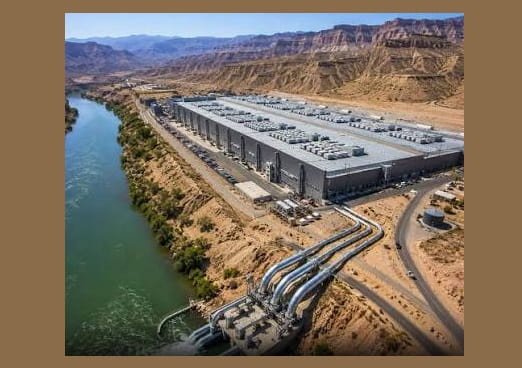
Modern AI data centers are very different from ordinary warehouses. They can consume enormous amounts of electricity, require extensive cooling infrastructure and operate continuously.
Backup generators, turbines, cooling systems and electrical equipment can also create noise and air-quality concerns for nearby communities.
As developers move increasingly large projects closer to residential areas, litigation is expanding into several areas at once: environmental permitting, zoning, nuisance law, property damage and public health.
The developing cases against xAI, Amazon, DataOne and other operators suggest that community impact is becoming a major legal risk for the AI infrastructure industry. Courts are unlikely to decide whether data centers are beneficial or harmful as a whole. Instead, developers will increasingly be judged on whether individual projects comply with environmental law, zoning procedures and the property rights of surrounding residents.