A driver leaves the beach, slips off sandy sandals, and drives home without shoes. It sounds like the beginning of a traffic ticket, especially to anyone who grew up hearing that barefoot driving is illegal. The claim is widespread, but it does not reflect the general rule for passenger cars in the United States. The law focuses less on what a driver wears and more on whether the vehicle is being controlled safely.
Is It Against the Law to Drive Without Shoes?
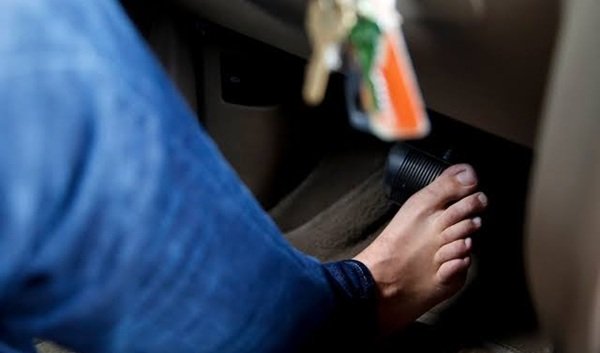
No state has a general law making it illegal to operate an ordinary passenger car simply because the driver is barefoot. There is also no general federal rule requiring private motorists to wear shoes. A driver ordinarily cannot be cited solely for having bare feet, although local rules and rules for different vehicle types should not be assumed to be identical.
The issue is distinct from driving a motorcycle. Motorcycle safety and equipment requirements can vary by jurisdiction, and some rules or official guidance address protective footwear. Commercial employers may also impose workplace footwear requirements even where traffic law does not.
Why Do People Believe It Is Illegal?
The myth persists because bare feet appear less protective than shoes and because driving instruction often emphasizes suitable footwear. That sensible safety recommendation is sometimes repeated as a supposed legal prohibition. Safety guidance and an enforceable statute, however, are not interchangeable.
AAA confirmed in a July 2026 driving-safety discussion that driving barefoot is not itself illegal. It also warned that a driver could face consequences if inadequate pedal control contributes to a collision. This is the important legal distinction: lawful footwear choices do not excuse careless driving.
Can Barefoot Driving Still Lead to a Ticket?
Yes, but the charge generally would concern driving behavior rather than bare feet alone. A driver who loses control, drives carelessly, or creates a hazard may violate a state’s reckless-driving or careless-driving statute regardless of footwear. An officer must rely on the elements of the relevant offense, rather than treating shoeless driving as automatically unlawful.
For example, if a foot slips off the brake and the vehicle runs a red light, the traffic violation is real even though barefoot driving itself is not banned. The driver cannot avoid responsibility by arguing that no footwear law exists. The legal inquiry concerns whether the driver operated the vehicle with reasonable care.
Could Barefoot Driving Affect an Accident Claim?
In a civil injury case, evidence that a driver could not brake effectively may be relevant to negligence. It does not establish liability automatically. The injured person generally must show that the driver failed to use reasonable care and that the failure contributed to the harm.
Footwear may matter only if it helps explain what happened. A motorist who drove barefoot without difficulty may have no footwear-related fault at all. Conversely, a loose sandal that becomes trapped beneath a pedal can cause trouble even though the driver was wearing shoes. An insurance claim likewise depends on the policy and the circumstances, not an automatic rule that barefoot drivers lack coverage.
Is Driving in Flip-Flops or High Heels Better?
Not necessarily. Loose flip-flops can slide off and wedge beneath the brake. High heels may change pedal pressure and reduce the driver’s ability to feel the controls. Heavy boots or shoes with slick soles may create their own problems. Footwear that fits securely, gives reliable traction, and permits full pedal movement is generally the safer choice.
A driver who removes uncomfortable shoes should also move them away from the pedals. Loose footwear on the floor can create a hazard independent of whether the driver is barefoot.
Do Local Laws or Workplace Rules Matter?
Motorists should distinguish general state law from special rules for certain vehicles, occupations, or locations. A delivery company, fleet operator, or employer may require closed-toe shoes as a condition of employment. Violating that policy could have workplace consequences without creating a state traffic offense. Any claimed municipal prohibition should be checked against the actual ordinance before being presented as law.
Conclusion
Driving barefoot in an ordinary car is generally legal throughout the United States. The real obligation is to maintain safe control of the vehicle. Drivers who feel more secure in properly fitting shoes should wear them, while those who drive barefoot remain subject to the same traffic-safety and negligence standards as everyone else.