Building a car in your garage is not automatically illegal in the United States. Hobbyists can assemble vehicles from kits, donor vehicles, used engines, custom frames, or mixed parts. The legal challenge usually begins when the finished vehicle is meant for public roads.
A homemade car generally has to fit into a state category such as specially constructed, assembled, reconstructed, custom, or kit vehicle. To become street-legal, the owner may need proof of major parts, a VIN, inspections, a title, and registration. The exact process depends on the state and how the car was built.
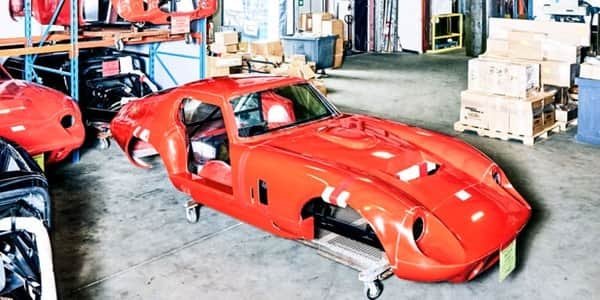
Is There a Federal Ban on Homemade Cars?
No federal law simply prohibits an individual from building a car for personal use. Federal rules become more important when a newly manufactured vehicle or complete kit is produced for sale.
NHTSA distinguishes one-off homemade vehicles and kit cars from ordinary production vehicles, while applicable new equipment can still be subject to federal safety standards. EPA rules can also apply to complete kit cars and emissions-controlled vehicles or engines.
Can You Drive a Homemade Car on Public Roads?
Only after it satisfies the registration rules of the state where it will be licensed. Finishing the mechanical build does not create a legal right to drive the vehicle on the street.
States commonly require documents showing where the frame, body, engine, transmission, and other major parts came from. Receipts and bills of sale help prove lawful ownership.
How Does California Handle Homemade Cars?
California calls many home-built vehicles “specially constructed vehicles,” or SPCNS vehicles. They are homemade or kit vehicles built for private use rather than by a licensed manufacturer.
Registration generally requires a title or registration application, statement of construction, receipts for major components, vehicle verification, a Vehicle Safety Systems Inspection certificate, fees, and smog certification. Some vehicles also need California Highway Patrol VIN inspection or assignment.
What Are the Rules in Texas?
Texas uses the term “assembled vehicle,” which can include a kit car, replica, custom vehicle, or street rod. Before title and registration, the owner must show the Texas DMV that the vehicle is eligible.
Texas may require photographs, proof of ownership for the motor, body, and frame, an ASE master-technician safety inspection, a weight certificate, VIN documents, and emissions testing in applicable counties.
Texas also bars certain builds, including some using nonrepairable or flood-damaged components and vehicles designed only for off-highway or racing use.
What About Cars Built Completely From Scratch?
A scratch-built vehicle can still qualify for a title, but the state may classify it differently from a kit car. Florida, for example, treats a scratch-built replica as an “Assembled From Parts” vehicle.
Because a true scratch build may lack a manufacturer VIN, the owner may need a state inspection and an assigned or reassigned identification number before registration.
Do Emissions Rules Apply?
Yes. Emissions treatment depends on the state, engine, vehicle category, and sometimes the model-year rules applied to the build. California uses a BAR referee process for initial smog certification, while Texas requires testing for qualifying assembled vehicles in emissions counties.
Federal EPA rules also regulate complete kit cars and certain new motor vehicles under the Clean Air Act. An older engine does not automatically eliminate every emissions requirement.
Can You Sell a Car You Built Yourself?
Building one vehicle for personal use is legally different from producing vehicles for sale. Manufacturing complete vehicles or kits for resale can trigger federal certification, safety, and emissions obligations.
The Bottom Line
Yes, it is generally legal to build your own car in the United States. The difficult part is making it legal for public-road use. A home-built car usually needs a recognized state classification, ownership records, a VIN or VIN verification, required inspections, a title, and registration.
Before starting a street-use build, check the motor-vehicle agency in the state where it will be registered. Designing around title, safety, emissions, and documentation rules from the beginning is much easier than legalizing an undocumented finished car later.